



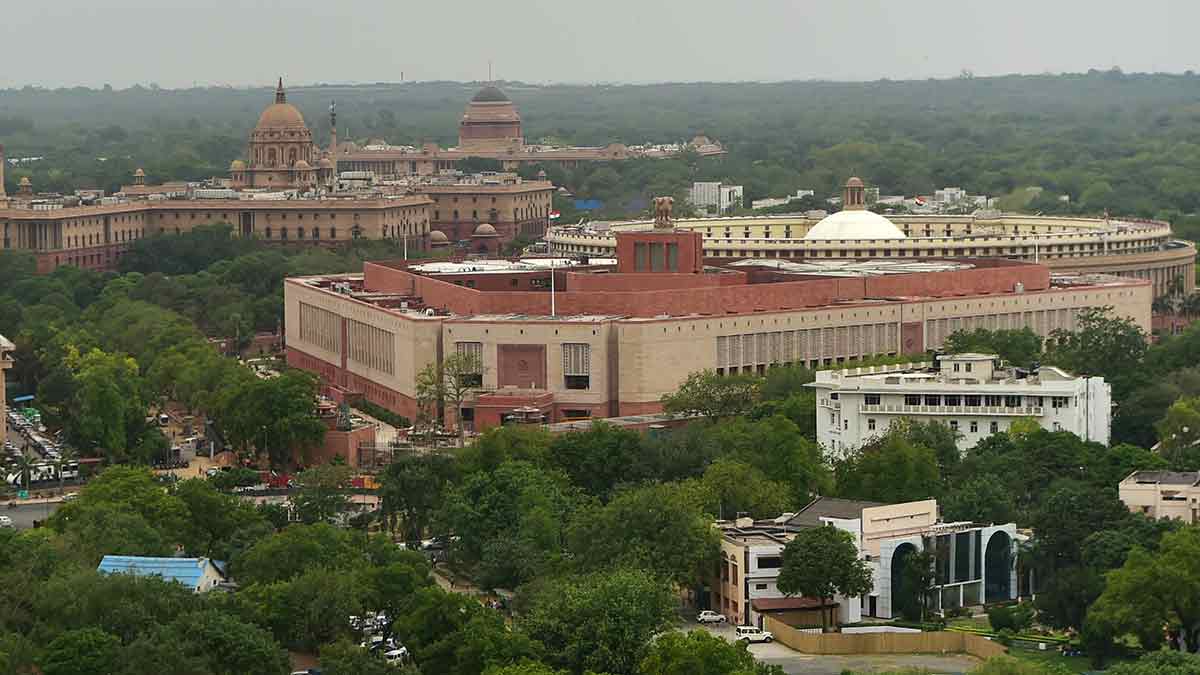
The recent proposal by a Delhi BJP MP to officially rename the capital city from Delhi to ‘Indraprastha’—invoking the legendary city of the Pandavas from the Mahabharat—is more than a superficial suggestion. It is a politically motivated attempt to rewrite the complex, multi-layered history of one of the world’s oldest continuously inhabited metropolises.
While draped in the language of cultural revival, this move fundamentally misunderstands the city’s enduring identity and prioritises mythological narrative over documented historical fact, all while distracting from critical urban governance challenges. Renaming the capital ‘Indraprastha’ would be a historic mistake.
The very name ‘Delhi’ is not a relic to be discarded, but a testament to a remarkably inclusive and cumulative past. The current name, known globally and cherished locally, has organically evolved to embrace all the successive cities built in the area over millennia. Its roots trace back to the first identifiable fortified city, Dhillika, established by the Tomar dynasty near the present-day Qutub Minar.
Over the centuries, whether new capitals like Lal Kot, Siri, or Shahjahanabad were established, each was ultimately subsumed under the single, unifying name of ‘Dilli’. To replace this encompassing identity with a name tied to a singular, ancient, and mythological reference to (at best) a part of the city would be to deliberately erase a long and shared past that is the very essence of the city’s character.
The proponents of ‘Indraprastha’ often present the modern city as the precise location of the epic capital. However, historical documentation does not bear this out. While medieval-era Sanskrit and later Persian texts refer to a place called Indraprastha or Indarpat located in what is today the Central Vista area, none of these sources conclusively identify it as the capital of the Pandavas from the Mahabharat. Furthermore, archaeological evidence is far from conclusive. While excavations at the Purana Qila site have yielded ancient artefacts like Painted Grey Ware (PGW), suggesting a settlement of great antiquity, the Archaeological Survey of India (ASI) has never definitively identified any site with the sophisticated, grand capital described in the epic.
The push to rename the capital based on a legendary link is fundamentally flawed because it seeks to elevate folklore over verifiable history. This blurring of the lines between fact and fiction not only renders the past trivial, but also serves a petty political purpose. When a proposal is founded on dubious history and an eagerness to privilege one ancient narrative over all others, it immediately raises concerns about a hidden political, or worse, communal agenda. It is a disingenuous attempt to reshape the urban landscape to align with a specific ideological narrative, rather than genuinely seeking to celebrate the totality of the city’s heritage—a heritage that includes Hindu, sultanate, Mughal, and colonial eras.
Beyond the academic and historical missteps, the practical implications of renaming India’s political capital are enormous. A name change in a city of this magnitude is not comparable to changing a street name; it would entail colossal logistical and financial costs. It risks confusing the city’s established global recognition as a major economic and political gateway. Its name is instantly recognisable in diplomatic, trade, and travel circles worldwide. Disrupting this established identity for a symbolic gesture is a reckless move that would create absolute chaos and uncertainty on a global scale.
Ultimately, the preoccupation with a symbolic name change distracts from the pressing realities facing the city’s millions of inhabitants. The true measure of restoring and celebrating Delhi’s legacy does not lie in a new label, however culturally resonant, but in addressing the critical, tangible issues of urban planning, crippling air pollution, water scarcity, and equitable development. The authentic culture and identity that most people in Delhi genuinely take pride and joy in is that of a continuously evolving city—a resilient, composite, and inclusive metropolis. This is an identity that transcends any single historical era.
Delhi is not a museum piece to be rebranded; it is a living city with a complex, shared, and ongoing story. The proposal to change its name is an unnecessary, historically flawed, and politically disruptive diversion that the nation’s capital can ill afford. It should be jettisoned.
editor@theweek.in
