



I have recently released my latest book, inspired by the 75th anniversary of the adoption of our Constitution. I am neither a lawyer nor a constitutional theorist, but have written it as a thinking citizen of India, for other thinking citizens.
In it, I have traced the long and arduous road we had to take to constitutional self-governance, examining how the Constitution has been interpreted, implemented, and challenged since its inception. Even as I argue that the Constitution of India is not a static relic cast in stone but an evolving and dynamic, “living” document, which has allowed it to stand the test of time, I observe how judicial interpretation and societal transformation have continuously shaped the ways in which the Constitution is applied. And, yet, even as it evolves, it remains subject to challenges that strike at the very heart of its foundational values.
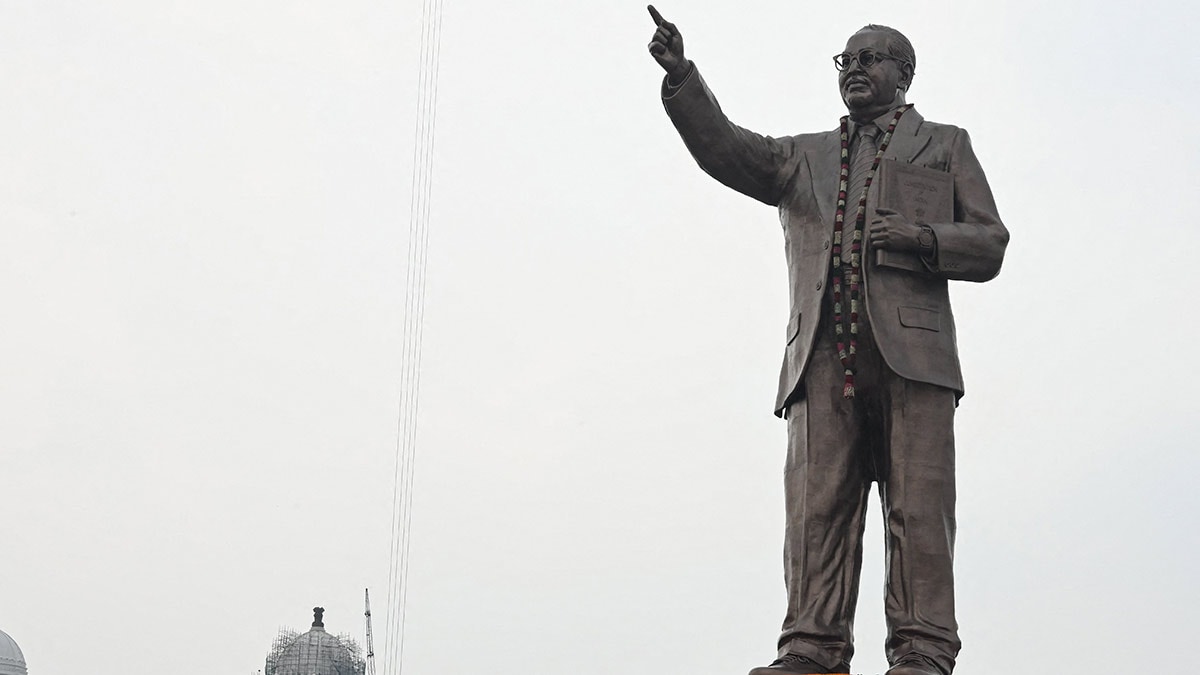
Chief among these is contestation around core constitutional principles: the secular character of our Republic, meant to safeguard the pluralism—of caste, creed, colour, culture, cuisine, conviction, costume, and custom—of our immemorial, deeply inclusive civilisation; the sanctity of fundamental rights; the fragile balance of power between the organs of the state, as also between the Centre and the states; and the moral obligation to protect the rights of minorities. These are not incidental features of our constitutional architecture—they are central to the Republic of India’s very identity. It is for this reason that I not only emphasise constitutional values but also, following Dr Ambedkar, constitutional morality: the unwritten code of conduct, the spirit behind the letter of the law, which calls upon those entrusted with power to exercise it with responsibility, restraint, and reverence for the principles of justice, liberty, equality, and fraternity.
Even amid the pomp and pageantry that accompanied the 77th Independence Day and the 75th anniversary of the adoption of our Constitution, it has become impossible to escape the perception that increasingly, our elections sustain only the barebones of democracy, even as its sinews—our Parliament, legislatures, judiciary, media, civil society, public universities, and watchdog agencies—are sought to be hollowed out or hijacked. More pernicious still is the politics of religious hatred, and the communalisation of our politics, polity, and public life, which portend ill for the idea of India and, therefore, for our Constitution.
Ultimately, however, there is no reason to lose hope. Though our Constitution and the polity it breathes life into are sometimes under strain, their protectors have risen all over the country. The Constitution of India is no longer an impenetrable legal treatise; no longer is it solely the preserve of lawyers and judges, law students and lawmakers. Today, it belongs to the common man, the citizen of India—a charter of liberation held aloft in courageous defiance, in pursuit of truth; to demand accountability from the powers that be, and to claim rights arbitrarily denied.
Today, our Constitution serves as a mirror, reflecting the Idea of India, and rousing us to protect it. Today, it has become the common link between a stand-up comedian defending his right to free speech and expression, and members of the opposition taking their parliamentary oaths, because held high in their hands is a copy of the Constitution of India: a searing reminder of their right to speak their minds, and more important, to speak truth to power.
Far from being ornamental in nature, to be kowtowed to on days of national importance, our living Constitution has become a moral compass in the hands of the ordinary citizens of India—who, in all their dazzling diversity, have risen to ensure that no harm befalls it. In doing so, they have vindicated the vision of our founders that ultimately, it is the citizen who must be the most vital and vigorous building block of Indian democracy.
Let us never forget that the founders of modern India bequeathed this eternal land, the idea of India, and the Constitution which is its most enduring and endearing testament, not to politicians but to the citizens of India—making all of us the custodians of this rollicking, robust, and resilient Republic.
editor@theweek.in
