



Among the several hundreds who gathered outside the cathedral where Dame Sarah Mullally was being enthroned as the first woman archbishop of Canterbury was a Catholic activist, Jane Varner Malhotra. The 57-year-old with an Indian surname, who had flown in from the US, carried a sign reading “Catholics, let’s do this”.
Easier pronounced than ordained. As in the case of humans, so with institutions—the older you are, the more rigid you get when it comes to changing your habits, pun intended. The Catholic church is older than the Anglican, tracing its origins to Jesus’s own disciple St Peter.
Indeed, the English church claims to be nearly as old. Legend has it that Pope Gregory the Great inquired about a few fair-faced boys he saw in a Roman slave market. Told they were pagan boys from the land of Angles, he exclaimed “non Angli, sed angeli” (not Angles, but angels), and sent priest Augustine to proselytise England, the Angles’ land.
Augustine converted King Ethelberht of Kent (easy job; he had a Christian wife already) in 597, built a priory and an abbey at Canterbury, and is revered as the first archbishop. The archbishopric has since survived assassinations (Thomas Beckett), beheadings (Simon Sudbury), being burnt at stake (Thomas Cranmer) and more.
Canterbury’s primacy was often challenged by York, the only other province in Britain. The matter was settled in the 14th century by Pope Innocent VI. He recognised York as ‘Primate of England’ and Canterbury as ‘Primate of All England’. That sounds like the difference between Britain and Great Britain or cyclopaedia and encyclopaedia.
But the Anglican church is actually younger than even Methuselah. In the 16th century, King Henry VIII wanted to annul—not divorce—his first marriage to his brother’s widow Catherine of Aragon (he didn’t want to be the keeper of his brother’s wife), so that he could marry Anne Boleyn, in the hope of getting a male child. Pope Clement VII, who was under the thumb of Catherine’s nephew, the Holy Roman Emperor Charles V, refused, citing canon law.
Henry, who had campaigned against Protestant ideas spreading in Europe and had been honoured by the Pope as Fidei Defensor or Defender of Faith, now told the Pope to go to hell (not literally; God forgive), severed the English church’s links with Rome, and established the Church of England with himself as its head and Canterbury as the highest priestly office. But he kept the title; the monarch of England is still styled Defender of Faith.
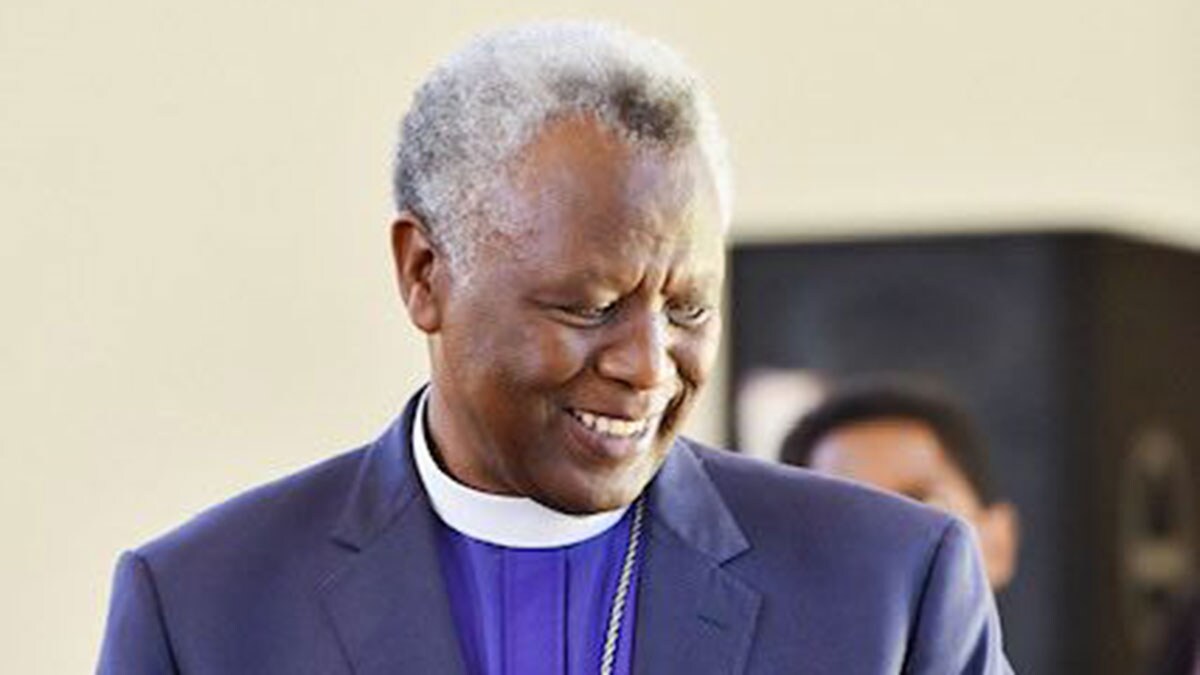
For an old institution, the Church of England has been fairly open to reforms, especially in the post-war era, ordaining women as priests, recognising gay and lesbian rights, and now getting a woman archbishop. All the same, Anglicans outside England, especially several in Africa, are resisting change. So much so, a group of bishops met lately in Nigeria’s capital Abuja and threatened to elect Rwanda’s Archbishop Laurent Mbanda as rival to Mullally, but refrained from the move at the last minute.
The Nigerian move has sent shock waves across the global Anglican laity. For, of the 95 million Anglicans around the world, two-thirds are in Africa. Most of them are opposed to same-sex marriage, which the church in England no longer damns, and say “the majority of the Anglican Communion still believes that the Bible requires a male-only episcopalism”. The issue, they say, “is whether scripture or contemporary culture governs the life of this church”.
Anglicans in England aren’t worried. If God has been saving the king, He will save the king’s archbishop, too.
prasannan@theweek.in
