



The similarities between Canada and Australia are striking. One is close to the North Pole, the other to the South Pole. Both are in the Commonwealth, have too much land, too few people and a lot of uranium.
Together, they produce a third of the world's uranium and lithium. Both have had now-hot now-cold ties with India. Canada signed a nuclear deal with India in 2010, Australia signed a uranium sale deed in 2014, but both had been largely holding on to their stock, thanks to their domestic politics.
There are dissimilarities, too. Australia plays Test cricket, Canada doesn’t. Few Australians speak French; a quarter of the Canadians do. Canada didn’t have enemies around; Australia has distant China to worry about in the Indo-Pacific.
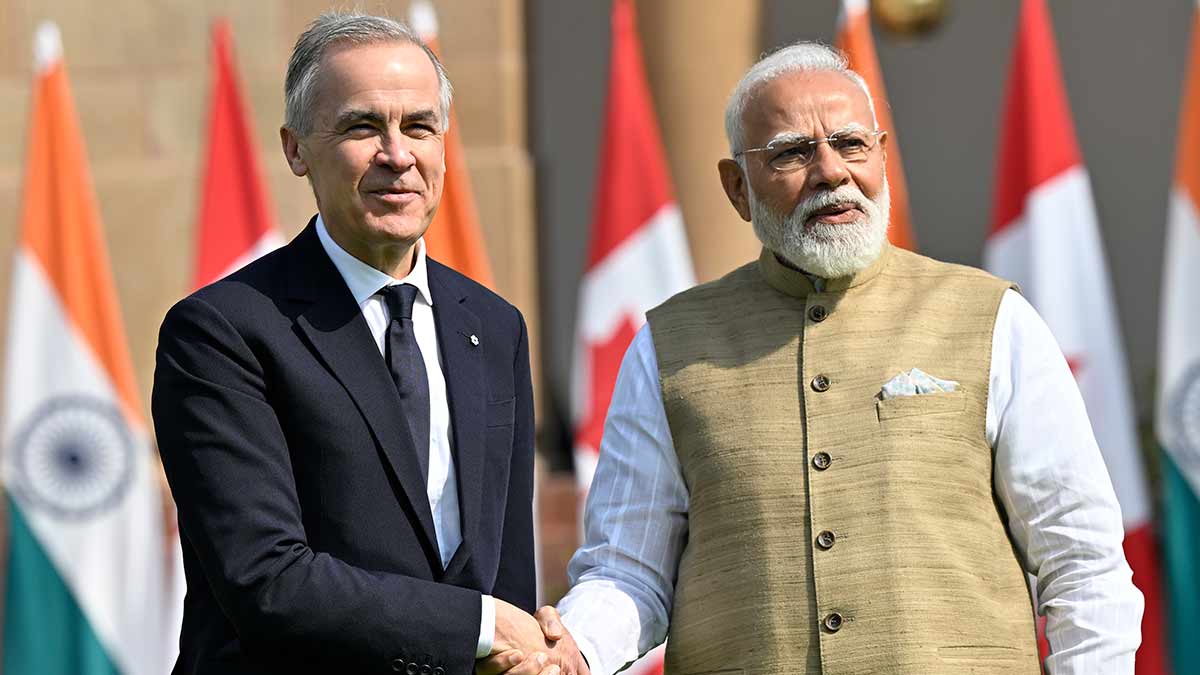
Last week Canada’s PM Mark Carney landed in Delhi and signed a $2.6 billion uranium deal. The Canadians were India's oldest atom-mates. Homi Bhabha, who taught us nuclear physics, had a passion for rowing river-boats. His teammate at Cambridge was a Canadian, Bennett Lewis. Lewis became Canada's atomic boss just as Bhabha came to head India's.
Bhabha asked his team-mate to help build a reactor in India; Lewis sent his men. They built Cirus. Then came the Candu (Canada Deuterium Uranium Reactor)-type reactors for Rawatbhata in Rajasthan. Its technology has been replicated in other reactors.
When India tested a bomb in 1974, Canada said the plutonium was taken from Cirus, and cut all links in the nuclear chain that led to India. The ties warmed up especially during the Stephen Harper-Manmohan Singh years, till Justin Trudeau came up with his half-lies about Narendra Modi’s spies having killed Sikh radicals in Canada.
Carney has since atoned for Trudeau’s sins. He has promised to work with India on small modular reactors, and told Modi that he, too, viewed terrorism, extremism and radicalisation as challenges that threaten India, Canada and the world. Next, he jetted to Canberra, where he told Anthony Albanese that the old world order is crumbling, and Australia and Canada should work together as “strategic cousins”; both are middle powers who should write the new rules that determine security and prosperity, and not “let the hegemons dictate outcomes”.
Why this change of mind? The fact is, the Canadians had been innocent to the bad ways of the world. Ever since James Wolfe scaled a cliff in the dark and captured the Plains of Abraham in Quebec in 1759 from the French, Canada’s borders have hardly ever been threatened. They have had no enemies around who sent in infiltrators, terrorists or territory grabbers, as we have. Their only border, with the US, is the world’s longest unguarded one.
Naturally, Canadians are conditioned to be good—genetically and geopolitically. They naively championed the world’s weirdest disarmament idea—give up landmines. Poor fellows didn’t know that armies might give up, but terrorists and the Taliban, who don’t sign Geneva conventions and Ottawa oaths, wouldn’t.
They saw no evil in anyone or anywhere. This faith in liberty and decency had blinded them to make laws that are so liberal that they let even Kanishka bombers roam free. They didn’t know that their goodness was being made use of by baddies like the Khalistanis, however few they are.
Then, all of a sudden, two years ago, a big bad bully came to live next door and started eyeing the unfenced border with Canada, and claiming the Canadian compound as his. That was the first time that Canadians understood how it felt when someone coveted your home and gas-warmed hearth. Now Carney is going around preaching against hegemons. Jolly good!
prasannan@theweek.in
