



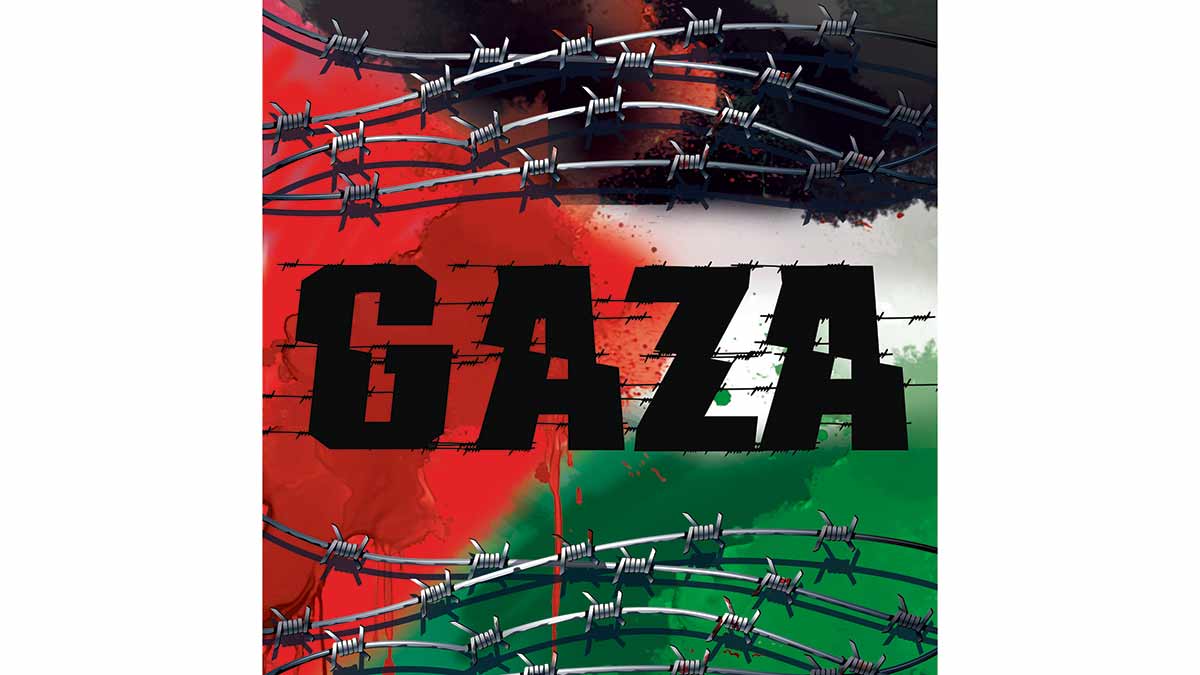
One couldn’t miss the several historic ironies when Britain declared support to a Palestine state last week.
One, we saw the original sinner at the confessional. It was Britain which had sowed the idea of a homeland in Palestine for the globally dispersed Jews in 1917, thereby triggering the strife that has been raging in the Middle East since. In the process, they two-timed the Arabs who had supported them against the Ottoman empire in the First World War. Remember the story of Lawrence of Arabia.
Two, it was a Jew who made the statement for Britain last week. Keir Starmer, though a Christian by birth and an atheist by faith, is a synagogue-goer. One may say that it is to keep shalom at home—his wife is a Jew—but many Jews consider him as one of them, as they did Benjamin Disraeli in the 19th century.
Three, Starmer used much the same wording for a Palestine state as foreign secretary Arthur Balfour, who had fathered the idea of a homeland in Israel for the Jews in a letter to the Jewish banker Lord Rothschild. In the letter, published on November 9, 1917, Balfour had promised a "national home for the Jewish people" in Palestine, then an Ottoman region with a small Jewish population. Now, after “we recognised the State of Israel more than 75 years ago as a homeland for the Jewish people… today we join over 150 countries who recognise a Palestinian state too…,” said Starmer.
There is a fourth irony. Israel may be winning the military war on Palestine, but is losing on the diplomatic front. Since Yasser Arafat proclaimed a Palestine state in 1988, about 150 of 193 UN members have thumbed it up—13 of them came in after Benjamin Netanyahu launched his war two years ago. Two years ago, no western country (except Sweden) would even hear of a separate Palestine; now there are Norway, Spain, Ireland, Slovenia, Britain, France, Canada, Australia and Portugal. Two are in the big five; four of them in G7.
Therein lies a fifth irony: the two who are holding out, apart from the US, are the two old Axis allies, perhaps penitently. To India, it’s a moment of vindication. India had always balanced its ties with both—voted against partitioning Palestine in 1947; yet recognised Israel in 1950 but did not establish diplomatic ties; recognised the PLO in 1974 and the Palestine state in 1988; and finally opened diplomatic ties with Israel in 1992. Ironically, that was done with the consent of Palestine leader Yassir Arafat, a deft act of diplomacy by Narasimha Rao that was hailed by his critic L.K. Advani
Since then ties have soared with Israel, but not soared with Palestine. India stayed committed to the Palestinian cause, consistently condemned the terrorism of one side and genocide by the other side, and advocated dialogue to resolve the conflict. Narendra Modi did tilt towards Israel, declared India "stands in solidarity with Israel" in Netanyahu’s war on terror, abstained from UN resolutions calling for ceasefire, but has now voted in the UN in favour of a two-state solution, along with Britain, France and co.
Well and good! But are these declarations going to be wishes writ in the waters of the Jordan river? Therein lies the biggest irony. Netanyahu is depopulating and 'depalestining' Gaza fast—his war has killed some 65,000 people in two years, and about 90 per cent of Gazans have been rendered homeless. At this rate, will there be any Palestinian left to live in Gaza, which is part of the Palestine state recognised by 150 of 193 members of the UN?
prasannan@theweek.in
