



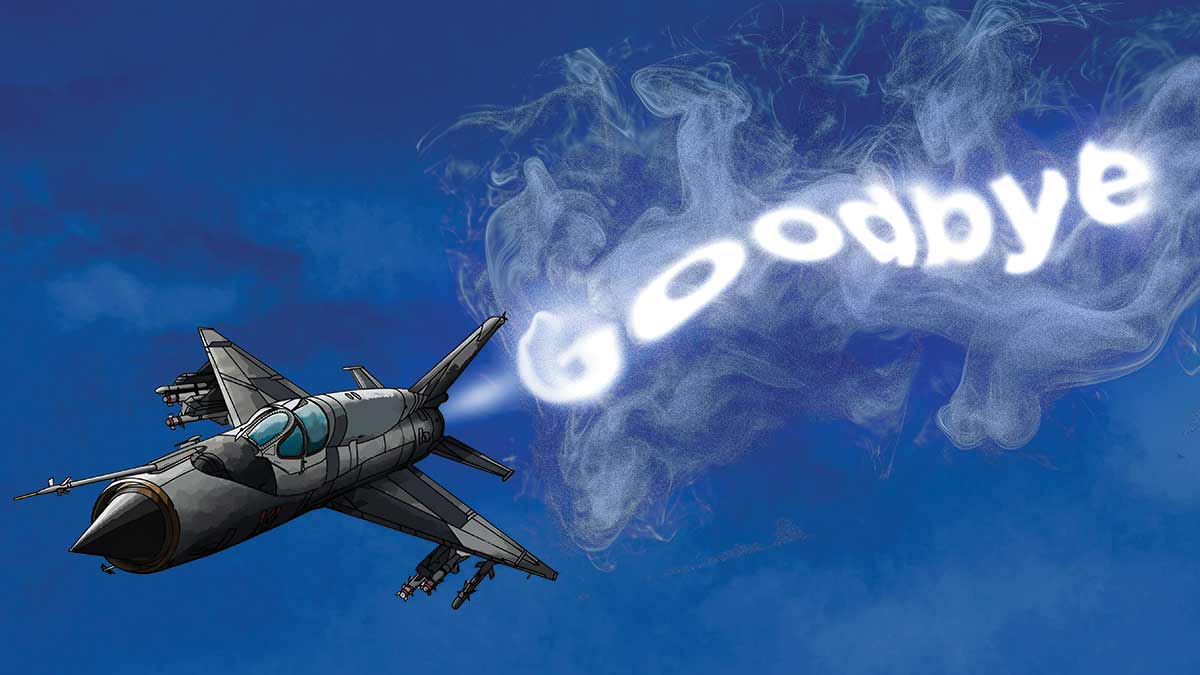
The chief was looking livid when we walked into the briefing room at the Air HQ. Pointing to a picture of a MiG-21 on the wall, he asked “You call this a flying coffin? You want me to junk it?”
The year was 2000 or 2001. Another MiG-21 had fallen off the sky, and commentators were calling it flying coffin. “Take it from me—I shall fly it; my successors shall fly it; we will fly it for decades.”
Military bravado, we thought, and quietly listened to the rest of the briefing. His anguish was understandable. MiGs were falling off the skies, a dozen a year. I had watched, in shock and pain, one hitting a mountainside in Leh a few years earlier. Spares weren’t available from ex-USSR; air-frames and engines were old; no advanced jet trainer for the pilots to learn jet flying.
A week later, IAF PRO Rajesh Dhingra called. “Chief is visiting Bareilly tomorrow, and would take a few press people. Would you join?”
We flew in an An-32, and checked into the mess. Soon we were told the chief would meet us “out there”. As we walked out, we saw Air Chief Marshal Anil Yashwant Tipnis, clad in flight overalls, waiting for us. “I told you, I shall fly it. You will see me flying a coffin.” After a quick visit to the washroom (“always take a leak before you fly”), he jumped into the cockpit of a MiG-21 and shot up, his 60-year-old body fighting 9G force. As we held our breath, he vanished into the blue at supersonic speed, reappeared, flew past the base a few times, and landed with a thumbs-up.
At the debriefing, he said: “It’s not the weapon that wins wars; it’s the soldier. The weapon—an aircraft, a tank or a warship—is as good or as bad as the man who uses it. We do have some issues with MiG-21. Believe me, she’s a good airplane of her generation, and my boys who fly her are as good as the best in the world.”
Realising that he had been a bit harsh on us, he said, “We have dinner night today; you’ll see us at our formal best. Join us; black shoes and ties, please.” All rancour forgotten, we joined the toast over “Mr Vice, the President!” and “Gentlemen, the President”.
Over the next few months, we would learn about the issues plaguing the MiG-21 fleet from Tipnis and his successor S. Krishnaswamy. Crashes had happened earlier too, but they had caught headlines mainly after Flt Lt Nachiketa’s MiG-27 had a flameout over Kargil in 1999 on the very second day of the air operations. Nachiketa survived, was captured by the enemy and returned as would be the F-16 killer Abhinandan Varthaman 20 years later, but his buddy Sqn Ldr Ajay Ahuja, who went to Nachiketa’s aid in a MiG-21, was shot down.
If Tippy fought his MiG campaign by personal example, Kichu waged his war with facts, figures and statistics. After every accident anywhere in the country, he would brief us in detail, sharing every nugget of info—the type of the aircraft, its vintage, its engine, its air-frame, the vintage of its tyres—not just in terms of age, but in terms of the landings they had done! We even joked—at this rate, Krishnaswamy would have us believe it’s safer to take a MiG-21 to New York than a Boeing-747. Believe me, he once showed us it was true, statistically!
Asked why he wasn’t pressing the government for a quick decision on Advanced Jet Trainers, Krishnaswamy replied: “I don’t want the government to take decisions under pressure; that’s why I am telling you all these—that we can manage with what we have.”
But he was disarmed when the mother of a pilot who was killed in accident began a campaign. “I can fight the enemy; I can’t fight tears,” he told us privately.
prasannan@theweek.in
