



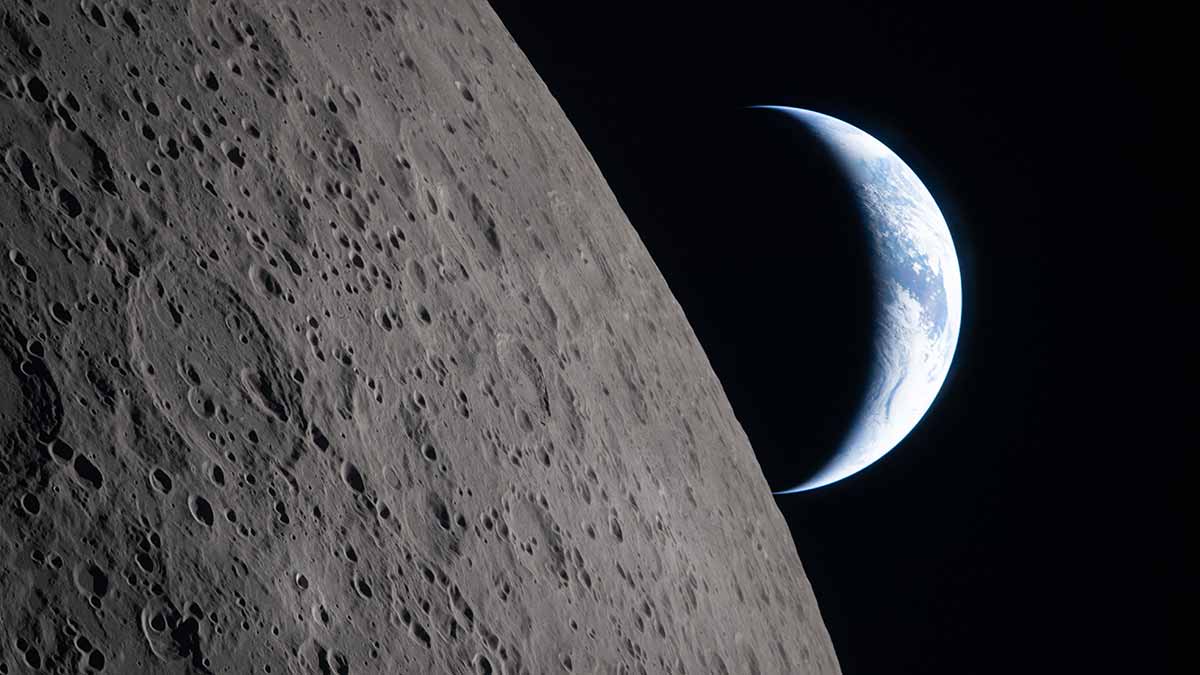
Distance lends perspective. Without doubt, the Fortunate Four flying on Artemis II must be getting this perspective as, at the time of writing, they travel to the far side of the moon, further than any man has been before. Without doubt too, they must be thanking the countless stars around them, that at least for 10 days, they were able to leave this miserable world as it commits suicide, murder and mindless destruction, all at once.
From the Artemis window, they would have compared our beautiful blue planet favourably to all else around them, admired the magical view of oceans and land masses, bathed in white swirls. But soon the earth would have appeared smaller, the lines of the continents fainter and increasingly irrelevant. The minuscule proportion of the earth with the endless surrounding vastness would have been quickly driven home.
They must have wondered that if the earth in the universe is much the same as a speck of dust in a desert storm, then what is the brouhaha all about. Where, from that window, are to be seen the lines, some dotted and disputed, that divide nation states, the lines over which men are killing each other? Where are the imperious capitals, the power centres, the palaces and pelf? All that would have been visible to them would have been a blue ball without political or racial fault lines. At that distance it would have been of no import too that men may be born with white, yellow, brown or black skins or some may pray to the east and others to the west.
With that glimpse into a creation, the pettiness of our international politics must become incomprehensible. Why have puny men with small minds and huge egos, vengeful, greedy and morally bankrupt men been allowed untrammelled power to invade nations at will, threaten and execute genocide, kill innocent women and children by the thousands, covet one man’s land or another man’s oil? Who has given them the right to threaten to end ancient civilisations, the wealth and depth of which they are ill-equipped to even comprehend? To pummel into rubble and dust humanity’s heritage, art and culture. Or ethnically cleanse a people from their land where lie the graves of their fathers, rob them of access to revered places of worship, extend borders at will. What heavenly sanction, which obscure edict, gives these men the right to start a war that violates every tenet of international law in the 21st century, and has no reason beyond anger. Or to invent for their actions disingenuous glib narratives every day, to use thuggery and brute force to bomb hospitals, libraries, universities, schools, power houses and bridges.
The Fortunate Four may well wonder where the wise men of the world have gone, those who fought for peace and brotherhood, education and development. They may quickly acquire what Edgar Mitchell, Apollo 14 astronaut and one of the 12 men to have walked on the moon, called “an instant global consciousness, a people orientation, an intense dissatisfaction with the state of the world, and a compulsion to do something about it”. They may not be able to, as Mitchell wanted, to drag crazed leaders by the “scruff of the neck… a quarter of a million miles out and say, ‘Look at that, you son of a b***h.’” But they may rest assured that the dark side of the moon, with apologies to Charles Dickens, is a far, far better place that they go to than they have ever known.
The author was India’s high commissioner to the UK and ambassador to the United States.
