

This is a very special year for me. Like Sabyasachi and the India Fashion Week, I am also celebrating 25 years in the business. For two and a half decades, week after week, uninterrupted (except of course when I was on annual leave), I have been writing a fashion column.
What makes it even more unusual is that the columns have appeared in mainstream news publications like The Indian Express, Mumbai Mirror, The Times of India and now here, at THE WEEK. It is so easy to write on fashion for fashion publications, print or digital. Try talking trends to hard-nosed newspaper editors, clueless about anything other than politics or municipal issues, and you’ll know. But I have been lucky for my golden run. I have been fortunate to be able to interview Valentino, Donna Karan and Salman Rushdie, and feature them on the front page of mainstream newspapers. I have been grateful to announce the arrival of Uniqlo, Starbucks and even Karan Johar’s babies on the revered page one. And yes, the column discussed, decoded and dissected why we wear what we wear, why what we wear tells others things about us. Fashion concerns all of us. We all wear clothes. And our clothes tell our stories.
A senior journalist who had started her career in magazines and then moved to newspapers asked me once whether it was a struggle for me to pitch to newspaper editors. My answer was no. Of course much of it has to do with the fact that I have been blessed to work with the most glorious editors this country has seen—the late Behram Contractor, the tireless Shekhar Gupta, the genius Meenal Baghel. All of them understood the power of good writing, regardless of the topic at hand.
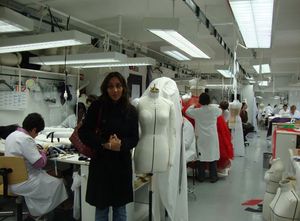 The columnist at the Christian Dior atelier in Paris.
But I would also like to take some credit here: for being so disciplined about my domain. When you take your work seriously, others will, too. You could be a crime reporter or a health reporter, but if your stories are not unique (news breaks) or interesting (good feature writing), no one cares. The current chief editor of The Indian Express, Rajkamal Jha, once announced in a meeting: “Any good story is a good feature story”. There was no difference between news and features—the front page, the opinion pages and the feature pages belonged to anyone who wanted them.
Fashion is so many things at once, it became the most amazing toolkit for me. It was a history lesson just understanding how the shapes and styles came to be. It became a lesson in marketing, why some brands did better than others. It was a love song to human hands, when we see the few thousand types of weaves and embroidery handmade in India alone. It was a homage to human enterprise—how our craft entrepreneurs, our fashion designers, turned their mom-and-pop shops into mega luxury brands simply selling Indian clothing to Indians.
People watching and hanging around malls taught me all I needed to know about retail. Fashion became an understanding of human behaviour, and how our clothes expressed our points of view. And yes, economics too. Did you know you cannot buy European shoes in India any more, thanks to our political relations with China? Go figure, but yes, fashion is also geopolitics then.
Fashion writing took me to Paris (nearly 10 years in a row for their fashion week) and Milan, but also new markets like Moscow (my current favourite), Croatia, Brazil, Dubai and even Pakistan.
In some ways I’m like the Gen-Z; I’ve understood a career is just something you are good at.
X@namratazakaria