

The bouquets keep coming for Leena Nair, the global CEO of Chanel. On June 11, the Indian-born Nair was awarded the UK’s Commander of the Order of the British Empire (CBE) by Prince William, prince of Wales, in recognition of her work in retail.
Nair has been making news ever since she was appointed the chief executive of Chanel in 2021. Especially so because she has no background in fashion. Chanel is among the most valuable luxury brands in the world: it ranks among the top three fashion labels globally, alongside Hermes and Louis Vuitton, and much ahead of Dior, Gucci and Cartier.
Thanks to Chanel, it is now well-known that Nair, 56, has had a terrific career in the corporate world. She previously worked with Unilever as their chief human resource head for their global office spanning 190 countries, becoming the first female and first Asian to do so. We also know that she comes from a simple but hard-working roots. She was born to a Malayali family in Kolhapur, Maharashtra. She had completed her bachelor’s degree in electronics and telecommunication in Sangli, Maharashtra, and then wanted to study further.
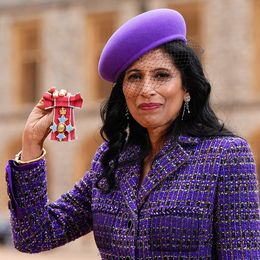 Leena Nair with her medal after being appointed a Commander of the Order of the British Empire | AFP
Her parents were not happy with this request. Nair said at the Stanford Graduate School of Business in October last year that her father would “allow” her to do her postgraduate course at XLRI in Jamshedpur only if he could pick a groom for her when she turned 23. She was so excited to be able to study further, she agreed. On her 23rd birthday, her father reminded her of this and she was thus introduced to her now husband for an ‘arranged’ match.
When I watched this interview it disturbed me. What if Nair had said no to her father’s condition? Would Unilever not have had her as their HR head? Would India not be gloating about a hitherto unknown Indian woman as the Chanel CEO? In all probability, yes.
Nair, happily married with two sons, lucked out with her personal life. Her father’s choice worked out for her. But she had to pay the price for her assent—her free will.
Women have no agency in patriarchal India. Even the one who is hand-picked to run a global luxury behemoth was not allowed to pick her own husband. A 2018 survey shows that 93 per cent of marriages in India are arranged and only 3 per cent marry for love.
Occupying the front pages of newspapers these days is the story of a woman being investigated for commissioning the murder of her husband while on their honeymoon in Meghalaya. We are told that Sonam Raghuvanshi, 25, had apparently played a hand in the murder of her husband Raja Raghuvanshi, 30, as her parents didn’t approve of her choice of partner, a lower-caste employee of her father. Violence by a woman against a man is big news in India. But violence against a woman is normal; 33 women were murdered in India in 2021 in the name of ‘honour killings’. Globally, 140 women were murdered every day by a family member or a partner in 2023.
Chanel, meanwhile, has picked a remarkable Indian woman as its new global brand ambassador—Ananya Panday. The 26-year-old actor has not only swept all the awards last year, but is intelligent and independent and represents both traits in heaps. Especially when, at the age of 25, she bought herself her own little apartment.
India’s real icons must be women who have successful careers without any riders or guilt. That is when the nation can start celebrating them.
X@namratazakaria