



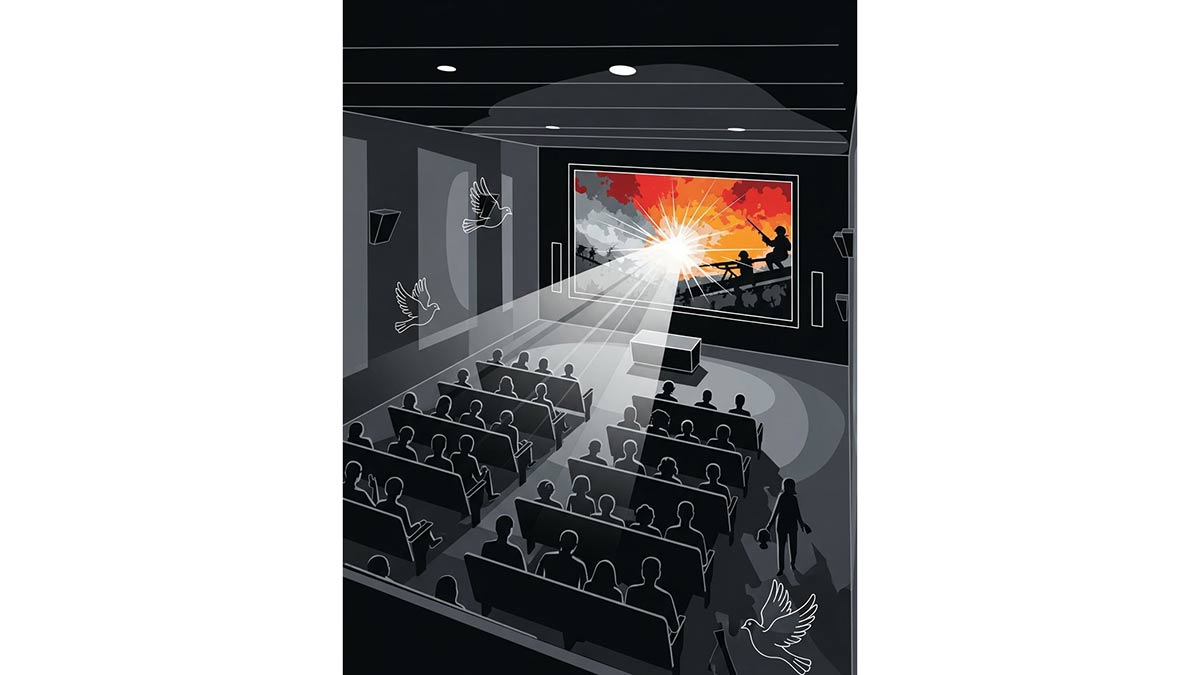
Gadar, Veer-Zaara, Bajrangi Bhaijaan, Raazi, Uri, Gadar 2, Dhurandhar—the list of successful Hindi films featuring Pakistan is long and varied. Romance, comedy, drama and war: stories from almost every genre, unfolding in cinematic stand-ins for ‘Karachis’, ’NWFPs’ and ‘Lahores’ routinely play out on Indian screens to packed houses.
We have made ads involving Pakistan—Fevicol’s Wagah Border spot and Google Search’s Reunion spring instantly to mind. We reel with glee when we beat them at cricket, erupt in outrage when they out-throw us in a javelin contest, and our more desperate news channels now invite Pakistani experts for panel “discussions”.
In recent times, these films have grown more hyper-masculine, more aggressively patriotic, and more firmly rooted in dusty slums and pinds full of butcher shops and strutting roosters and kohl-eyed spies who themselves strut like roosters. Audiences shout and cheer with full fervour when they watch them, and tolerate no word of criticism (however mild) once they emerge from the cinema halls—whether from a professional actor like Hrithik Roshan or a measured critic like Anupama Chopra.
Loving these films has become the new Aadhaar card. If you don’t love them, your nationality, your Hindu-ness and your patriotism are all suspect. It is as simple as that.
Or, is it?
To me, it seems that the lovers of this sort of cinema seem to have a deeply complex, highly toxic love-hate situationship with our neighbouring country. It seems like their most secret fantasy is to cosplay as a Pakistani warlord. Or just be a Pakistani warlord. Otherwise, why all this love for Akshaye Khanna’s Rehman Dakait character?
Why are his reels and dance moves going as viral as Vecna’s from Stranger Things? Why the rumours that he is demanding Rs21 crore for his next project after reportedly being paid only Rs2.5 crore for this one?
Meanwhile, fashion and lifestyle watchers are noting something curious. Never has Pakistani culture and couture exerted such a strong influence on Indian aesthetics. Indian bridal fashion is increasingly incorporating elements like intricate Gara/Zardozi embroidery, softer, silvery pastel palettes, relaxed silhouettes, flowy garara and sharara styles, shorter kurtas, pencil pants, tulip salwar and wider pauchas (hemlines). Traditional yellow temple jewellery is giving way to diamonds and silvery platinum. The heavy, all-over mehendi favoured by UP and Punjabi aunties has been replaced by a more delicate, distinctly Arabic henna vibe.
Some home-and-garden stores are selling collections called Samarkand, Isfahan and Charbagh. And all this is happening while our earphones loop the latest hit from Dhurandhar. So yes, the line between hate, obsession and full-on-stalking seems to be blurring wildly.
As we ready ourselves for yet another Pakistan-set war film—Sriram Raghavan’s Ikkis, which seems to promise a saner, more introspective narrative—let us remember that the antithesis of love is not loathing, but apathy. We need to arrive, both mentally and in our national narrative, at a place where we do not have to rave, rant and exist in a state of mild arousal about Pakistan at all times. It should not have the power to stir us so deeply.
Faiz Ahmad Faiz wrote, “Aur bhi ghum hain zamaane mein, mohabbat ke siwa (There are other sorrows in the world besides love).” I would add: “Aur bhi mulk hain zamaane mein, Pakistan ke siwa (There are other countries, too, in this world, not just Pakistan).”
I am not a Pakistan lover. But I am not a Pakistan hater either. The opposite of love is indifference. That’s the goal. That’s what represents true healing. Can we please be mature enough to achieve it?
editor@theweek.in
