



In the late 1990s, I wrote a script for Pepsi titled ‘Main Bhi Sachin’. It was set at Lord’s, during the World Cup and featured a young, thirsty Shah Rukh Khan, on the hunt for a chilled Pepsi. He spots crates of them being carted into the Indian team’s locker room, tries to sneak in, but is shooed away by a very British guard pointing at a ‘players only’ sign.
So, Khan dons a curly wig and a Sachin Tendulkar jersey and sneaks back in. By today’s sensitised standards, it was probably appallingly racist that the British guard fell for this ‘disguise’ and let him enter, but let’s not go there, shall we.
Anyway, Khan-as-Sachin wanders around the locker room, creating havoc. Just when he is finally punching open a chilled Pepsi can and getting ready to sip it, a heavy hand lands on his shoulder. Behind him is skipper Mohammad Azharuddin, saying matter-of-factly, “Pad up, Sachin. You are on.” It all sounded adorable on paper, and I giggled plenty while writing it. But getting Azhar to deliver that one line naturally was… well, tough.
We did over 20 takes. Khan was flawless—his expression switching smoothly from happy anticipation to blind panic every single time. While Azhar, bless him, proved that while the Lord had gifted him cricketing genius, he had withheld the lesser talents. We finally got a usable take and staggered back to Mumbai, broken but relieved, to make of it what we could.
Azhar isn’t alone. Sourav Ganguly had the classic deer-in-the-headlights look in many of his early commercials. Sachin had exactly two expressions, a frown and an extra-wide smile. Rahul Dravid had a lovely Bangalorean drawl but was painfully self-conscious. I never got to work with Virender Sehwag, or Kapil Dev, but I have heard some horror stories.
Things got better for us advertising hacks with the arrival of M.S. Dhoni. He was relaxed in front of the camera—which doesn’t sound like much, but in our world, that is a huge plus. And, then, came the Instagram era, with celebrity agents, stylists, managers and Virat Kohli. Today’s cricketers—not just the ones married to film stars—know more about angles, poses and holding eye contact than the shooting crew ever did. Perhaps they know too much.
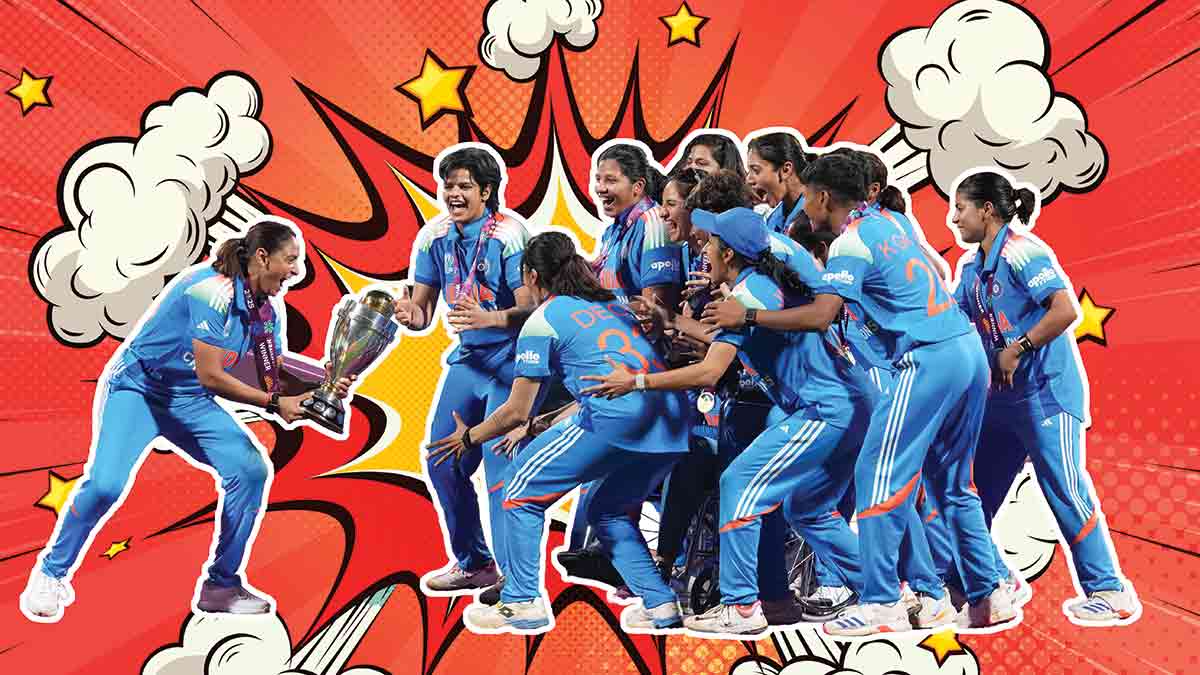
Which is why the ‘girls in blue’ are such a breath of fresh air. Unstudied, unfiltered, easy in their skin—utterly infectious in their authenticity. They share their emotions and thought processes with the camera so naturally. May be men are just more taciturn, or feel the need to be “cool”, but these young women have no such issues.
To even play a sport at this level in India demands progressive and supportive parents—and liberation from the ‘beauty laws’ that say a girl should not play lest she tan, rupture her hymen, or become too outspoken after discovering her own strength. Of course, we have had our Sainas and our Babitas—and they have been awesome—but now we have a busload of them, all drawing strength from each other. From the emotion in Jemimah’s huge eyes as she poured her heart out after the semis, to the proud little toss of Deepti’s head as she smiles for the cameras; from Amanjot’s father, a carpenter, crafting her first bat, to the fearless aplomb with which Shafali handled her air-drop into the thick of the fighting—the camaraderie among these sisters-in-sweat shows us what real heroes should look and be like.
Patriarchy’s loss is advertising’s gain.
