



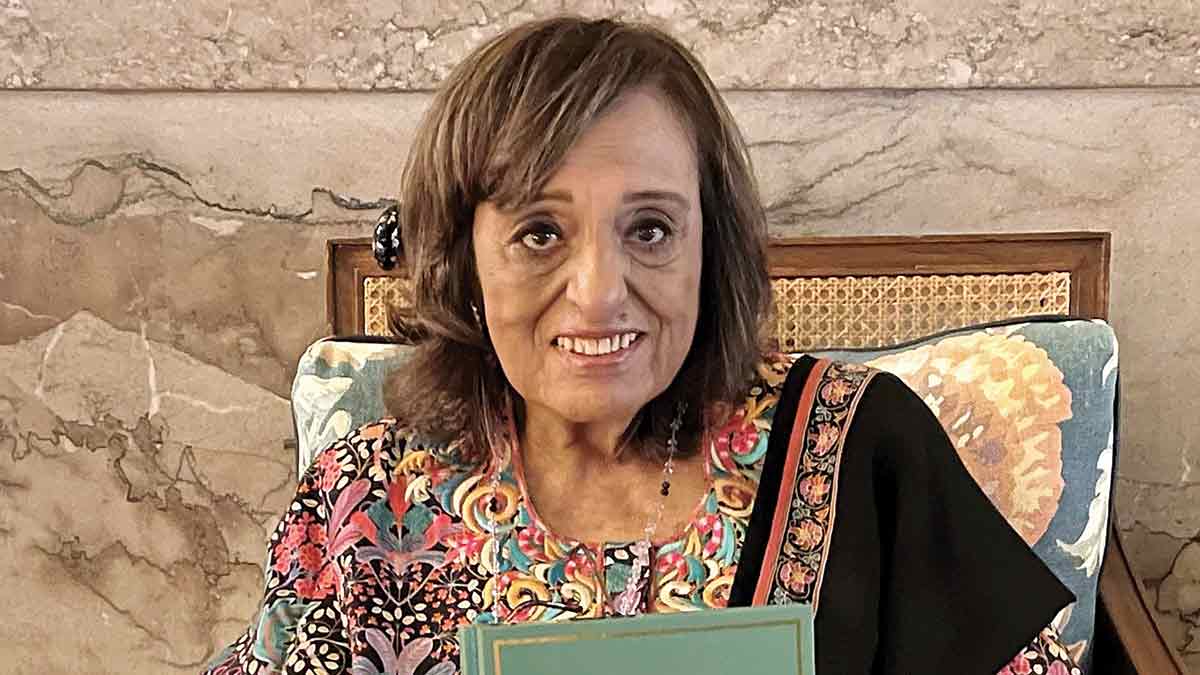
Vegetables: The Indian Way is a lavishly produced coffee table book, which announces itself as “a definitive collection of recipes from the simple to the special”. It is not a book designed just for die-hard vegetarians. Au contraire, meat eaters need it the most! It is a comprehensive compendium, packed with nutritional information one rarely finds in similar volumes.
Camellia Panjabi’s first book, 50 Great Curries of India, sold two million copies internationally and was translated into several languages. Camellia’s credentials are as impeccable as her palate is discerning. As marketing director for the Taj Group of hotels, Camellia built a formidable reputation as a no-nonsense perfectionist with a nose for all things culinary. She attributes her abiding passion for food to her upbringing,; her mother, a doctor, placed immense importance on the nutritional value of food served at home. This early exposure is reflected while she discusses the different categories of vegetables, pointing out that in a vast country like India, each district, each caste and each community has its own traditional dishes, “with an unquantifiable number of cuisines”.
For the past two decades, Camellia has devoted herself to creating London’s most iconic Indian restaurants, working closely with her sister Namita and brother-in-law Ranjit—the trio behind brands like Amaya, Chutney Mary, Masala Zone and the historic Veeraswamy. Till the Panjabi sisters came along and redefined the very idea of Indian cuisine for discerning global diners, desi khaana was relegated to down market dumps serving sloppy curries and leathery kebabs to local neighbourhoods.
The perception changed with the arrival of a sophisticated, well-designed distinctly upscale Chutney Mary serving dishes inspired by Anglo-Indian specialities (Namita had hosted my book launch at this gorgeous venue). There was no looking back as prestigious food awards came their way, heralding the arrival of exceptional cuisine from the subcontinent.
Building on the reputation and success of the first venture, they expanded the portfolio, frequently hosting events for royalty and top tier celebrities. A few months ago, I was invited to a special dinner at the Veeraswamy (Britain’s oldest Indian restaurant). It was hosted for a select few authors attending the London edition of the JLF. At the perfectly curated sit down dinner, the conversation was as delectable as the multi-course meal. Camellia’s fervent after-dinner speech to save Veeraswamy from imminent closure provided much food for thought.
I have known Namita and Camellia for most of my life—we attended the same school in Mumbai. Over the years, our friendship remained on course, with several friends in common. Camellia’s remarkable culinary trajectory (an MBE awarded for her services to the hospitality industry), combined with her laser focused dedication to dominate the space given the competitive restaurant business, has paid rich dividends.
Senior chefs would quake each time Camellia was spotted at any one of the Taj restaurants. She earned their respect, thanks to her vast knowledge and deep understanding of cuisines from across the world. As marketing director, juniors recall with awe how she led her team and structured mega events that left guests gasping! It was Camellia’s ingenuity combined with daring that elevated each experience and led to the creation of perennially popular Taj properties like Mumbai’s Golden Dragon. Sichuan-Style Chinese cuisine was unknown to India at the time, but its fiery introduction to uninitiated desi palates made Golden Dragon the ultimate Chinese eatery.
Her new book is packed with “nutrients”—history, beliefs, stories and information, presented in true Camellia style. Who would have thought radishes (edible swollen roots) would be this elevated! Henceforth, I will never take ‘mooli’ for granted. “Nothing in Indian food is meant to be just so,” insists Camellia.
Adapt, improvise, experiment. Train your tongues, folks. The flavours of India are in excellent hands.
@DeShobhaa @shobhaade
