



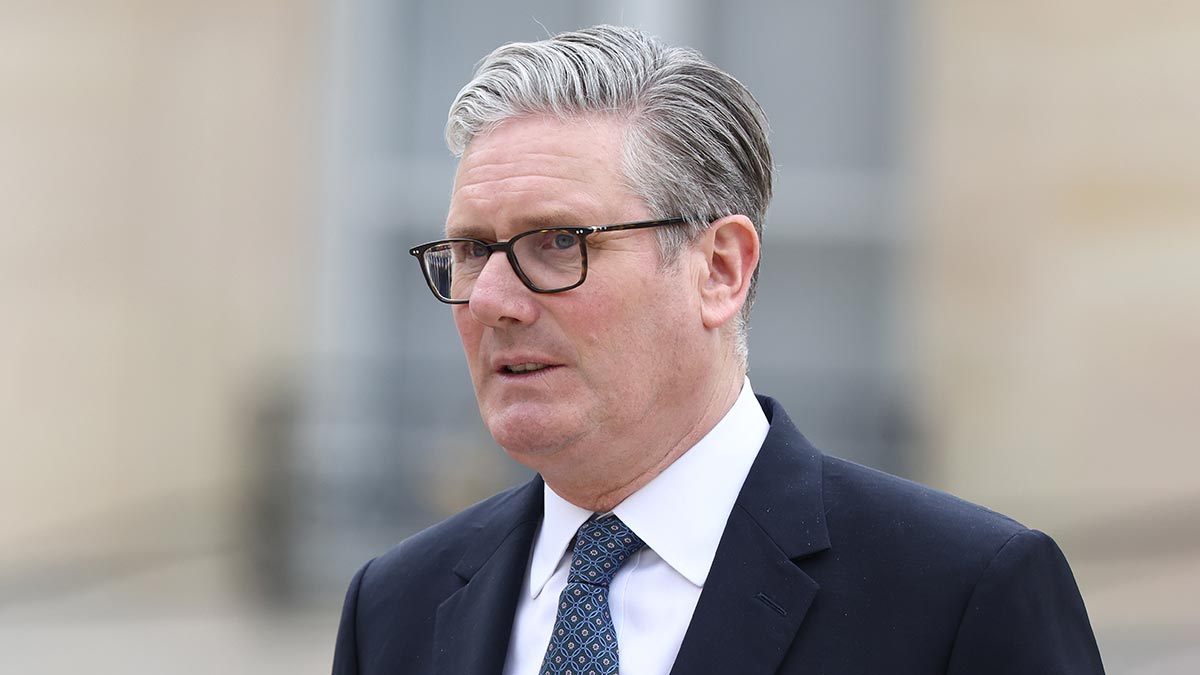
It was a week from hell. For British prime minister Keir Starmer, setbacks came in threes and on three fronts—defence, economy and politics. A week earlier, no one would have expected controversies to send the boring lawyer-turned-PM on a roller-coaster ride, desperately clinging on to his seat. Opposition Tory leader Kemi Badenoch declared Starmer “is incompetent or lying. All roads lead to his resignation”.
The third scandal was the worst. Like the grim reaper, sex offender Jeffrey Epstein struck from his grave—again. The Guardian revealed Epstein’s buddy, Peter Mandelson, had failed his “security vetting” in 2024 when Starmer appointed him Britain’s ambassador to the US. Last year, Starmer had sacked Mandelson after Epstein files showed Mandelson had borrowed money, even leaked sensitive documents to Epstein when he was a minister. Following police investigations, Mandelson was arrested and bailed this February.
But The Guardian’s latest disclosure contradicted Starmer’s earlier claim in parliament that Mandelson was “duly” vetted. Lying or misleading the parliament warrants resignation. To pre-empt this dire outcome, Starmer quickly sacked his top foreign office official, Olly Robbins, for the “unforgivable” lapse of not informing him about the vetting failure. But this only inflamed opposition leaders who accused Starmer of scapegoating a bureaucrat to save his own skin. Now they demanded his scalp. Epstein and Mandelson were not Starmer’s friends. The twice-sacked Mandeslon was controversial, but also a star, close to Donald Trump and acclaimed for successfully rebranding the stodgy Labour party that catapulted Tony Blair to power in 1997. But Starmer appointed Mandelson to this all-important ambassadorship without the vetting verdict.
The Epstein nightmare erupted immediately after a scathing strategic review by the government-appointed George Robertson, a former defence minister. He declared Britain’s security was “in peril” because the nation was spending way more on welfare than defence. Accusing the government of “corrosive complacency” he said Britain was “underprepared, underinsured and under attack”. Then came the IMF stinger that Britain’s economy would perform the worst among developed economies. It blamed high taxes and Iran war for exacerbating Britain’s low growth and high prices.
Volatility is now a global contagion. Starmer won a landslide victory in 2024, but since then, domestic drift dashed his popularity with bungles and bumbles, bad decisions and worse implementation. But the Iran war revived his fortunes because he stood up to Trump’s threats and insults. Starmer refused to drag Britain into Trump’s ‘illegal’ war which had neither “clear purpose nor exit plan”. Voters liked Starmer showing some spine. As Trump’s war tantrums, bullying, contradictions and unreasonable demands rose, so did Starmer’s popularity.
But he now faces a credibility crisis. Opposition parties clamour, but they lack the majority to eject Starmer. Labour MPs can, but they are inclined to retain Starmer—at least until after the important Scottish, Welsh and English council elections on May 7. Labour expects an electoral thrashing and fear Starmer’s removal now would aggravate internal turmoil. Some MPs say the Trump-induced geopolitical turbulence favours Starmer’s steady hand. Besides, ‘There Is No Alternative’—TINA, an acronym first coined for Iron Lady Margaret Thatcher.
Britain has seen iconic prime ministers like Churchill, Disraeli and Gladstone. Today, Labour has no alternative to its uncharismatic prime minister. If Starmer clings on, he will in true British tradition, “keep calm and carry on”—to what? Britain is important. But from the top, it has slipped to a “middle power”. In these messy times, Britain’s challenge is not to become a muddling, middling power.
Pratap is an author and journalist.
