



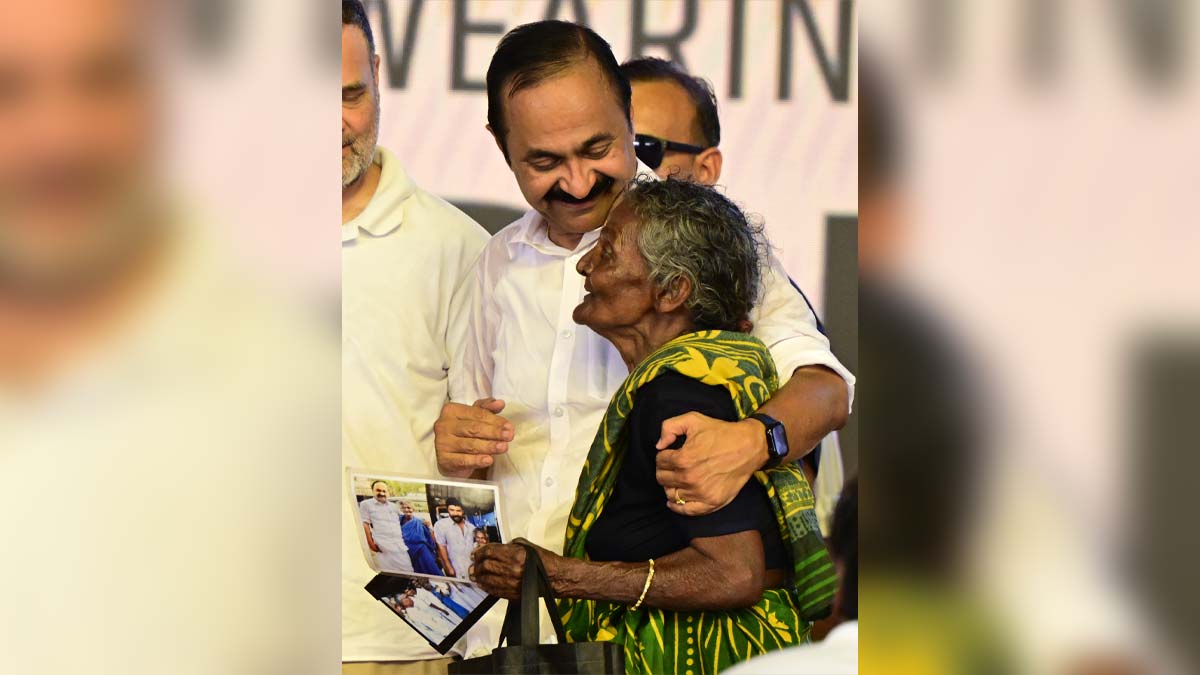
Long before V.D. Satheesan entered mainstream politics, a defining moment in his public life unfolded in a magistrate court. His first independent case as a young lawyer involved Shanmukhan, a poor shop employee accused of creating disturbance on the road. Shanmukhan insisted that he had done nothing wrong and refused to pay a fine after allegedly being humiliated by a police officer. For Satheesan, the case became less about legal procedure and more about dignity. He argued that a working man could not be harassed simply because he lacked power or money. The magistrate eventually reprimanded the officer and dismissed the case. Though Satheesan refused payment, the worker insisted on paying a small fee before walking away with his self-respect intact.
That early experience perhaps explains the political instinct that continues to shape Satheesan even today. One of the first decisions taken by his 21-member cabinet was to order a reinvestigation into allegations of police brutality during the 2023 ‘Nava Kerala Sadas’ outreach programme of former chief minister Pinarayi Vijayan in Alappuzha. At the heart of that controversy, too, was the question of dignity: the alleged assault and humiliation of Congress workers protesting by the roadside at the hands of members of Vijayan’s security detail, incidents that Vijayan himself later notoriously defended as “rakshapravarthanam” (a life-saving act).
Notably, the Congress fielded one of those victims, A. D. Thomas, from the Alappuzha constituency. Today, the 30-year-old is among the youngest legislators in the assembly. “I expected this decision in the first cabinet meeting itself because there were numerous young people who became victims of police brutality and state repression, many of whom were effectively pushed to the margins of life,” said Thomas. “Taking action against such incidents is not retaliation. Rather, it is about protecting democratic rights, including the right to hold opinions, organise protests and agitate.”
Another major announcement following Satheesan’s first cabinet meeting acknowledged a long-running women-led agitation that had rocked the previous government. The UDF government announced a Rs3,000 hike in the honorarium of ASHA workers, taking their monthly pay in Kerala to Rs12,000. Welcoming the decision, S. Mini, state vice-president of the Kerala ASHA Health Workers Association, said the new chief minister had recognised the contribution of deserving workers.
“This shows that the government is at least addressing ordinary people,” she said, adding that the previous government, although it eventually increased the honorarium by Rs2,000 after sustained pressure, had largely been unwilling to seriously engage with the issue. “Women workers were struggling in places lacking even basic facilities, but the protest was dismissed as unnecessary, mocked at and branded in different ways,” she said, while adding that the agitation would continue until the new government accepted their original demand of Rs21,000 per month.

However, Kerala remains a fiscally stressed state. According to the latest Comptroller and Auditor General report, the state’s revenue deficit increased from Rs9,226.28 crore in 2022-23 to Rs18,140.19 crore in 2023-24, a rise of 96.61 per cent, while the fiscal deficit climbed from Rs25,554.54 crore to Rs34,258.05 crore during the same period, an increase of 34.06 per cent. In simple terms, the state is borrowing even to meet day-to-day expenses.
Incidentally, when Satheesan visited veteran Congress leader and former chief minister A. K. Antony after the Congress selected him for the chief minister’s post, Antony reflected on how he, too, had come to power in 2001 with a similarly sweeping mandate, only for the initial phase of public acclaim to gradually give way to criticism and ridicule as the state’s financial troubles deepened.
Economists, however, believe there is still considerable scope for a government with sufficient political will to improve Kerala’s financial position. Prof. K. J. Joseph, director of the Thiruvananthapuram-based Gulati Institute of Finance and Taxation, described Kerala as “a land of paradoxes where the people are rich, but the government is poor”. Economist Mary George argued that Kerala’s fiscal crisis was as much a governance problem as a revenue problem. She pointed to massive leakages in sectors such as forest revenue, quarrying and the gold trade, alleging widespread illegal operations, weak enforcement and poor tax compliance. According to her, rampant GST evasion in retail commerce, particularly in the gold sector, deprived the state of substantial revenue. She also flagged routine fund diversion, weak internal auditing and political interference in financial oversight as major structural issues, arguing that the absence of transparent and reliable audited accounts has weakened Kerala’s credibility. George, however, added that visionary leadership could still change the state’s fortunes.
Tony Chittettukalam, author of Neranubhavangal, a biographical account of Satheesan, said the new chief minister was well equipped to take on the challenge. Chittettukalam, who also produced the interview series Dialogue with VDS, hosted by Satheesan, said he possessed a rare combination of intellectual depth and openness to expert opinion. In each episode, Satheesan engaged with specialists from different fields, reflecting both his willingness to study issues in detail and his humility in seeking guidance on subjects beyond his expertise.
Recalling their time working together, Chittettukalam said Satheesan would meticulously prepare questions for every guest, no matter how busy he was. “Even informal conversations were approached with preparation,” he said, describing it as part of Satheesan’s belief that every public engagement demanded seriousness and respect.
The financial challenges facing the state could, however, affect the new government’s core social agenda, which had already been broadly outlined through the UDF’s five-point programme. Significantly, the new government moved to implement two of those promises in its very first cabinet meeting. The cabinet decided to introduce free travel for women in Kerala State Road Transport Corporation buses from June 15, and also approved the creation of a separate government department exclusively for senior citizens, the first such initiative in the country.
As the government moves ahead with more guarantees, the fiscal situation could constrain its ambitions. G. Pramod Kumar, formerly with the UNDP Asia-Pacific, cautioned that another major promise, a Rs25 lakh health insurance scheme for all families, might prove far more difficult to implement. “Such a scheme would require enormous financial and technical resources. Kerala’s existing public health system would need a complete overhaul for it to work effectively. Otherwise, it risks remaining merely a policy announcement riddled with operational loopholes,” he said.
Over the past decade, Kerala’s public health sector has witnessed a decline, Pramod noted, while health care has become increasingly dominated by large corporate hospital chains backed by international private equity funds. Since their primary focus is profit, he argued, the Satheesan government could face a major structural challenge in reforming the sector.
Dr Sreejith N. Kumar, who was among the five-member health commission that drafted the UDF’s health care blueprint ahead of the elections, said the new government was expected to place strong emphasis on preventive health care as lifestyle diseases, malignancies and trauma-related illnesses have emerged as major concerns in the state. According to Sreejith, Satheesan himself follows healthy lifestyle practices, including regular exercise and disciplined eating habits, and is therefore likely to take a personal interest in strengthening preventive health care initiatives.
Pramod, meanwhile, identified education as another neglected yet urgent sector, despite accounting for one of the largest allocations in the state budget, much of which goes towards salaries and pensions in government and aided institutions.
“The entire system has to be revamped, and a lot of money can be saved there,” he said, while stressing the need to improve educational quality. Pointing out that many colleges, particularly in science streams, suffer from low enrolment, Pramod said the government would eventually have to consolidate institutions, abolish redundant posts and rationalise expenditure. “However, such reforms would face enormous resistance from community organisations and political interests that have historically influenced Kerala’s education sector.”
