



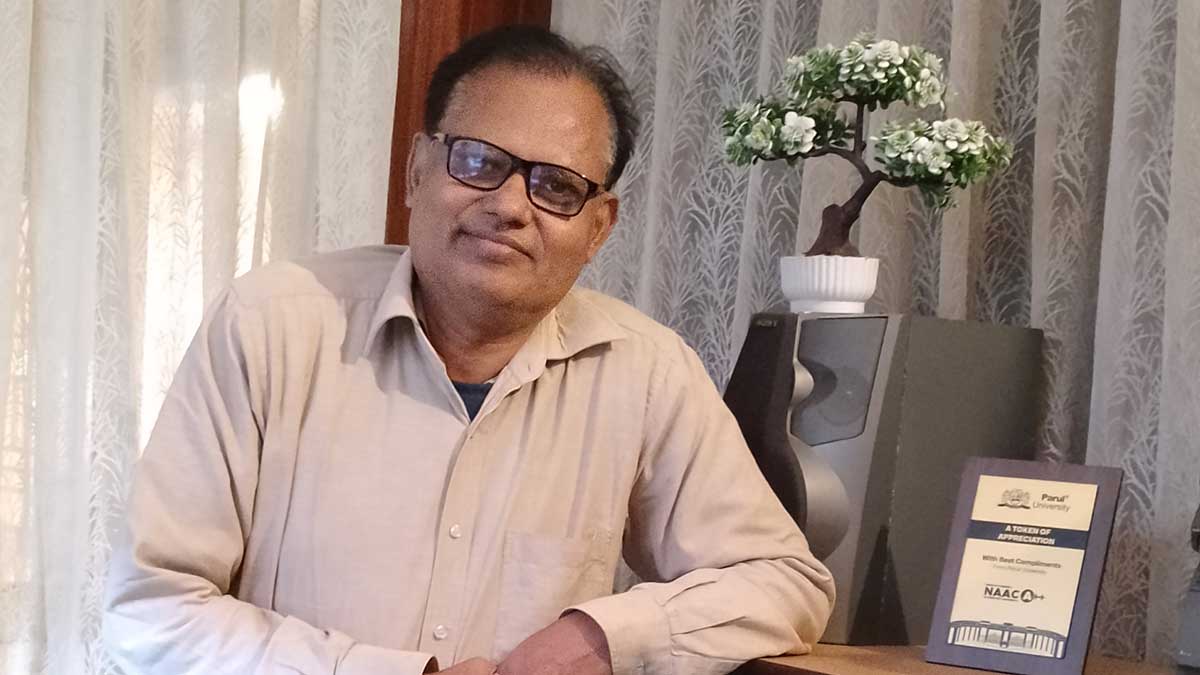
Interview/ Vivekanand Jha, Writer
Well-known author, academician and political commentator, Vivekanand Jha has been deeply concerned about Bihar’s social and cultural identity. As the state goes to the polls, the proud Bihari speaks about what the state needs. Edited excerpts from an interview with Jha:
Q/ What can literature offer for the development of Bihar?
I was born and brought up in the City of Joy, where in college I was subjected to incessant taunts. For years together, I was in deep distress, unable to duck the pejorative term Mayo, which was hurled at people from Bihar.
It took me years to rediscover my illustrious moorings. I realised I hailed from Mithila, the birthplace of the great sage Yajnavalkya, and from a land consecrated by Gautama Buddha. This realisation led to my evolution and later to my book, Yes, I Am Bihari. The book reaffirmed the Bihari identity and pride.
Unfortunately, Biharis are scattered across the globe. They dare not stay within their own state, because Bihar lacks industrial infrastructure for employment generation.
Education is the only means of salvation for Biharis. Bihar must progress as an educational hub. Remember, most of the IAS officers are from Bihar. In fact, everywhere you find Biharis excelling in education and administration.
Q/ But the Bihari youth are hooked to digital devices.
Along with rapid technological growth, there is a corresponding degeneration in the intellectual level of the younger generation. When information is literally at your fingertips, your thinking ability begins to decline. The mind no longer feels the need to explore or question deeply.
This has led to an intellectual emptiness. If we are not aware of our moral roots or heritage, of what use is technological advancement?
Q/ How do you assess the performance of the Nitish Kumar government?
I am completely apolitical. But I must acknowledge one very big change. A most visible transformation began with the Golden Quadrilateral highways project. It is evident to anyone travelling through the state.
When the director general of the Bihar Museum, Anjani Kumar Singh, was the chief secretary of Bihar, he provided bicycles to schoolgirls. That single decision became a social revolution. It encouraged thousands of girls to come out of their homes and pursue education.
I remember being mocked for being a Bihari in the early 2000s when I lived in Delhi. People associated Bihar with backwardness and political chaos. That stigma has significantly diminished. But still, there are flaws and deficiencies in governance.
Q/ What have been the government’s major achievements and shortcomings?
The greatest achievement is the restoration of dignity for Biharis. Earlier, Bihar was an object of ridicule, especially during the chaotic Lalu era. Nitish Kumar’s governance, despite imperfections, instilled a sense of order and respectability. The improvement in infrastructure and education deserves credit. Yet, shortcomings remain—unemployment, corruption and the slow pace of industrialisation still trouble the state. But, overall, the shift from ridicule to respect has been monumental.
Q/ Does the current political leadership possess the vision and capability to lead Bihar towards modernity?
If the current dispensation continues, Bihar will move forward, though progress will be gradual rather than spectacular. Nitish Kumar, despite his advancing age, still represents stability, experience and a certain administrative balance.
If his government retains power, and the alliance with the Union government remains intact, the benefits of major national schemes will continue to reach the grassroots. The results of such welfare programmes are already visible in sectors like education, rural infrastructure and women’s empowerment.
That said, Bihar still faces deep-rooted constraints—structural, economic and psychological. A significant part of the challenge lies in the mindset of the people. With growing exposure to the outside world—thanks to migration, digital connectivity and social mobility—the attitude of Bihari youth is changing. There is a quiet revolution taking shape in their outlook, and that gives me hope.
Q/ How do you envision Bihar ten years from now?
If the government sincerely connects with the pulse of its citizens, particularly the youth, then Bihar has every potential to reclaim its historical grandeur. The youth of today are far more aware, ambitious, and technologically equipped. If this energy is channelled through proper education, innovation and skill development, then within a decade Bihar can evolve into a modern, knowledge-driven state. The foundation already exists—what we need is vision, continuity and the courage to reform outdated systems.
In Bihar, especially the Mithila region, I have observed a transformation among the youth. They are aspirational. They want job-oriented governance and opportunities within their own state. If political leaders respond sincerely to this aspiration, Bihar will emerge as one of India’s leading states in the next decade.
Q/ How does Bihar’s political environment affect its intellectual and cultural life?
Politics, whether we admit it or not, deeply influences the intellectual and cultural ethos of society. In Bihar, this influence has been both constructive and corrosive.
For decades, political turbulence stifled creativity and independent thought. Many intellectuals either withdrew from public life or were co-opted by political agendas. Literature and cultural expression, instead of being instruments of awakening, often became reflections of frustration.
But it is slowly changing. The new generation of writers, thinkers and artists—particularly from Mithila and Patna—are reclaiming their voice. They are no longer confined by the boundaries of caste politics or regional pessimism. They are using literature, digital media and education to rebuild the intellectual identity of Bihar.
When politics becomes responsible and transparent, it provides the environment in which culture and intellect can thrive. But when politics degenerates into power games and vote-bank manipulation, it impoverishes the moral and cultural fabric of society.
Bihar’s destiny, therefore, is intertwined with the quality of its political leadership—and with how deeply that leadership respects the thinkers, writers and educators who shape public consciousness.
Thakur is an author and educator.
