



Bihar is often seen as one of India’s less developed states. But, for Biharis, their land is a source of immense pride, built on ancient civilisations, brilliant minds and transformative achievements.
For instance, just 30km from Patna, the village of Taregna—literally “counting of stars”—once stood at the centre of astronomy. Around 499 CE, a young Aryabhata, barely in his twenties, gazed into the cosmos from this humble village. He charted the heavens with simple instruments and a mind centuries ahead of its time.
He unravelled the true nature of eclipses (debunking the belief that they were caused by supernatural forces) and identified earth’s axial rotation as the cause of day and night. He calculated the length of a year, with startling precision: 365.2588 days. One can almost picture him under the night sky, scribbling equations by lamplight, stars above and silence around.

Taregna, sadly, is now on the edge of obscurity. A recent visit by a team from IIT Patna’s department of cosmology uncovered traces of ancient instruments—Aryabhata’s own, perhaps. But a suitable memorial to him is yet to be thought of.
Bihar’s post-independence story has often been one of missed opportunities. The state failed to industrialise or build the infrastructure needed for sustained growth. Roads remained poor, irrigation unreliable and power supply irregular. As Punjab capitalised on its agrarian strengths, Bihar lagged behind, its farmlands vulnerable to seasonal extremes.
The soul of Bihar lies in its lush, fertile plains sustained by the rivers Ganga, Sone and Gandak, which occasionally test its resilience through floods.
Once home to thriving sugar and paper mills, Bihar’s industrial base collapsed because of inadequate governance, shortsighted policy and underinvestment. This economic stagnation spurred a large number of youth to seek education and employment elsewhere.
The creation of Jharkhand in 2000 dealt another blow. Much of Bihar’s mineral wealth was transferred to the new state. Deprived of coal and iron reserves, Bihar was unable to power new industries. Despite improvements in roads and communication, economic development remained uneven because of weak political leadership.
Education, once a hallmark of Bihar’s identity, also faltered. The ancient Nalanda university drew scholars from across Asia, but Bihar’s educational institutions have struggled in modern times. While states like Tamil Nadu and Maharashtra invested heavily in human capital, Bihar’s schools and colleges deteriorated. Recent establishment of institutions like the IIT and the All India Institute of Medical Sciences in Patna, and another AIIMS branch in Darbhanga, offers signs of renewal. But they remain steps, not leaps.
The maharaja of Darbhanga donated land and infrastructure to Patna University and helped establish Lalit Narayan Mithila University and Kameshwar Singh Sanskrit University—institutions that continue to shape higher education in the state. But youth seeking a better future continue to migrate to other states.
Bihar is not short on potential. It has fertile soil, cultural depth and an enduring spirit. Today, Biharis dream not only of revival but of a renaissance—their gaze turning towards a better future.
HIDDEN CULTURAL SPLENDOUR
Bihar’s lesser-known festivals reflect its deep-rooted tradition. They rarely make national headlines, but these celebrations tell unique stories of emotional depth and resilience.
Take Jitia, for instance—a mother’s dawn-to-dusk fast for the well-being of her children, rooted in the legend of King Jimutavahana, who sacrificed himself to save a serpent couple’s offspring. In Mithila, mothers chant ancient hymns, abstain from even a drop of water and offer prayers that bridge generations.
Similarly poignant is Madhushrawani, celebrated by newlywed women. It begins with a ritual fast, which is followed by a public celebration. Entire villages gather to share food, exchange blessings and narrate inspirational tales of marital harmony.
On the full moon night of Ashwin, the Kojagara festival begins with an invocation of prosperity. Women stay awake, offering prayers to the goddess Lakshmi, while families share delicacies made from makhana (foxnut), which is widely grown in ponds in the Mithila region. Under the night sky, they exchange paan and supari, strengthening friendship and familial bonds.
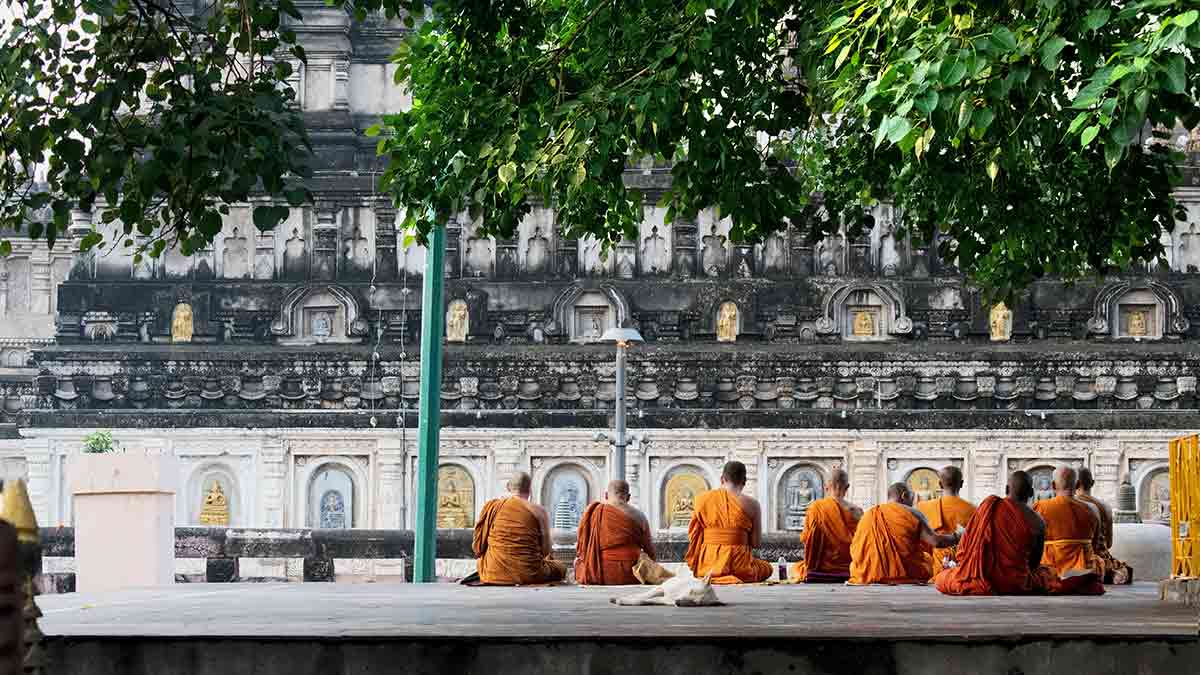
Bihar’s cultural fabric is not only festive; it is also deeply spiritual. Home to Mahavira and the Buddha, the land remains steeped in ancient wisdom. Many temples now lie in obscurity or ruins, but they whisper stories of devotion that have withstood time. In Mahishi, for instance, the 14th-century Kandaha Sun Temple, built by King Narsingh Dev, holds within its sanctum a granite idol of the sun and a miraculous well said to heal skin ailments. Local legends speak of bronze and panchadhatu idols hidden there during invasions. Bihar is also home to one of India’s oldest Hindu temples—the Mundeshwari temple in Kaimur district, which was built 2,000 years ago.
Jai Mangla Gadh in Begusarai, near the Kanwar Lake Bird Sanctuary, is one of the 52 shakti peeths where spiritual energy and ecological beauty intertwine. Migratory birds circle the ancient temple, and the winds carry chants across the wetlands. The site holds vast tourism potential as a confluence of ecology and devotion.
TIMELESS TALES OF GENIUS
Bihar has given India some of its most luminous minds—poets, philosophers and thinkers. Among the most legendary is Kalidasa, one of the greatest Sanskrit poets and playwrights. His birthplace remains debated, but many scholars believe he was connected to Bihar, particularly during the Gupta era in Pataliputra. His masterpieces, Abhijnana Shakuntalam and Meghaduta, evoke a landscape of pristine rivers, tranquil forests and spiritual serenity—imagery that reflects the natural and cultural richness of Bihar.
Bihar’s intellectual tradition extends into the realm of philosophy. Udayanacharya of Kariyan village in Samastipur was a formidable logician and champion of the Nyaya school of Indian philosophy. His works, like Nyaya Kusumanjali, remain seminal texts.
Equally iconic is the debate between Sankara and Mandan Mishra in Mahishi, Saharsa—a battle of wits between Advaita and Mimamsa philosophies. When the contest ended in a stalemate, Mandan’s wife, Bharti, entered the fray, posing questions on household life and ethics. This intellectual debate—vigorous, civil and profound—remains a storied moment of Indian philosophy and of women’s status.
Bihar continued to birth literary giants in modern times. Ramdhari Singh Dinkar, the rashtrakavi, gave voice to India’s independence movement with fiery poems like ‘Rashmirathi’ and ‘Parashuram ki Prateeksha’. His verses were not just lyrical—they were weapons of resistance.
Phanishwar Nath Renu, with his landmark novel Maila Anchal, brought to life the beauty and struggles of modern Bihar. Acharya Surendra Jha ‘Suman’ left a deep mark on Maithili and Sanskrit literature while serving as a parliamentarian. Another powerful voice was Baidyanath Mishra Yatri, whose poems in Hindi and Maithili addressed political unrest and social injustice, making him a true poet of the people. Bhikhari Thakur emerged as Bhojpuri’s Shakespeare, with plays like Bidesiya giving voice to migrant workers and the marginalised. His plays, rich in social commentary, are still performed across Bihar.
ART OF THE MATTER
Bihar’s vibrant spirit shines through its art and cinema. The centuries-old Madhubani paintings of Mithilanchal—once simple wall adornments—have evolved into a celebrated art form. Pioneering artists such as Sita Devi and Ganga Devi have elevated it to the global stage.
On screen, Bihar’s stories find many voices. Maithili films like Mamta Gaave Geet (1981) beautifully showcased the richness of that language and culture. Its heartwarming songs, infused with traditional folk melodies, became a staple in homes and celebrations across the region. The first-ever Bhojpuri film, Ganga Maiya Tohe Piyari Chadhaibo (1963), tackled themes of social justice and family values, establishing a strong connection with the audience. Hindi cinema has also found inspiration in Bihar’s diverse stories and landscapes. Prakash Jha’s hard-hitting dramas (Gangaajal, Apaharan, Rajneeti) and biopics like Manjhi: The Mountain Man (2015)—about a man who single-handedly carved a path through a mountain using only a hammer and chisel—draw on the region’s grit and grandeur. Stars such as Shatrughan Sinha and Manoj Bajpayee have brought Bihari sensibilities onto the national stage, their performances rooted in the state’s complex social tapestry.
Today, Bihar is reclaiming its legacy as a centre of learning and innovation. Coaching hubs in Patna drive the dreams of thousands of civil service aspirants. Upgraded roads, electrification, rural connectivity and welfare schemes, like the Mukhyamantri Kanya Utthan Yojana, signal progress.
But challenges such as poverty, unemployment and migration remain.
The 2024–25 Union budget laid out a bold vision for Bihar’s resurgence, blending economic growth with cultural revival. With a record allocation of Rs58,900 crore, the budget favours infrastructure, energy, flood control, tourism, education and health care—areas that are critical to attracting investment, creating jobs and reversing migration.
Key projects include Rs26,000 crore for new roads and a major Ganga bridge to boost connectivity; Rs21,400 crore for a 2400MW power plant to enhance energy access; and Rs11,500 crore for flood management to safeguard agriculture. Tourism will benefit from upgrades to heritage sites like the Vishnupad and Mahabodhi temples, while new medical colleges and airports signal the commitment to improving lives.
The budget reflects the aspirations of a youthful Bihar—better education, job opportunities and a more equitable future. Programmes supporting skill development, entrepreneurship and women’s empowerment aim to bridge rural-urban divides. Initiatives like the Bihar Innovation Lab and the Smart Village Programme are digitising public services and furthering e-governance, telemedicine and digital education. Efforts to revive Madhubani art and support local artisans blend tradition with innovation.
A clear political vision and a mighty cultural revival are essential for the great future that Bihar truly deserves.
Thakur is a writer, translator and educationist.
