



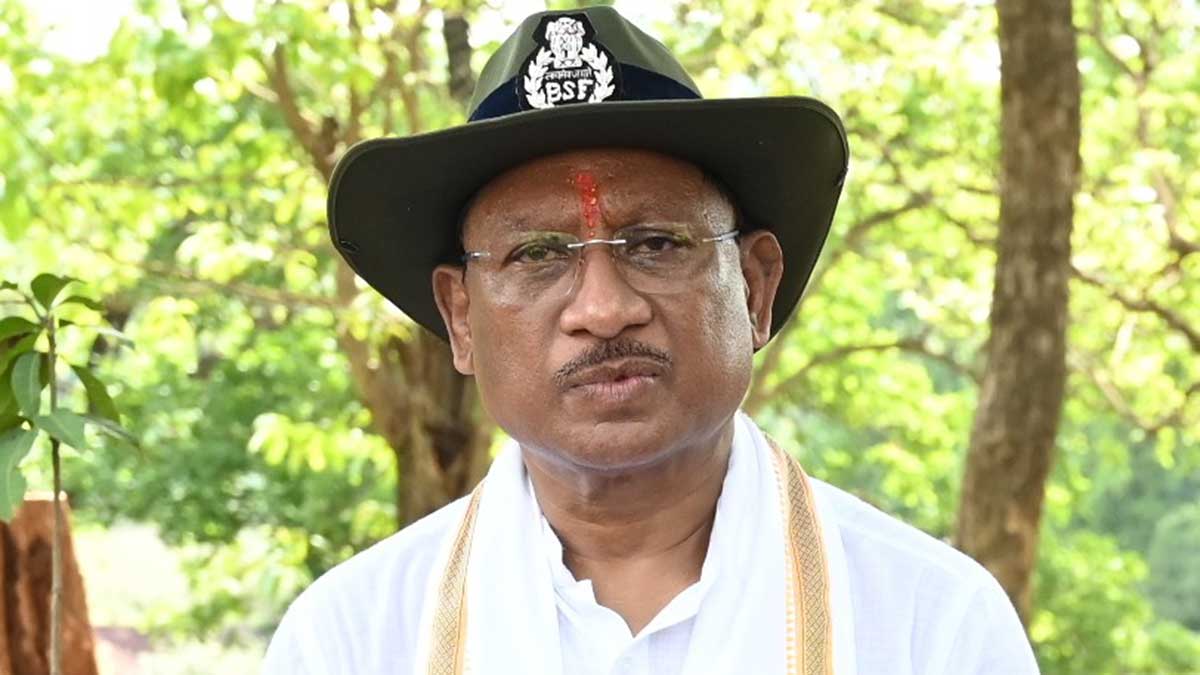
Interview/ Vishnu Deo Sai, Chhattisgarh chief minister
When Chhattisgarh was carved out of Madhya Pradesh in 2000, it emerged as a state rich in forests, minerals and water resources, but burdened with sharp developmental divides owing to its difficult terrain and limited administrative reach. These gaps soon turned it into a safe haven for Maoists, who, after being driven out of Andhra Pradesh, entrenched themselves in the state’s tribal belts. Taking cover in the dense forests and remote villages of a dozen districts cut off from governance, the insurgents turned Chhattisgarh into the epicentre of Maoist violence.
But sustained security operations over the past decade, coupled with development initiatives and welfare schemes, have steadily blunted the Maoist threat. Road connectivity, health centres, schools and mobile networks have drawn the once-isolated villages into the governance fold.
The Maoists have been pushed to the margins in Bastar, Bijapur, Dantewada, Sukma, Kanker and Narayanpur—once the heartland of the insurgency. The induction of 1,500 surrendered Maoists into the District Reserve Guards (DRG) has been a game changer. Their first-hand knowledge of Maoist tactics and terrain has given security forces a decisive edge in operations, resulting in successes such as the neutralisation of top leader Basavaraju early this year.
The close alignment of the state government under Chief Minister Vishnu Deo Sai with the Union home ministry has boosted the counterinsurgency strategy. An ambitious target has been announced: a Naxal-free Chhattisgarh by March 2026. In an extensive interview with THE WEEK, Sai said meeting the target required security goals to be matched by visible progress on the ground—in terms of infrastructure, education, jobs and industrial growth.
“Chhattisgarh is rebranding itself as one of India’s most attractive investment destinations,” he said, “securing over Rs6.65 lakh crore in proposals under its new Industrial Development Policy 2024-2030.” Sai said the state’s strategy prioritises security and development, “but remains open to dialogue under clear conditions—complete renunciation of violence and acceptance of the Constitution”. Excerpts from the interview:
Chhattisgarh has often been associated with naxalism in national discourse. How is the narrative shifting from security concerns to development milestones—particularly in Bastar?
Security operations have yielded remarkable results with 445 naxals having been neutralised, 1,500 surrendered, and 1,552 apprehended. Camps have been established in far-flung villages in the Bastar region to serve as gateways for welfare delivery. Through the Niyad Nellanar Yojana, nearly 1.11 lakh people in 327 villages across five districts of Bastar have gained access to job cards, PM Awas Yojana houses, schools and health centres.
Connectivity in Bastar has significantly improved. The Road Requirement Plan (92.6 per cent of 1,800km completed) and the Road Connectivity Project (72.2 per cent of 2,327km) now connect remote villages to markets and services. The Raipur–Visakhapatnam Expressway will connect Bastar to ports and industrial centres. Rail lines link Jagdalpur to Bhubaneswar, Rourkela and Visakhapatnam, while air routes connect Bastar to Hyderabad, Bilaspur and Jabalpur.
Around 90,000 youth have been trained under the Mukhya Mantri Kaushal Vikas Yojana, and 39,000 have found jobs. Bastar’s natural and cultural heritage is being promoted for tourism—Chitrakote and Tirathgarh falls, Danteshwari temple and Bastar Dussehra [are part of] the ‘Destination Chhattisgarh’ campaign. Dhudmaras village was recognised by UNESCO for sustainable tourism. New medical colleges are being established in Kondagaon, and schools have reopened.
The Industrial Development Policy 2024–30 has placed Chhattisgarh among India’s top 10 investment destinations. What were the key policy changes that helped drive this turnaround?
In just six months, we have attracted investment proposals worth Rs6.65 lakh crore—reflecting trust not just in our resources, but in our governance. Several key policy shifts have driven this turnaround. First, the scope of industrial investment has been expanded beyond traditional mining into IT, semiconductors, green energy, health care, pharma and logistics. We have operationalised the ‘one-click single window system 2.0’, enabling all departmental approvals to be completed online. Over 350 structural reforms have been implemented; more importantly, we have made compliance simpler, faster and fully digital.
What mechanisms are in place to ensure that the investments translate into jobs for youth and women?
The investments are not just about capital inflow—it’s about creating sustainable livelihoods. Our industrial policy embeds clear mechanisms to ensure that these investments directly benefit youth, women, small enterprises and marginalised communities. We have mandated local employment linkages across sectors.
Additionally, Nava Raipur is emerging as an employment engine with BPO hubs, livelihood centres of excellence, and a 200-acre MediCity. To support youth and startups, we have developed incubation centres, while land is being offered to MSMEs at concessional rates. Specific provisions have been made for SC/ST communities, women, ex-servicemen, people from Naxal-affected areas and surrendered Naxals.
The policy offers special benefits for industries generating more than 1,000 jobs. Any successes so far? And how are outcomes being monitored on the ground?
We are already seeing strong examples—like Polymatech Electronics’s Rs1,100-crore semiconductor unit in Nava Raipur, which will produce 10 billion chips annually and generate substantial employment, and Rackbank’s 150MW data centre, which is creating a range of tech and support jobs. Sectoral clusters like the MediCity, readymade garment park, and furniture cluster are also designed to generate mass employment.
You inherited a state with strong political divides. How is the state ensuring continuity in governance while pursuing new administrative priorities?
Our government prioritises unity and effective governance, strengthening welfare programs like PM Kisan Samman Nidhi, which supports 26 lakh farmers, and Ayushman Bharat, which covers 87 per cent citizens. Administrative reforms focus on transparency and efficiency, integrating new priorities like tech economy and green energy while maintaining continuity for effective, result-oriented governance.
The DRG has former Maoists playing a key role in counterinsurgency. How has this strategy shaped the morale and effectiveness of ground operations?
Their first-hand knowledge of Naxal tactics and terrain has provided our security forces with a strategic advantage, improving intelligence and operational precision. This has led to notable successes, such as the neutralisation of CPI (Maoist) general secretary Basavaraju. Their involvement has also encouraged further surrenders, with more than 1,500 Naxalites laying down arms.
There have been intermittent public discussions around the possibility of a ceasefire or dialogue with the remaining Maoist factions. Is the government open to engagement under clear conditions, or is the strategy strictly focused on security and development integration?
Our strategy prioritises security and development, but remains open to dialogue under clear conditions—complete renunciation of violence and acceptance of the Constitution. Violence and peace talks cannot coexist. We welcome those who choose peace, but engagement must be transparent and unconditional.
What is the current status of the state’s rehabilitation and resettlement policy for surrendered Maoists and displaced tribal families? Are there concrete timelines and monitoring mechanisms to ensure their long-term integration into the mainstream?
Our rehabilitation policy offers surrendered Naxalites Rs10,000 a month for three years, one hectare in rural areas or four decimals in urban areas, 15,000 PM Awas units, and skill training. Groups with 80 per cent surrender rate receive double the bounty. Naxal-free villages get Rs1 crore for development. Dedicated monitoring cells ensure timelines are met, facilitating long-term integration and self-reliance.
