



Bihar’s political scenario remains distinct from the rest of north India, shaped less by cultural nationalism and more by the intricate dynamics of caste. Unlike Uttar Pradesh, where the BJP has fused hindutva with governance, Bihar continues to function as a laboratory of caste-based political engineering. What eminent political theorist Rajni Kothari once described as the “politicisation of caste” finds its most tangible expression in Bihar.
The recent caste survey conducted in Bihar enumerated over 200 castes and sub-castes, reflecting the extreme social fragmentation of the state. These divisions are not merely statistical; they are deeply embedded in political affiliations. Even within communities considered politically unified, sub-caste distinctions matter. However, over the years, Chief Minister Nitish Kumar and former chief minister Lalu Prasad have managed to foster unified identities among their respective communities of Kurmis and Yadavs.
Every major political player in Bihar has engineered support through targeted caste mobilisation. Leaders like Upendra Kushwaha (Koeris), Chirag Paswan (Paswans), Anand Mohan Singh (Rajputs) and Jitan Ram Manjhi (Musahars) anchor their political identities in caste representation.
The most innovative social engineering has been seen in Nitish Kumar’s outreach to the Extremely Backward Castes (EBCs), also known as BC-1. This group, once referred to as pachpaniya—a collection of 55 scattered and socially disadvantaged castes such as goldsmiths, potters and carpenters—had long existed without political cohesion. By creating policies aimed at their upliftment and representation, Nitish carved out a powerful and loyal vote bank. This transformation, from political invisibility to electoral significance, is a textbook application of Kothari’s theory that caste, when politicised, empowers the marginalised.
Another critical development in Bihar’s politics has been the rise of women as independent voters, particularly among the rural poor. With large-scale male migration for employment, women have become de facto heads of households. This economic independence, though born of necessity, has translated into political agency. Women in these communities often make voting decisions based on their own perceptions of governance, not necessarily dictated by male family members. Nitish has reaped the benefits of this shift, thanks to welfare schemes that directly target female empowerment—from reservations in local governance to bicycle distribution for schoolgirls. In recent elections, the long queues of women voters have been both visible and decisive.
While Prime Minister Narendra Modi enjoys significant personal popularity and policies like direct benefit transfers from the Centre have found appreciation, the BJP’s model of cultural nationalism has not achieved the same traction in Bihar as in other states. Instead, the party has built its support base among upper castes and select OBC groups. In recent years, the Kushwaha community—constituting over four per cent of the population—has emerged as a likely ally. Once aligned with Nitish during the formation of the Samata Party, leaders like Shakuni Choudhary and Jagdeo Prasad were key figures from this community. Over time, however, their allegiance has wavered. In constituencies like Aurangabad, the RJD fielded a Kushwaha candidate who won in a traditionally Rajput-dominated area, signalling a potential shift. Deputy Chief Minister Samrat Choudhary of the BJP also hails from the same caste, further underlining its growing strategic importance.
Among dalits, the Paswans and Musahars have visible leaders in Chirag Paswan and Jitan Ram Manjhi, respectively. However, Charmakars, who may be numerically equivalent to Paswans, remain without a strong representative. This leadership void is being eyed by emerging players like Prashant Kishor, who is crafting a narrative around uniting dalits and Muslims under a new platform. Whether this effort materialises electorally remains to be seen, but it adds another layer to Bihar’s political matrix.
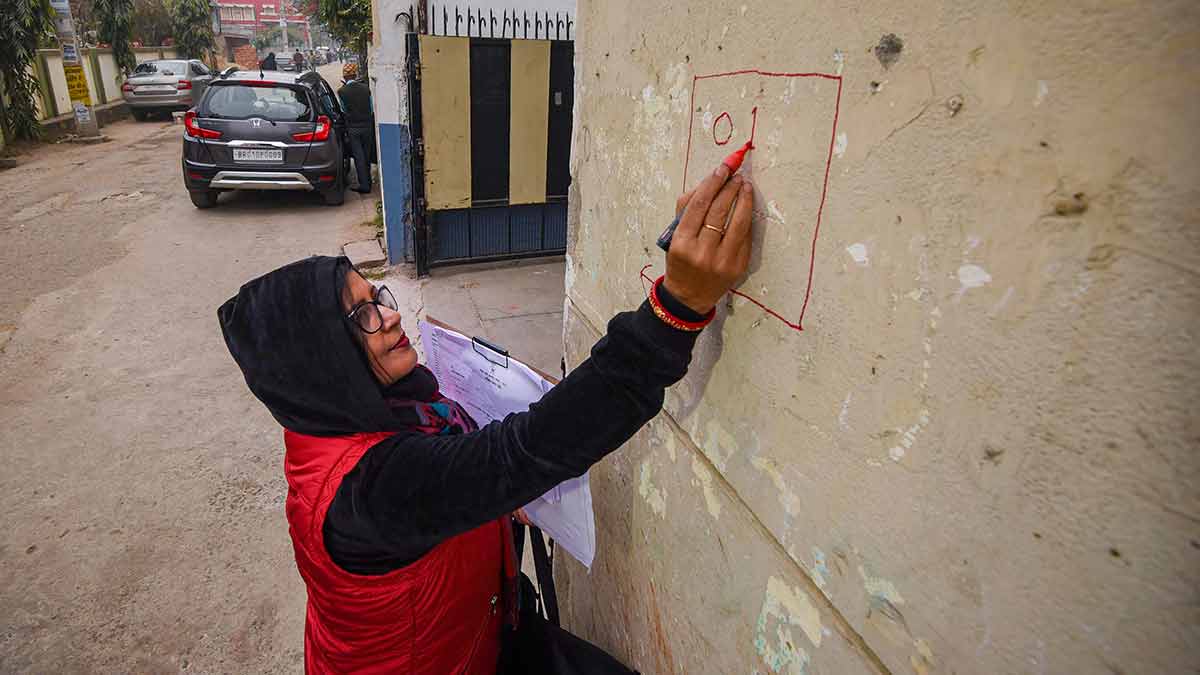
The much-anticipated caste census was expected to spark demands for proportional representation. However, the political response was surprisingly subdued. The RJD, traditionally the loudest advocate for caste-based equity, appeared content to let Nitish and the JD(U) claim credit. Some upper caste groups contested their declining population figures, suggesting a potential reshaping of power-sharing equations if a national caste census were conducted. But as of now, no new vote banks have emerged—only a recalibration of existing ones. The ground remains unchanged, though the narratives have shifted.
Kothari never saw caste as inherently regressive. Rather, he saw its political mobilisation as essential to the deepening of Indian democracy. In his view, caste could serve as a vehicle for participation and bargaining within the democratic framework. Bihar stands as a living example of that thesis. Here, caste is not merely a relic of the past, but a force negotiating the present and shaping the future.
—As told to Pratul Sharma.
Ranjan is professor of political science at Patna University.
