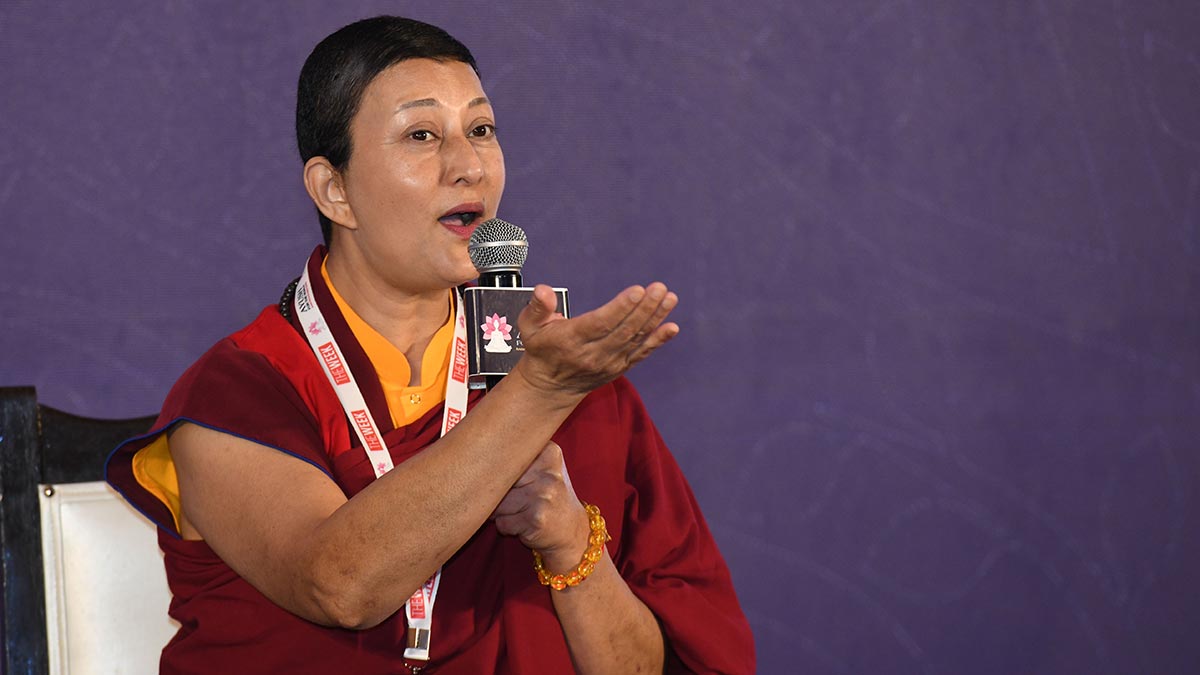
I was born in Coorg and my name was originally Ira, then it went to Aria, and now Drolma is my Buddhist name. I have had several names, but one question has guided my life: what is the real purpose of my life?
I travelled four continents to find happiness. I achieved every goal—modelling, marketing, travelling the world—but there still remained an underlying unhappiness. The Buddha speaks of this: life is unsatisfactory. Even in the most beautiful settings, our minds are never at rest.
We spend our lives accumulating things—a bigger home, a better car—all in the name of happiness, but we forget that death can be just a breath away. In Buddhism, we see death as a reminder of impermanence. Everything you see is impermanent—your car, your house, your loved ones. When we attach ourselves to what will change, we create suffering.
My turning point came after my mother passed. The next day, all that remained was a small bowl of ashes. I asked myself: “What is the purpose?” And something answered: your purpose is to help other beings, to find your own enlightenment.
I entered a three-year retreat, training the mind through mindfulness and meditation. Every sorrow and happiness comes from the mind. We are already divine; we simply need to uncover that nature.
Today, I believe the path is simple: practise gratitude, mindfulness and compassion. When you watch your mind as carefully as you carry a full cup of water, you begin to transform.