



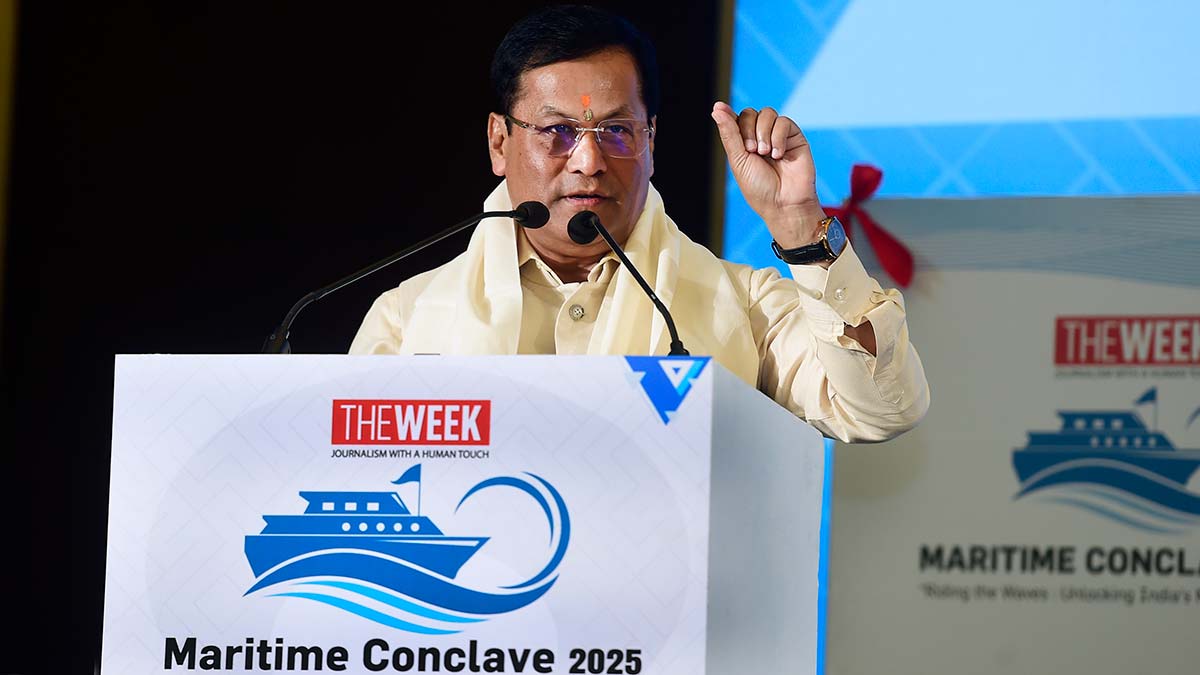
From Union Minister Sarbananda Sonowal’s ancestral house in Dibrugarh district’s Muluk Gaon, near the once-insurgency hotspot of Chabua, ULFA chief Paresh Barua’s house is just a few kilometres away. While they hail from similar socioeconomic milieu in rural Upper Assam, the paths their lives have charted couldn’t have been more apart.
Barua, 68, heads the anti-talks armed guerrilla faction of the ULFA, with hundreds of cadre housed in camps in Myanmar’s jungles. Sonowal is spearheading India’s effort to acquire prosperity through ports, ships and waterways.
Sonowal, 62, is tasked with making India a prime maritime power. Guided by the Maritime India Vision 2030 (MIV 2030) and the Amrit Kaal Vision 2047 (AKV 2047), Sonowal, who had never seen the sea until much later in life, is well on course.
While MIV 2030 has a framework of more than 150 initiatives and 10 key themes that will spur growth in India’s maritime sector through the holistic development of ports, shipping and waterways, AKV 2047 is a blueprint for a total transformation that aims to place India at a key position in the global maritime domain.
Sonowal has galvanised the once-sedate ministry of ports, shipping and waterways into one where much action is happening. His pet projects are positioning ports as engines of growth, making Indian shipbuilding attractive again, and getting shipping to be lucrative. Guided by national security and strategic requirements, new sea routes have been charted and activated.
Travels to foreign destinations to understand cutting-edge developments in the sector have honed his understanding of technology in maritime. From sustainable fishing to greening of shipping, to using 3D printing to make ships, the former student leader is busy at work.
While the maritime sector is key to achieving Prime Minister Narendra Modi’s vision of a Viksit Bharat, Sonowal is also guided by the goal of trying to reclaim India’s historical and rightful place as a leading maritime nation.
