


When he returned to India after a five-year stint with Sun Microsystems in the US in 1997, what struck S.D. Shibulal the most was the stark disparities in society. He could not help but reflect on his own successes—Infosys, which he co-founded, was already the biggest success story in the Indian IT sector, and it had made him a wealthy man. And he could not also help but attribute his success to the invaluable contributions of teachers, parents, friends and mentors. This profound sense of gratitude spurred Shibulal and his wife, Kumari, to ask what would be the most meaningful way to pay back. And education emerged as their clear choice.
The philanthropic landscape in India is rapidly evolving, driven by dedicated individuals and family foundations committed to systemic change. Kumari and Shibulal, both 70, are at the forefront of this movement. Their Shibulal Family Philanthropic Initiatives (SFPI) have been championing the transformative power of education for more than 25 years. Their journey, deeply rooted in personal experience and a strong belief in giving back, exemplifies a “mind and money” approach to philanthropy, actively shaping the lives of thousands across India.
Beyond merely funding projects, Kumari and Shibulal committed themselves to personal engagement. Kumari, in particular, chose to fully immerse herself in the initiatives, with an emphasis on “more mind than money”.
Their conviction in education stems from their own formative experiences. Kumari, born to farmer parents in a village in Kerala, vividly remembers a time when education was not prioritised, with children often absent from school during harvest seasons. Her parents were remarkably progressive for their time. “My mother strongly believed in education,” she says. This parental insistence ensured that Kumari and her siblings received an education, a foundation she credits for her current standing. Indeed, she was among the very few girls in her village to attend college, a significant achievement at a time when most girls were married off after 10th grade.
This personal journey underpins their belief that “education is the only transformative power”, capable of creating upward mobility, enhancing social status and fostering role models. Children from SFPI's Vidyadhan programme, especially girls who become breadwinners, are seen as heroes in their villages. This transformation goes beyond individual achievement, with villagers seeking their advice on education, further amplifying the impact.
Established in 1998, SFPI began by sponsoring the education of just two children from Shibulal’s hometown school in Alappuzha, Kerala. Over the past 25 years, it has grown significantly, developing a range of programmes aimed at empowering underserved communities across India. While the majority of their initiatives focus on education, SFPI also extends its work to health care, social welfare, organic farming, and arts and culture.
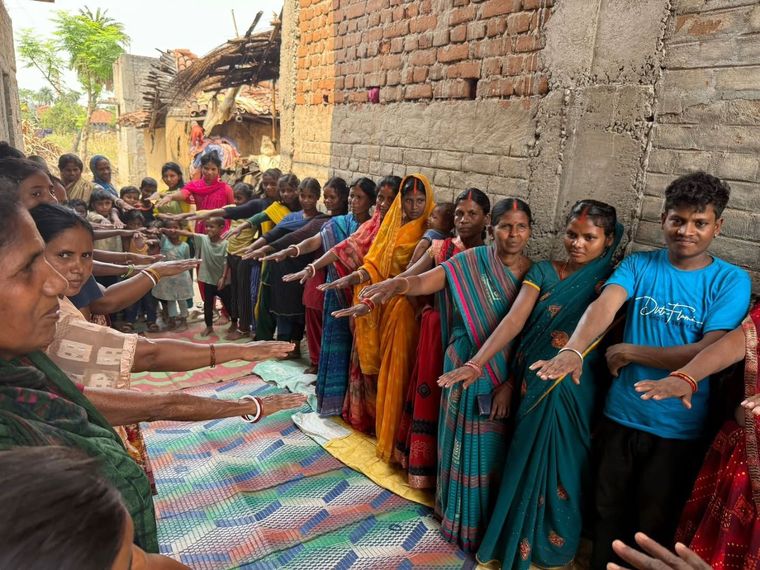 Learning verve: SFPI helps women in Bihar get access to education | Instagram@sfpiorg
SFPI's work addresses many levels and aspects of learning. Vidyadhan, the flagship scholarship programme launched in 1999, for instance, is designed to support the college education of meritorious students from economically challenged families. It provides 80 per cent of the student's education cost and offers mentorship for about five to six years. It has been a phenomenal success, with 5,000 children currently enrolled and some 2,500 having already graduated as engineers, doctors and other professionals. Some recipients have even returned to sponsor new students.
Apparently, the scale of need is immense. Last year, Vidyadhan received more than 1,00,000 applications for 3,000 seats. SFPI aims to increase its annual scholarships from 1,600 to 5,000 in the next four to five years, with a long-term goal to reach 1,00,000 scholarships by 2030.
There are other programmes such as Ankur, a residential scholarship programme catering to school students from underprivileged backgrounds, Shikshalokam, an initiative for strengthening educational leadership at a systemic level, Edumentum, a platform dedicated to building a stronger overall educational ecosystem, Vidya Kreeda, a scholarship programme for the higher education of talented sports players, and Saathiya, a programme specifically designed for youth from economically weaker sections who seek careers in hospitality operations.
Kumari and Shibulal's 25-year journey has provided invaluable lessons and insights into the inherent challenges of organised philanthropy. He highlights the importance of clear alignment of objectives between family foundations/corporates and the social sector partners taking the work forward.
Another significant challenge is the need for “line-of-sight impact” and patience, especially with child education programmes that can take from seven to 15 years to bear fruit.
The biggest challenge, Kumari says, is the necessity of refusing deserving children because of limited capacity. With thousands of them equally deserving, having to say no is “heartbreaking”. This need underscores why partnerships are “important” to increase reach through concepts like 'Each One, Teach One'.
SFPI's philanthropic work is characterised by a structured and scalable approach. “Our approach is always to start small—pilot, then project, then platform, and eventually network,” says Shibulal. This ensures sustainability and allows for wider collaboration, as the scale of societal problems is too large for any single entity to tackle alone.
Kumari and Shibulal’s legacy, initially defined by his professional success at Infosys, has shifted to enabling the success of others—students, teachers and civil society partners. They aim to empower individuals to transform their own lives and become contributing citizens, a legacy far more profound than any corporate achievement. For them, wealth is fundamentally a responsibility. “It should be used wisely and meaningfully,” says Shibulal. “When I meet students, some tell me they want to become philanthropists. I tell them, first study well, support your family, and then think about helping others. Even spending time with someone can be more valuable than just writing a cheque.”