


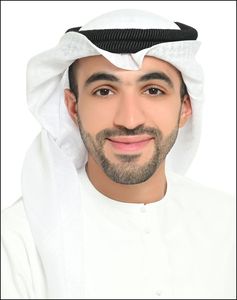
 Abdulnasser Alshaali
Interview/ Abdulnasser Alshaali, Ambassador of the UAE to India
The United Arab Emirates has emerged as the most vocal Gulf state in calling for a strong pushback against Iranian attacks on civilian infrastructure, energy installations, ports, airports and international maritime routes. The UAE is seeking to prevent Iran from creating a new normal by attempting to control shipping through the Strait of Hormuz and forcing the United States to divert military attention to defending Gulf allies. Indian officials monitoring the situation believe the UAE’s position on a ceasefire to end Iranian aggression against Arab Gulf states could be key to any diplomatic breakthrough. In an exclusive interview with THE WEEK, UAE Ambassador to India Abdulnasser Alshaali says Iran’s actions are not only against the UAE, but against all countries, including India, whose households and industries depend on stable energy supplies from the Gulf. “Targeting civilian infrastructure has no justification and reflects a deliberate strategy of aggression,” he says. Excerpts:
Q/ Despite diplomatic claims from Tehran, strikes have continued. How does the UAE interpret the apparent disconnect between stated intent and actions on the ground?
There is no disconnect; what we are witnessing is a consistent pattern of unprovoked aggression and terrorist attacks from Tehran. As of March 29, Iran has launched more than 2,300 missiles and drones against the UAE, including ballistic missiles, cruise missiles and drones. The unprovoked terrorist attacks on March 19 on the Habshan gas facility and the Bab field represented a further dangerous escalation. Targeting critical energy infrastructure is not just an attack on one country; it is a direct threat to regional stability and global energy security. It is economic warfare not only against the UAE but against every country, including India, whose households and industries depend on stable energy supplies from this region. Targeting civilian infrastructure has no justification and reflects a deliberate strategy of aggression. Despite Iran’s words, its actions do not speak of sincerity or peace.
Q/ How do you define the UAE’s position today?
The UAE’s position has been clear and consistent. Before this war began, we made it clear that UAE territory would not be used to launch unprovoked terrorist attacks against Iran. We have acted with restraint, remained measured and held a defensive posture throughout. The challenge is Iran’s continued willingness to target civilian infrastructure and pursue escalation against neighbours across the entire Middle East. What is particularly concerning is that these attacks have not been directed at countries engaged in conflict with Iran, but at its neighbours, including states that have consistently sought stability.

The UAE demands an unconditional cessation of all unprovoked terrorist attacks. Our sovereignty and territorial integrity are not subjects for negotiation. We have chosen restraint deliberately. But restraint should not be mistaken for vulnerability. That restraint exists alongside the full and legitimate right to defend ourselves under the UN Charter. We are also seeing strong diplomatic support from across the international community. Leaders from around the world have been in constant contact with the UAE, and 179 countries have condemned the attacks and expressed solidarity.
This position is also reflected across other international bodies. The International Maritime Organization (IMO) Council, during its 36th extraordinary session, strongly condemned Iranian threats and unprovoked terrorist attacks against vessels and its purported closure of the Strait of Hormuz. The decision, co-sponsored by more than 115 member states, the highest number in the IMO’s history, underscores the global consensus that freedom of navigation in the Strait must be upheld. The international community stands firmly for stability, restraint and the rule of international law.
Q/ What role do you see New Delhi playing in de-escalating tensions?
Prime Minister Narendra Modi personally telephoned His Highness Sheikh Mohamed bin Zayed Al Nahyan in the earliest hours of this war. That conversation preceded any multilateral mechanism or formal diplomatic track. The call was received as an act of brotherhood in the spirit it was intended—an expression of genuine concern from a leader whose relationship with His Highness has been forged over more than a decade of sustained and close personal engagement.

India’s decision to co-sponsor UN Security Council Resolution 2817, alongside 136 nations, elevated that personal solidarity into a matter of international record. India also supported the UAE’s declaration at the IMO Council. Both represented an extraordinary demonstration of global unity and the largest co-sponsorships in the history of their respective institutions.
What makes India’s position distinctive is the breadth of its credibility. India maintains substantive relationships across West Asia and with the broader international community. That diplomatic reach, combined with the scale of India’s strategic and economic weight, means that when New Delhi speaks on matters of regional security, it does so with authority.
Q/ In what ways does India’s strong alignment reinforce the UAE-India Comprehensive Strategic Partnership?
The diplomatic engagement throughout this period has been intensive and continuous. His Highness Sheikh Abdullah bin Zayed Al Nahyan, deputy prime minister and minister of foreign affairs, has maintained direct contact with Dr S. Jaishankar, minister of external affairs. Her Excellency Reem Al Hashimy, UAE minister of state for international cooperation, also met with Jaishankar in New Delhi on March 19. These engagements are of major strategic relevance, with a focus on the safety of Indian nationals, energy security, and how our cooperation can resolve this war.

The UAE-India Comprehensive Strategic Partnership, established in 2017 during His Highness Sheikh Mohamed bin Zayed Al Nahyan’s visit to India as chief guest at Republic Day, elevated the bilateral relationship to one anchored in strategic trust, spanning defence, security, and diplomacy. This January, President His Highness Sheikh Mohamed bin Zayed Al Nahyan visited India once more and both leaders signed a letter of intent for a strategic defence partnership. The institutional infrastructure between our two countries, including open diplomatic channels, growing defence cooperation and the personal bond between leaders, ensure our partnership will only deepen.
The essential message from the UAE’s side has been one of appreciation and reassurance: appreciation for India standing with us when it counted, and reassurance that the safety and interests of Indian nationals remain paramount.
Q/ You have emphasised that the UAE remains “open for business”. How are you sustaining investor confidence, especially among Indian businesses?
Our integrated multi-layer air defence systems are capable of addressing a broad spectrum of aerial threats through long-, medium- and short-range systems, providing comprehensive coverage of national airspace. The UAE has gone through difficult moments before, and each time we have emerged stronger and more resilient. We are agile, measured and clear in our communication, and the fundamentals of our economy and society remain intact.
The UAE’s macroeconomic position reinforces this. Three quarters of the UAE’s GDP is generated outside the oil sector. Sovereign wealth holdings of $2.49 trillion place the UAE third globally, behind only the United States and China. S&P Global’s recent reaffirmation of the AA/A-1+ credit rating, with a stable outlook, was issued with full awareness of the security environment, noting a consolidated net asset position projected at approximately 184 per cent of GDP in 2026 and government liquid assets at roughly 210 per cent of GDP. The banking system holds over AED 5.42 trillion in assets, with capital and liquidity buffers well above international thresholds. The average budget surplus over the past five years has been 5.6 per cent of GDP.
For Indian businesses, the practical infrastructure for continued trade is in place and functioning. On the bilateral front, the UAE and India have the institutional framework, and a decade of deepening trade ties, to manage any possible disruptions and ensure continuity of supply. Most important, there is no change to the UAE’s long-term economic priorities. The UAE–India Comprehensive Economic Partnership Agreement (CEPA) continues to provide preferential market access across sectors. Bilateral trade reached $100 billion in FY 2024–25, with the UAE ranking as India’s third-largest trading partner and second-largest export destination.
President His Highness Sheikh Mohamed bin Zayed Al Nahyan and Prime Minister Narendra Modi committed in January 2026 to doubling that figure to $200 billion by 2032. That target reflected a joint assessment by both leaders of the structural depth of an economic relationship that has matured rapidly since the signing of the CEPA in 2022. In the UAE’s assessment, the current situation has done nothing to diminish the ability to achieve this goal.
Q/ What measures are being taken to safeguard the Indian diaspora in this evolving security environment?
The safety of every individual on UAE territory is our absolute priority. That includes Indian nationals, who are considered part of the very fabric of our country. At the strategic level, the UAE’s integrated defence systems have been protecting the country with remarkable effectiveness. They have intercepted the vast majority of more than 2,300 missiles and drones launched against this country since February 28. That capability is the product of decades of investment and planning, and it has performed to an exceptional standard under sustained operational conditions.
Essential services, including energy, water, health care, telecommunications, transport and food supply, continue to operate with minimal disruption. Strategic food reserves cover four to six months of demand, and market monitoring is in place to prevent unjustified price increases.
As home to more than 200 nationalities, including a large Indian community, the UAE’s strength lies in its diversity and in the trust people place in its institutions. The Indian community has been part of this country’s story for generations. His Highness President Sheikh Mohamed bin Zayed Al Nahyan made that clear when he sat at the bedside of an injured Indian civilian in hospital and spoke of every resident’s safety and wellbeing as a personal responsibility. This reflects how the UAE’s leadership governs.
The safety of Indians in the UAE is a personal obligation that the UAE’s leadership upholds each day.