


 Ankita Dutta
WITH THE AMERICAN attention on Greenland, the island is becoming a flashpoint in transatlantic relations. The history of Greenland is intertwined with that of Denmark. The Nordic outreach to the region dates back to Erik the Red, who founded the first European settlement in the region in the 10th century. However, Greenland was formally colonised by Denmark in the early eighteenth century, although the Inuit societies had inhabited the island for millennia. Throughout the colonial period, Denmark exercised administrative and economic control. In 1916, the US recognised Denmark’s rights to Greenland as part of a deal that transferred control of the Danish West Indies to America.
After World War II, the United Nations pushed for decolonisation in Greenland. In 1953, Greenland became a part of Denmark under the Danish constitution, marking the beginning of a gradual process of political integration. However, this constitutional revision was contested because Greenlanders were not consulted during the process. Between 1953 and the introduction of Home Rule in 1979, Greenland remained under this framework. The period saw the implementation of modernisation policies that integrated Greenland into the Danish economy and global markets.
The Home Rule in 1979 granted Greenland its own parliament and control over some of its domestic affairs. This was followed by the 2009 Self-Government Act which further deepened autonomy and recognised the right to self-determination of the Greenlanders under international law. However, Copenhagen retains control over matters related to monetary policy, citizenship, judiciary, security and defence, constitutional affairs and foreign policy. While Greenland have control over policies related to taxation, education, health, fisheries and natural resources, it relies on Danish financial support and institutional infrastructure. Interestingly, on the issue of self-determination, an opinion poll highlights that “56 per cent of Greenlanders would vote yes to Greenlandic independence if a referendum were held today, 28 per cent would vote no, and 17 per cent do not know what they would vote for”. All Greenlandic political parties are in favour of independence, but they differ on how and when to achieve it.
Socioculturally, Denmark-Greenland relations are a complex mix of citizenship and lingering historical legacies. While Greenlanders are Danish citizens and participate in democratic processes, historical experiences related to forced relocations and assimilationist policies remain ingrained in the psyche of the citizenry. Historical social experiments such as the “Little Danes experiment of 1951”, in which Inuit children were removed from their families to be re-educated as model Danish citizens, led to the loss of their language and culture. Another one was ‘Coil Campaign’, which refers to the forced sterilisation of Greenlandic women and girls by Danish doctors since the 1960s. While Denmark has issued formal apologies for these incidents, many in Greenland believe that the apologies were long overdue, and the demand for justice and reconciliation continues.
In the past few years, Greenland has experienced a revival of Inuit culture, which is marked by the emphasis on its language and traditions. This revival has further fuelled the demand to reclaim Inuit identity and self-determination, with increasing momentum for independence and for building a distinct national future.
Denmark has responded to Greenland with several reconciliation efforts, including an apology for the past injustices and systemic discrimination. A historical investigation by Denmark and Greenland was launched in 2024 to understand “the decisions, actions and processes that have shaped Greenland’s development and the relationship between Greenland and Denmark over the past decades”.
Politically and strategically, Greenland occupies a pivotal position in the Arctic and the transatlantic security architecture. Its location between North America and Europe makes it vital for defence systems, early warning systems and control of North Atlantic sea lanes. The US has maintained a military presence in Greenland since World War II when, after Nazi Germany’s occupation of Denmark, the Americans invaded the island and established military and radio stations. The 1951 defence agreement with Denmark granted the US the right to build and maintain military bases.
With the melting of the Arctic ice and the intensification of great-power rivalries in the region, Greenland’s strategic and resource potential has become salient. The island is rich in natural resources, including iron ore, graphite, palladium, vanadium, zinc, gold, uranium, copper and oil. Greenland ranks seventh in the world for rare earth reserves, with 1.5 million tonnes, and is home to the largest reserves of two rare earth deposits in the world. However, due to the harsh climate, no mining activity has taken place on the island.
President Donald Trump first offered to buy the island from Denmark in 2019 as a “real estate deal”. In his second term, however, he has redoubled his efforts to take over the island despite the push back from Denmark, Greenland and other European leaders. Trump has justified his actions on national security grounds rather than on the island’s untapped resources, as it is situated at a critical chokepoint for surveillance in the Arctic region. He has emphasised that the US needs to “own” Greenland to prevent Russia and China from doing so, and that the US “will do it the easy way or the hard way”.
Despite renewed threats and increasing pressure from the US, Greenland lawmakers have stressed that Greenland is “not for sale”. The Greenlandic government issued a statement saying it could not “accept under any circumstances” the American desire to control the territory. Prime Minister Jens-Frederik Nielsen said, “Greenland is part of the Kingdom of Denmark and part of NATO through the Commonwealth. This means that our security and defence belong in NATO. That is a fundamental and firm line.”
Greenland underscores another sticking point in the unravelling transatlantic relations. While its strategic location anchors it within NATO’s northern defence architecture, on the other hand, the aggressive posture of the US exposes the asymmetry of power in the alliance. Greenland’s evolving relations with Denmark and the US capture emerging shifts in contemporary geopolitics, where geography, competition for resources and great-power rivalry increasingly intersect with questions of alliance, sovereignty and self-determination.
The author is assistant professor, Centre for European Studies, School of International Studies, at Jawaharlal Nehru University, Delhi.

Fires and fables
Greenland is where myth and history fuses. It is the only place in the Nordic realm where Viking myths, saga-literature, folklore, archaeology and even Christianity overlap. Till the medieval times Greenland was the edge of the known world for the Norse. Mothers made naughty children fall in line warning them of the wrath of Kolgrim. Condemned to death by burning in Hvalsey for sorcery in 1407, he was one of many spirits, giants and cursed families that were rumoured to prosper in Greenland by the mainlanders due to its proximity to the unknown.

At the crossroads
Erik the Red, who ended up on a frozen island while on an exploration after being banished from Iceland for murder, called it Greenland merely for brand purposes. He wanted to attract settlers. In 985, he led a fleet of 25 ships to establish Norse foothold that would last for nearly 500 years. While Erik was a pagan, his wife, Thjodhild, was Christian, and she built the New World’s first church. Their son Leif Erikson converted the Norse population before turning Greenland the base for the first European landing in North America.
Sagas in the snow
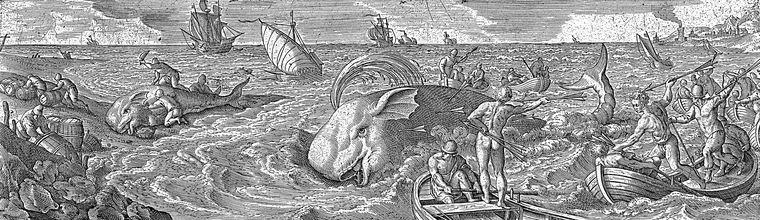
It was the arrival of the Thule People around 1200–1300 that clothed the land in a new fur. With their whale-hunting tools, kayaks and large ‘umiak’ boats, the coastal belts of the frostbound barrens became hospitable again. The Thules, after a long march from Alaska and Arctic Canada behind them, never collapsed. Their descendants, eight centuries later, survived to be called Inuits, and offered $100,000 per head by Trump to sell and leave.

Mission possible
Norwegian missionary Hans Egede sailed to Greenland in 1721. He earned the name ‘The Apostle of Greenland’ as he managed to give wings to Scandinavian colonial dreams by evangelising the Inuits. He founded Godthåb which later become Nuuk, the modern capital of the island. The 1700s witnessed more settlements coming up and the gradual return of European economic and civic life.
—boxes by Bechu S.