

Reading Catherine Thankamma’s A Kind of Meat and Other Stories is a sobering affair. It discomfits and jolts you, drawing you outside your own insular world. Her heroes are ordinary women battling a system rigged against them. The tone is dark; Thankamma does not blunt the sharp edge of reality. There is death, violence, sacrifice—yet, they never overpower the narrative. In fact, the charm of Thankamma’s world might be at the other extreme—the gentle, everyday rhythms of life: friends of different faiths encountering each other after many years, a woman’s shifting relationship with her garbage collector, life after the death of a spouse…. Through what is, Thankamma spotlights what should not be—the subtle shades of patriarchy, the societal pressure to conform, the cumulative injustices, the lack of agency.
In Thankamma’s world, however, the women never let fate drive their destiny. The societal pummelling does not break their spirit. In one story, for example, Madhu is a garbage collector whom the neighbours hate because of her filthy language. The narrator’s misgivings about Madhu, however, disappear when she realises that, in a society where untouchability is still an unspoken evil, the cards are stacked against the garbage collector. Later, when she sees a heavily pregnant Madhu bending over the trash, her pajamas rolled up to her knees, she is struck by the woman’s resilience. She is a survivor; she will not let the trash she collects contaminate her soul.
In another story college professor Rukmini, sleeping in a train, is mistaken for a prostitute because she had not tied up her wet hair and lay asleep like one dead to the world. It is disconcerting for her to know that her accusers are all women. “Their principled womanhood must make them feel they had the right to judge,” she thinks. As soon as they realise that she is a teacher, their attitude changes. The contempt turns to inquisitiveness, and the women start fishing for details. There is, after all, only one way to respect in this society—the respectability bestowed by your social standing.
In Polling Day at Nenmara, Alli is the presiding officer in a general election. She is to spend the night in a high-caste Hindu’s house. The head of the household—Acchan Namboodiri—superciliously points her to the room where she is to stay. The next day at the polling booth, two long serpentine lines have formed. As the voting progresses, Acchan Namboodiri arrives with his retinue of followers expecting to be ushered to the front. But he might be in for a surprise.
Thankamma’s prose is sparse, saying more by what she does not say. In the story Ellunda, for example, a young girl Ria is brought to a different church by her friend because of its superior offering of the sweet ellunda. Without spelling it out, Thankamma brings attention to the segregation in society through the description of the church and its parishioners. Soon, Ria realises that she and her friend are the only ones wearing fancy frocks; all the other girls are dressed more commonly. The church is just a whitewashed building with a small yard, unlike Ria’s huge parish church with its vast grounds.
There is a lightness to Thankamma’s storytelling that belies the dark realities it conveys. In her world, darkness does not mean the absence of light; it only amplifies its brightness. Amid the injustices and insults, Thankamma’s women shine with hope and humour. They make no apology for who they are, rebelling in some ways, assimilating in others. They might be vilified, but they are not weak. Their voices, they insist, must be heard. Their stories must be told.
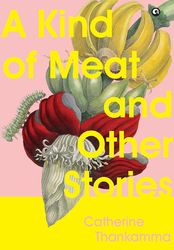
A KIND OF MEAT AND OTHER STORIES
By Catherine Thankamma
Published by Aleph
pages 206, price Rs699