


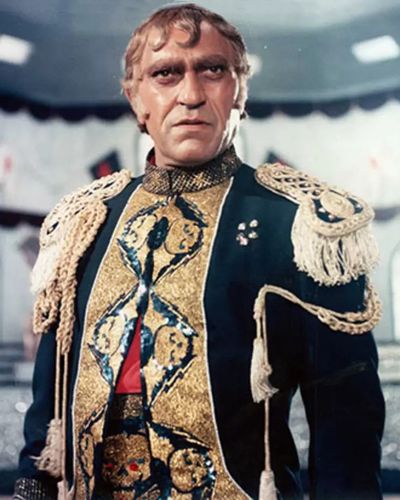
When Mogambo declared ‘Mogambo khush hua’ in his all-black coat studded with skulls, few knew that the iconic villain’s look was born from weeks of poring over foreign magazines, newspaper clippings and film history encyclopedias. The man behind that outfit? Madhav Agasti, who insists on simply calling himself a tailor.
Not for him the fancy designations—stylist, costume designer or fashion consultant. “The word tailor is not small, it carries dignity,” he says. “A tailor takes fabric and gives it shape, life and meaning. I take pride in it because it connects me to an Indian tradition that is centuries old.”
That simple yet powerful philosophy defines his memoir, Stitching Stardom. It is an unadorned, straightforward and unapologetically unassuming book. But the lessons it offers—glimpses of film stars and politicians who had no airs, a young man sustained by determination beyond his age and a quiet dedication to craft—are anything but modest.
The book flows loosely through time, punctuated by anecdotes that stretch belief. Actor Sunil Dutt agreeing without hesitation to be chief guest at Agasti’s alma mater in Nagpur. Rajesh Khanna saying yes to a train journey for another humble function. Politicians like Sushilkumar Shinde patiently waiting outside Agasti’s small shop on a concrete ledge or in his car for his turn. Agasti measuring Farooq Abdullah in a Delhi airport VIP lounge; thinking that the phone call summoning him to then prime minister P.V. Narasimha Rao’s office was a prank. Pranab Mukherjee choosing Agasti’s sherwani over the outfit brought by his son for his Presidential oath-taking ceremony. Bal Thackeray keeping Agasti’s visiting card on his table and referring everyone to him.
What it might lack in literary style, it makes up for in the sheer quality of the stories it tells.
The simplicity of these interactions stands in stark contrast to today’s social media-saturated celebrity culture. Agasti mourns this loss. “That balance of humility and mystique is rare now,” he says. “Social media has made stars too accessible. In my experience, humility wasn’t an act. Raj Kapoor, who fondly addressed me as Masterjee, treated me like family. Stardom never erased their roots.”
He also notes that earlier actors brought their own personality into their clothes. You could, for instance, easily tell apart a Prem Chopra from a Pran. “Style was part of their character,” says Agasti. “Today there are more resources than ever, yet global fashion trends and stylists have created uniformity. Individuality has been sacrificed at the altar of fashion.”
Take the Mogambo costume. The brief given to Agasti was that Amrish Puri had to look “western as well as like an Indian zamindar”. Getting that mixed look right meant intensive research. The first look Agasti created combined elements from an army general with that of a zamindar. But he wasn’t satisfied, so he scrapped it. “It was an ominous task, but I was enjoying the pressure to deliver. It was a happy burden to have,” he writes.
The final look: an all-black coat with golden monogram, a long frill shirt, a general’s insignia and shoes that screamed ‘merciless’, the zamindar feel coming through the breeches. The outfit was revealed to Puri on set, and his reaction came through that unforgettable line from Mr. India.
This anecdote also serves to illustrate one of the book’s most glaring weaknesses. It is one of just four illustrations included in the book. At every turn when Agasti mentions a cinematic character or a politician, there is an urge to see what the outfit actually looked like.
Agasti doesn’t skirt this issue. “I never thought I would write a book,” he says. “My focus was always on the client, not on archiving my work. I lived in the moment, not thinking of posterity. So the book had to be built on memory and storytelling, not photographs. Other than a few illustrations made for directors, whatever remains is what you can see in the films themselves.” It is a pity for the larger cause of chronicling the evolution of style.
Despite his impressive client list, there are some still on Agasti’s wish-list. One is Prime Minister Narendra Modi, whose style, Agasti says, “reflects simplicity and attention to detail—a rare combination. I would design a handwoven khadi bandhgala for him: rooted in tradition yet sharp with leadership”. Among the misses is former president A.P.J. Abdul Kalam, a leader who Agasti says carried simplicity with grace, “a leader whose clothes could reflect both humility and brilliance”.
The book also contains chapters penned by those who have known Agasti, including Akshay Kumar, Johnny Lever and Gulshan Grover—all offering similar glimpses of a man unchanged by success. Agasti recounts early hardships: sleeping on pavements outside tailoring shops in Bombay, learning Bengali to survive in Kolkata, telling a fib about having stitched for Dev Anand just to secure work. But these struggles are presented as stepping stones, not as moments demanding deeper psychological inquiry. There is little critical self-reflection on failures, no probing of doubts or setbacks that must have complicated his trajectory.
But in these complicated times, perhaps a simple book is what we need. The book closes with heartfelt gratitude to mentors, friends and family, including a poetic metaphor likening Agasti’s role to Lord Krishna’s protection of dignity through textiles. It is a touching conclusion to a memoir that is less about the tailor’s ego and more about the lives he touched, the identities he shaped, the confidence he stitched into every garment.
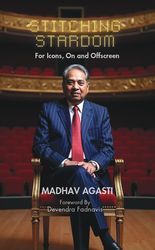
STITCHING STARDOM: FOR ICONS, ON AND OFFSCREEN
By Madhav Agasti
Published by India Penguin Enterprise
Price Rs499; pages 152