


Lost in translation’ no longer holds. In fact, the world was introduced to Banu Mushtaq—her literary oeuvre, fearlessness, and politics—only when Deepa Bhasthi translated from Kannada to English the 12 short stories that became Heart Lamp. It not only became the first book originally written in Kannada to win the International Booker Prize but also made Bhasthi the first Indian translator to win the honour. And the win isn’t restricted to awards. The book has sold over 50,000 copies and continues to top the charts.
In 2022, Geetanjali Shree’s International Booker-winning Tomb of Sand, translated from Hindi to English by Daisy Rockwell, followed a similar trajectory. Last year, Penguin India, which had published Tomb of Sand, brought the award-winning duo back with Our City That Year, originally written in Hindi by Shree in 1998. Perumal Murugan, too, found new readers after Aniruddhan Vasudevan translated his Pyre from Tamil to English; it made it to the International Booker longlist in 2023. The same year, Murugan had another breakthrough when he won the coveted JCB Prize for Literature for his book Fire Bird, translated into English from the original in Tamil—Aalanda Patchi—by Janani Kannan. Of the five books shortlisted for the 2024 JCB Prize for Literature, three were translations. Indian literary translations have also won big at the prestigious DSC Prize for South Asian Literature.
 Milee Ashwarya
Indian translations are bringing both Indian and foreign readers to the country’s rich literary culture that spans languages. “This is promising for editors like me across the publishing world,” says Moutushi Mukherjee, commissioning editor, Penguin Random House India, who also points out how it is not restricted to India as the 2024 Nobel laureate Hang Kang “won her greatest award for a work in translation”.
Having said that, are these big wins stirring sales of Indian literary translations in English?
“Awards do make a difference,” says Dharini Bhaskar, associate publisher at HarperCollins India. “They inform readers about books, ensure that the author and the translator are spoken of, impact sales, influence reading patterns, impact the way other books from a specific culture and region are received, and make it possible for translation literature as a whole to thrive. They also ensure that certain genres are approached with renewed interest.”
Meanwhile, Minakshi Thakur, publisher (Indian literature) at Westland Books, explains how, although initially few awards were given to translations and those like the Crossword Book Award had a separate category for them, this changed with the JCB Prize for Literature and the DSC Prize for South Asian Literature. Publishers, booksellers and readers started giving more importance to translations. It was also around then that Ghachar Ghochar by Kannada writer Vivek Shanbhag, got translated into English by Srinath Perur. It got parallel launches—in India in 2015 and in the US and the UK in 2017—and received critical acclaim everywhere. “So, interest in translations rose around that time. And the JCB Prize started bringing translations to the forefront,” she adds.
However, the wins don’t automatically translate into sales. “The International Booker-winning authors are selling a lot. But that wasn’t the case with the JCB Prize winners, except for Moustache by S. Hareesh. Indian awards don’t impact sales,” Thakur points out. Neither do these wins, in general, translate into sales of other translations, she adds. Notably, the JCB Prize for Literature, India’s most celebrated literary honour, has been discontinued.
One of India’s most prominent translators, Arunava Sinha, agrees. “It’s obvious that prize winners will get a bump in sales, but the question is—where’s your floor? A floor of 10,000 copies would be terrific for a really good book, but that’s not the kind of floor we see in India,” he says.
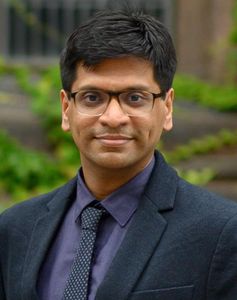 Aniruddhan Vasudevan
And while a shift in how publishers view translations is evident with more contemporary works being published, along with expansions to more languages beyond Hindi, Urdu, Malayalam, Tamil and Bangla, “it all ends with the book coming out; there is virtually no marketing to speak of beside routine press releases,” says Sinha.
According to him, qualitatively, there has been a shift, but the publishers are not able to pay as much attention to the marketing and distribution of the translated books they publish now as they did before. “Maybe it is because they are trying to meet their revenue targets by publishing more titles, because each title doesn’t sell as many copies,” he adds. “As a result, the marketing team tends to focus on those titles that can sell more copies for the same effort, which inevitably means [genres like] spirituality and self-help. So serious writing, which would not be able to match them in terms of numbers, is getting even less attention than it used to. While Heart Lamp is an exception and will probably end up selling over a lakh copies, other books struggle to sell even 2,000-3,000 copies. And if the marketing people in the publishing industry had the wherewithal to do more and ensure the discovery of the translated books they publish, a lot more people would get to know and buy those books.”
There is a print run attached to every copy. So if it is 2,000 to 3,000 copies since the marketing budget is a certain percentage of it, this becomes a challenge, says Thakur. “Compared to that, say a celebrity book has a print run of 50,000 copies, so the marketing budget will automatically be larger,” she says. “So, more money is attached to them because more money is coming from them. This is the situation which I would say the publishers want to change, but what do you do when the market wants that.”
Despite the big wins, the market isn’t great for individual translators, too, for whom the situation has worsened economically. “They are now getting smaller advances than before, which are calculated based on your first print run, and the publishers are not sure of selling a large number of copies,” says Sinha. “They think if a book does well, the translator would anyway earn the royalty. So why take on the cost of a fat advance? This has certainly cut the monetary incentive even further. Anyway, in India, translators don’t work primarily for the money. If they did, they wouldn’t be translators. There are no incentives, grants, residencies or support of any kind.”
Despite the lack of incentives, there is much interest in the translation space. “There has certainly been a more deliberate push in this area in recent years,” says Milee Ashwarya, publisher and senior VP, Adult Publishing Group, Penguin Random House India.
According to Thakur, publishers are now looking more at contemporary works, based on reader interest. Several such writers have built a reputation outside of their languages through translations, such as Murugan in Tamil, Shanbhag in Kannada, S. Hareesh and K.R. Meera in Malayalam, Sangeeta Bandyopadhyay and Manoranjan Byapari in Bengali, among others.
And while publishers are expanding to less-represented languages, the availability of translators in some languages still remains a problem, says Thakur.
Malayalam translator A.J. Thomas, who translated and edited The Greatest Malayalam Stories Ever Told, points out a new and exciting development, which is “the newly emerging space for translation and publication of short stories as a genre, which was previously sidelined”.
Another interesting development is translators ditching italics and footnotes and retaining the Indian tone in translation, thus pushing the boundary of English. Hence, Bhasthi’s work in Heart Lamp was dubbed “a radical translation which ruffles language, to create new textures in a plurality of Englishes”, by Max Porter, chair of the International Booker Prize 2025 judges.
“For decades, we’ve been trying to translate in a way to make it easier for the western reader to understand, whereas we have been made to understand their culture without any footnotes and italics,” Bhasthi tells The WEEK.
Sinha says that today’s translators are fearless. They feel that the languages from which they are translating can change the English that they are using. “So the editorial process, too, is very exciting,” he adds. “On an editorial level, things are in great shape—very good books are being chosen for translations, they’re published beautifully and have well-designed covers. But it all ends there. That is the tragedy.”