


It is one for the artists, the writers, the journalists, the kurta-pyjama clad, the thinkers, with coffee-breaths―the Triveni Terrace Café, a modern-day literary den at Delhi’s cultural hub of Mandi House. “Parantha with keema matar, phulka with shami kebab, cheese toast―the menu was limited but the place was spotlessly clean, great value for money, and the small dining area was packed with poets, painters and actors from the National School of Drama,” writes academic, food critic and historian Pushpesh Pant in From the King’s Table to Street Food: A Food History of Delhi.
The six-decade-old café was a place a young Pant frequented, familiarising himself with the flavours of Delhi and becoming a ‘dilliwala’. Hailing from Mukteshwar in Uttarakhand, Pant would make annual visits to the capital city in winters with his family.
From arriving in Delhi in 1965 as a teenager to living on his own, Pant has spent a lifetime studying the city’s food culture. “My deep dive explorations into the food culture of Delhi made me curious about what this was like in Indraprastha, celebrated in the Mahabharat,” he says.
And so, he sought knowledge from the epic to find answers: ‘Royal banquets were held where vassal kings feasted... [there was] roasted venison, char-grilled or pan-fried fish, rice cooked with condiments, sweets like ladoo and pua.’ Lack of the mention of recipes in the Mahabharat surprised him and he went to the Gita only to find three types of food―satvik, rajasik and tamsik―which provide a firm foundation for Indian gastronomy.
Magnificent Mughal meals
Pant, who taught international relations at Jawaharlal Nehru University, says that food culture flourished in India with the dawn of the Mughal era. This included Babur’s fondness for wine, Humayun’s love for the rustic food of the villagers and Akbar’s grand kitchen, which led to the merging of Turkish, Afghan, Indian and Persian styles of cooking.

Pant says that Indian delicacies like puri, khandvi and dal kachori became royal additions, apart from a large variety of breads like naan-e-wari, naan-e-taftan, soups, main course dishes like badana, khasa, nakhud kofta, and more. The grandeur of the Mughal kitchen was revived with Shah Jahan. One of his wives was the brain behind Chandni Chowk, one of the most iconic food places in the city. Pant also carefully notes the establishment of the famous ‘Ghantewala’ (sweets shop) in Chandni Chowk as the Mughal lineage weakened.
British Raj and pan-Indian taste
As the British made their way into India, so did their recipes. Iconic dishes of the British Raj were the railway mutton curry, dak bungalow murgi roast, Colonel Sandhurst’s beef curry, Bengal Lancers shrimp curry, fish and chips, and so on. “What they cooked and shared may be termed as the first stage in the evolution of pan-Indian taste,” says Pant. He further notes the blooming of bakeries in the city after the British took control.

Delhi belongs to no one
The influx of the Mughals and British, post-independence migration, and now job-related large-scale migration have meant that Delhi has been a melee of cultures. “The flavours of Kashmir and Punjab happily co-existed with Baniya, Kayastha, and Khatri tastes,” says Pant. “The city has welcomed ‘outsiders’ who have made it their home. From language to cuisine, it has celebrated diversity.”
As a result, Delhi became the hotbed for many small startups that are now massive businesses, including Haldiram’s and Bikanervala.

Chandni Chowk, especially, has seen many businesses flourish and become brands. The famous Paranthe Wali Gali tells the tale of how small-scale hotels have survived. It came into existence after a number of parantha makers from Agra moved to Delhi after the turmoil of 1857.
The magnetism of Delhi’s fast-food market has not only attracted new players, but has also sustained and grown legacy restaurateurs. “By the mid-1960s, Karim’s had become gentrified, like the Punjabi dhabas in Connaught Place,” says Pant. Till date, Karim’s remains a favourite among non-vegetarians.
Similarly, Delhi has also sustained food cultures of Christians, Parsis, Bengalis and South Indians. Annapurna claims to be the original sweet shop that introduced Bengali sweets to the city while Sagar Ratna, Madras Coffee House and Dakshin cater to southern tastes.
Dilli to Delhi
Punjabi refugees, who settled here even before partition, have had a deep impact on food preferences. Daryaganj’s Moti Mahal, started by three refugees from Lahore, claims to be the ‘creator’ of tandoori chicken, butter chicken and dal makhani, while the Daryaganj restaurant, opened by a successor of one of the Moti Mahal founders, also lays claims to the dishes.
As for recent times, Pant applauds ITC’s efforts to restore past glory to classic dishes, pushing for ‘Dehlavi khana’, and also talks about the arrival of momos in India, remembering how Yashwant Place, Chanakyapuri, became a bustling hub for street-style Chindian food.
The food market in Delhi has further evolved in the past 25 years, with new-age restaurants such as Farzi Café, Made in Punjab and United Coffee House catering to students and office-goers.
Pant’s food encyclopaedia on Delhi attempts to answer the pertinent question: who is an asli (real) Dilliwala and what is his cuisine? The closest answer, says Pant, is, “Whoever chooses to live in Delhi, calls it home, and enriches its culinary repertoire with his own, while enjoying the confluence of flavours.”
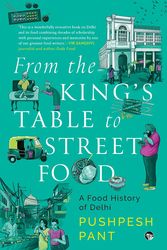
From the King’s Table to Street Food: A Food History of Delhi
By Pushpesh Pant
Published by Speaking Tiger Books
Pages: 377 Price: Rs699