

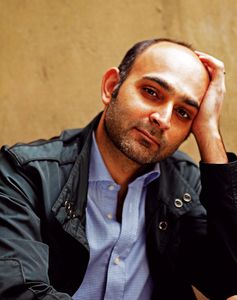
 Mohsin Hamid | Courtesy Penguin Random House India
Mohsin Hamid, the Lahore-born British-Pakistani writer, burst into the literary scene at the turn of the millennium with his first book, Moth Smoke. The 51-year-old threw open to the world the unseen Pakistan—of adultery, drugs, scandal and crime–that had never really been told. His second novel, The Reluctant Fundamentalist, was very much the book of the post 9/11 world, and it firmly established him as a writer to be taken seriously. Hamid’s latest book, The Last White Man, will be out later this month, and he calls it his most ambitious project, yet.
In a freewheeling chat on Zoom, Hamid explains that The Last White Man is a response to the current times. His hero, Anders, is a white man who wakes up one morning and realises that he has become brown. “He is shocked and upset. And he is hoping that this has not actually happened,” says Hamid. “The novel progresses from there, where this predicament and anger start to spread.”
Hamid straddles multiple continents. He lives in America, carries a British passport, but is Pakistani. Like Anders, he inhabits a world that exists everywhere, but belongs nowhere. And it is impossible not to draw parallels with Franz Kafka’s Metamorphosis in which Gregor Samsa turns into a cockroach, just like Anders turns brown.
Anders first tries to hide his brownness. But he soon understands that “he was not sure he was the same person. He had begun by feeling that under the surface it was still him. Who else could it be? But it was not that simple. The way people act around you changes what you are, who you are...,’’ writes Hamid.
For Hamid, it is personal, and also political. The tragedy of 9/11 changed America, and it changed Hamid, too. It also changed the world for him. Till then, he had inhabited an elite world. But it all changed with the attack. “I would go to the airport, and they would pull me out of the line for an incredibly detailed security check,’’ says Hamid. “They would put me in a room by myself for hours waiting. And then they would ask me all these questions. If I get onto a bus during the weekend, unshaven with a backpack, people would be uncomfortable, and would sometimes move seats. It was a profound sense of loss that I experienced. I wanted to go back to how it was before. And I was hoping that things will be normal, again.”
The book, which is deeply unsettling, explores the loss of whiteness for Anders and the bewilderment it brings, mirroring the writer’s own experiences. Says Hamid, “As years went by, I began to ask myself, ‘What have I lost?’ What is this thing that I wanted to reverse? And I realised that despite having brown skin and a Muslim sounding name, I benefited from many of the advantages of a partial whiteness. And I started thinking, ‘Is this something I should want back?’ There was the system, which had partially allowed me to belong. Was this something that I should desperately want to see restored?’’
This is the central question that confronts Anders, and the reader. And there are no easy answers. Hamid has moved from being an optimist to someone determinedly trying to find a way to optimism. It is an attempt from within to imagine a different way of living, beyond hate and the broken systems. “This book is about what if there is nowhere left to flee to,’’ says Hamid. “That is where I think the imagination comes into play. When there is nowhere left to go, you start playing in your imagination. And so, in a sense, fiction and literature are in response to this predicament.”
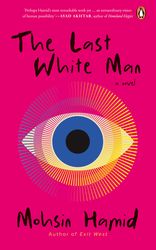
The Last White Man
By Mohsin Hamid
Published by Penguin Random House India
Price Rs599 Pages 192