



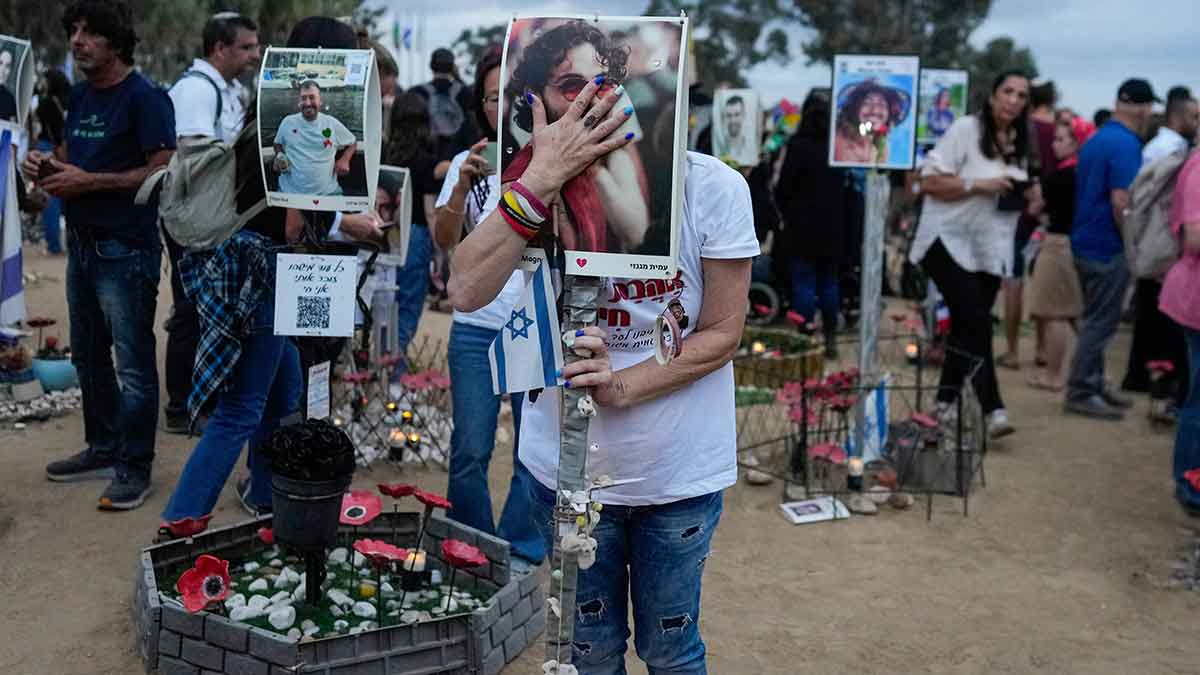
OCTOBER 7 MARKED the second anniversary of the brutal violence unleashed by Hamas against Israel, in which nearly 1,200 people, mostly civilians, were killed. It was the most gruesome attack on Israel since the Holocaust and has been described as its 9/11 moment. With over 250 civilians, including women, children and the elderly, taken captive into Gaza, fully capturing the trauma of the Israeli population is neither easy nor simple.
Calling the act ‘terrorism’ became political and led to a dilution of support for the Palestinians. As a result, several well-meaning and otherwise conscientious leaders, commentators and pundits refused to admit, recognise or condemn the violence and brutality inflicted on Israeli women and children. They were unable to differentiate between supporting the Palestinian cause and condemning violence against women.
Prime Minister Benjamin Netanyahu responded strongly with two closely linked objectives: to secure the release of the hostages, which also included some foreigners and dual citizens, and to completely destroy the military and political base of Hamas. This strategy plunged the Gaza strip into a cycle of increased violence, more casualties, destruction and displacement. Palestinian officials estimate over 68,000 deaths, including a large proportion of women and children.
The ongoing violence and prolonged suffering of the Palestinians shifted international opinion against Israel. Even countries that initially supported Israel immediately after the October 7 violence began adopting a neutral or more nuanced stance or revealed their pro-Palestinian leanings. Protesters took over several western capitals and Ivy League institutions in the United States, in contrast to the quietness of the Arab street. As a result, many western countries were forced to recalibrate their policies on the Israeli-Palestinian conflict and move towards recognising a Palestinian state.
Not wanting to be left behind, several groups and states sought to join the conflict and demonstrate their pro-Palestinian credentials. Hezbollah in Lebanon and the Houthis in Yemen entered the fight, along with groups in Syria and Iraq. Iran, which supports and guides many of these groups, also became involved, leading to two rounds of open Israel-Iran confrontations, the most intense being the 12-day clash last June. As a result, Israelis were often forced to seek refuge in bunkers, safe rooms and other shelters to escape hostile missiles, drones and other aerial projectiles.
Two years later, Israel could claim that it has significantly weakened the military capabilities of Hezbollah and Hamas, and even damaged Iran’s nuclear infrastructure. Knowledge and skills are never truly irreversible, and one can only say that Israel has reduced the military potential of its adversaries and possibly delayed their ability to confront it for a few years. The complete destruction of an opponent is every general’s dream, but is least likely in modern times. Therefore, the long-term benefits of this offensive approach depend on Israel’s ability to capitalise on this limited window of opportunity to delegitimise the goals and strategies of its adversaries.
The two-year confrontation also highlights four distinct features. First, after prolonged denial and hesitation, mainstream Arab-Islamic countries have accepted the brutality of the October 7 attack and come around to describing it as terrorism.
Second, there is growing recognition that Hamas is a liability for the long-term progress of the Palestinian movement and the realisation of statehood. Despite its mediatory role, or perhaps because of it, Qatar has realised that the militant Palestinian group is not an easy partner and would not accept a workable solution. Devoid of niceties, US President Donald Trump’s latest 20-point Gaza plan aims to end Hamas’s political influence. Interestingly, this is supported by several Muslim-majority non-Arab countries, including Türkiye and Pakistan.
Third, the internationally recognised Palestine National Authority, led by the octogenarian Mahmoud Abbas, which remained an ineffective, if not mute, player during the past two years, is seeking to bring the Gaza Strip–lost to Hamas in July 2007–under its control.
Fourth, the brutality of the Israel-Hamas war once again underscores the need for a long-term solution rooted in the dignity and honour of all the parties involved in the Israeli-Palestinian conflict. Although Herculean, there is no alternative to the peaceful coexistence of the state of Israel and the state of Palestine with security and peace. Such a path would serve as a fitting tribute to all the Israelis and Palestinians who were killed on October 7 and in its aftermath.
Against this backdrop, the peace talks on Gaza that began in Egypt on October 6 offer a sliver of hope and a potential opening for diplomatic engagement, however fragile.
The author teaches contemporary Middle East at Jawaharlal Nehru University, New Delhi.
