


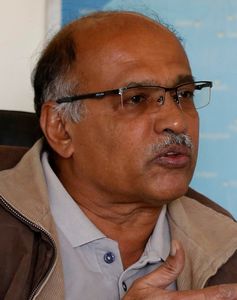
 Capt G.R. Gopinath
THOUGH MANY DIE in road accidents every day and India holds the record for the highest number of road fatalities and train accidents, air crashes still capture our imagination more than any other form of accident. Ever since man evolved from the apes, he has been fascinated by flight, watching birds in the sky. How one envies the bird high above, winging from tree to tree, over lakes and hills and dales, and thinks to oneself, “Ah, if only I could fly!”
Over 2,000 years ago man invented kite flying. He attempted tower jumping with makeshift wings nearly two millennia ago, and many perished in the attempt. Leonardo da Vinci scientifically designed flying machines with aeronautical concepts, but they were un-flyable due to limited knowledge at the time. In the late 18th century, the invention of the hot air balloon enabled manned flight.
The first heavier-than-air, manned powered flight came from the pioneering efforts of the Wright brothers in the US in 1903. Many dreamers and adventurers died in the seemingly impossible pursuit of flight. Yet, just over a century later, the Boeing 787 Dreamliner can fly 14,000km; the Boeing 777-200LR can fly 17,300km; and the Airbus A350-950 Ultra Long Range can fly 18,000km. Flights from Delhi to San Francisco or Singapore to New York now take 14 to 20 hours. The scale of this transformation is mind-bending.
Yet, in that one unspeakable moment—the Air India disaster that claimed the lives of so many loved ones—we begin to question whether air travel is safe and which airline we should fly next time. Such questions are as futile as asking, “Should I walk in our cities with their treacherous and hazardous traffic?” or “Should I drive a car or take public transport with its endless accidents?” To live is dangerous. If you want to discover new lands, you must sail the high seas, knowing full well that you may never reach the other shore. If you want safety, you buy an island, not a boat.
Anyone who runs an airline must fly—that is its only reason to exist. If you are safe but stay grounded, you will be bankrupt. You have to fly and be safe. Safety and speed go together.
The crash of the Boeing Dreamliner in Ahmedabad has now seized everyone’s attention. The Tatas, who acquired the moribund airline from the government two years ago, have no time to lose. They must urgently find a way to stem the rot—the cancer that set in over decades of state ownership—and prevent another catastrophe at all costs.
Air India, Indian Airlines and Air India Express have, sadly, a troubling record of fatal crashes over the last 50 years, both international and domestic. The airline, once a crown jewel under J.R.D. Tata, was globally renowned for flawless operations, immaculate service and unmatched hospitality. The decline began after nationalisation and after J.R.D. stepped down. Government, bureaucratic and political interference, zero accountability, enormous losses, frequent flight cancellations, harrowing passenger experiences, shabby cabins and indifferent service wrecked the airline. Add to that frequent strikes, union troubles and ill-conceived mergers of Air India and Indian Airlines, and the airline’s woes only multiplied. Senior bureaucrats, with little aviation expertise, were appointed to run the airline, further alienating loyal passengers.
Eventually, wisdom prevailed and the current government sold the airline to the Tatas, who had a deep emotional connection with the brand. They already ran two loss-making carriers, AirAsia and Vistara, in joint ventures with Singapore Airlines. But these were efficiently managed, with excellent service and good safety records.
Now, merging four airlines—Air India, Air India Express, AirAsia and Vistara—with four boards and CEOs, separate flight operations, training, quality control, engineering and maintenance, logistics, safety protocols, IT systems, HR departments, cabin crew cultures, aircraft types, salary structures and promotion hierarchies, into one unified, smoothly operating airline is an enormous task. The airline cannot pause its operations. It must continue flying even as it undergoes structural transformation. Every day is a live-wire situation.
A pilot may be experienced and highly skilled. An engineer may be well qualified. But unless all staff are integrated into a synchronised unit, the operation can fall apart, just like an aircraft with cutting-edge technology and components that fail if not properly assembled.
There could be any number of reasons, or a combination of factors, for this tragic crash: aircraft malfunction, pilot error or defects in the aircraft itself. There have been whistleblower complaints about Boeing. Many speculations will emerge. Fortunately, the aircraft’s Flight Data Recorder (black box) and the Cockpit Voice Recorder have been recovered. These will yield extensive data in the coming days. Until then, we must be patient and avoid jumping to conclusions while watching media anchors in overdrive.
The Dreamliner is among the world’s most advanced aircraft. Over 1,100 have been manufactured over the past 14 years, with no major accidents. The US National Transportation Safety Board, Boeing, Air India’s technical team, and India’s aviation regulator, the DGCA, will work together to determine the exact cause of the crash. The final report must be shared with airlines across the world for corrective action.
The Tata management, which has already invested in public trust and training infrastructure, must now work with government agencies to examine every aspect of airline and airport safety, especially issues like land encroachment, unregulated real estate around approach funnels and bird hazards near runways.
In the meantime, people should not panic. Air travel remains, by far, the safest mode of transport. It is worth remembering: more people die driving to the airport than while flying.
The author is a soldier, farmer and entrepreneur.