



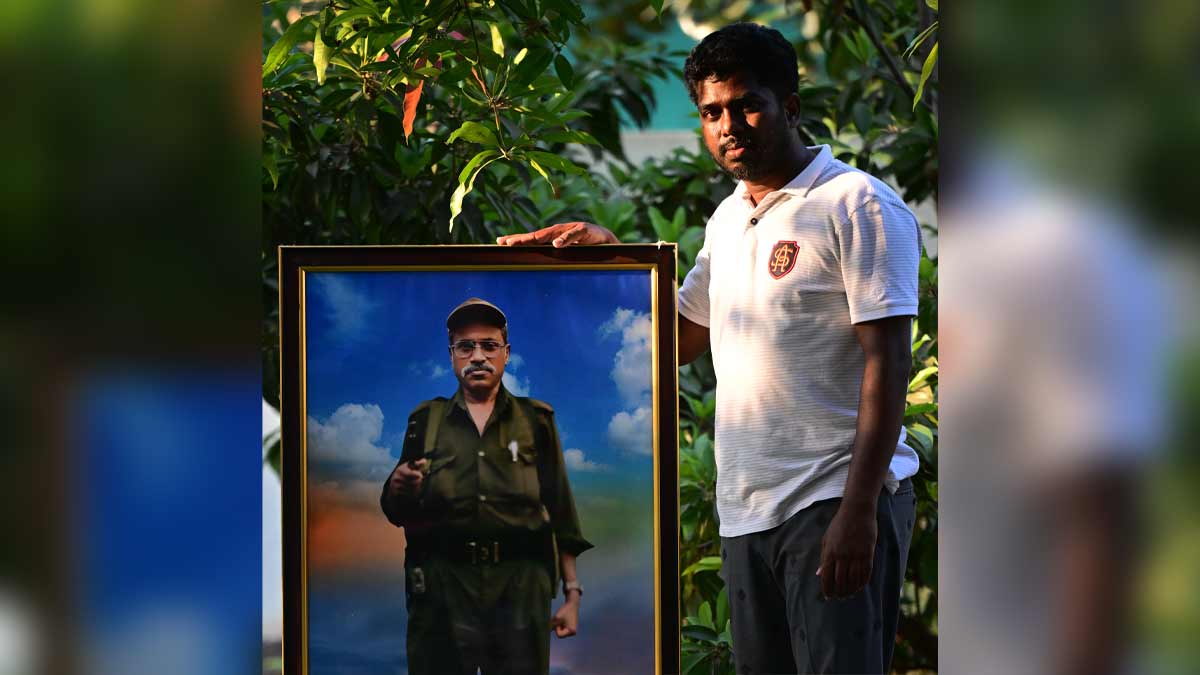
I was born into a movement I did not choose. My father, Macherla Yeshobu alias Jagan—known underground as Jagan Ranadeva—was a prominent figure in the Maoist movement in the Warangal region. Long before the CPI (Maoist) took its present form, he was already deeply involved in radical politics. His revolutionary life began at 25, inspired by leaders like Puli Anjanna. The movement then operated under different banners but with the same essence: resistance, rebellion and a promise of justice for the oppressed.
He led anti-landlord struggles and was jailed multiple times. Our family paid a heavy price. Security forces raided our home more than once, burning our crops and destroying our livelihood. I was only a year old when my father went underground.
I grew up, in many ways, an orphan. I studied in convent schools and later pursued a law degree. My father remained a distant figure—more myth than memory. I met him for the first time in 2004, during peace talks between the Andhra Pradesh government and the Maoists. I was 14. That brief meeting stayed with me, but it did not bridge years of absence. I saw him again around 2012 or 2013. After that, he was gone.
In September 2024, the police told us that he had been killed in Chhattisgarh. They sent photographs of his body. I could not even recognise him.
LAW OVER LAWLESSNESS
My father believed completely in the revolution. He wanted me to join. I refused. I had seen what it did to families, especially to my mother.
Ironically, a Maoist leader, Mallojula Koteswara Rao alias Kishanji, inspired me to study law. Media reports highlighted his education and intellect, and I realised that knowledge could be a more powerful tool than violence. I chose to fight for justice, but within the framework of the Constitution. Today, as a lawyer, I want to be a voice for the voiceless, to support weaker sections of society.
DID THE MOVEMENT FAIL?
Yes. But, not because of its ideology, but its leadership. The politburo made flawed decisions. Had they chosen negotiation or mainstream engagement earlier, many lives could have been saved. Instead, thousands suffered. Many cadre remain in jail. The leadership surrendering now knew the state would not accept their demands. Yet they continued on a path to inevitable defeat.
THE MOVEMENT STOOD STILL
One of the biggest mistakes was geographical concentration. Confinement to pockets like Bastar made things easier for state forces. How could they believe Indian forces, operating in terrains like Kashmir, would struggle in these areas?
The leadership failed to connect with evolving realities. People like me are the forgotten casualties—we lost fathers, brothers, loved ones. For what?
I WANT A DIFFERENT LIFE
If alive, my father might still have stayed in the movement. He was deeply committed—people likened him to a Japanese soldier who would never retreat. He cited global revolutionary figures like Stalin to explain how leaders brought their children into the struggle.
I want a different life—to serve society without destroying families.
—As told to Namrata Biji Ahuja
