



Interview/ Paul John founder & chairman, John Distilleries
Q/ What are the factors that made Indian single malt whiskies work?
My interest has always been to strive for the best. We conducted many experiments with casks, finishes, and maturation. I think the Scots were bluffing everyone into thinking that only Scotland can make it. Once the world started tasting “New World” whiskies, they realised that there is better stuff out there.
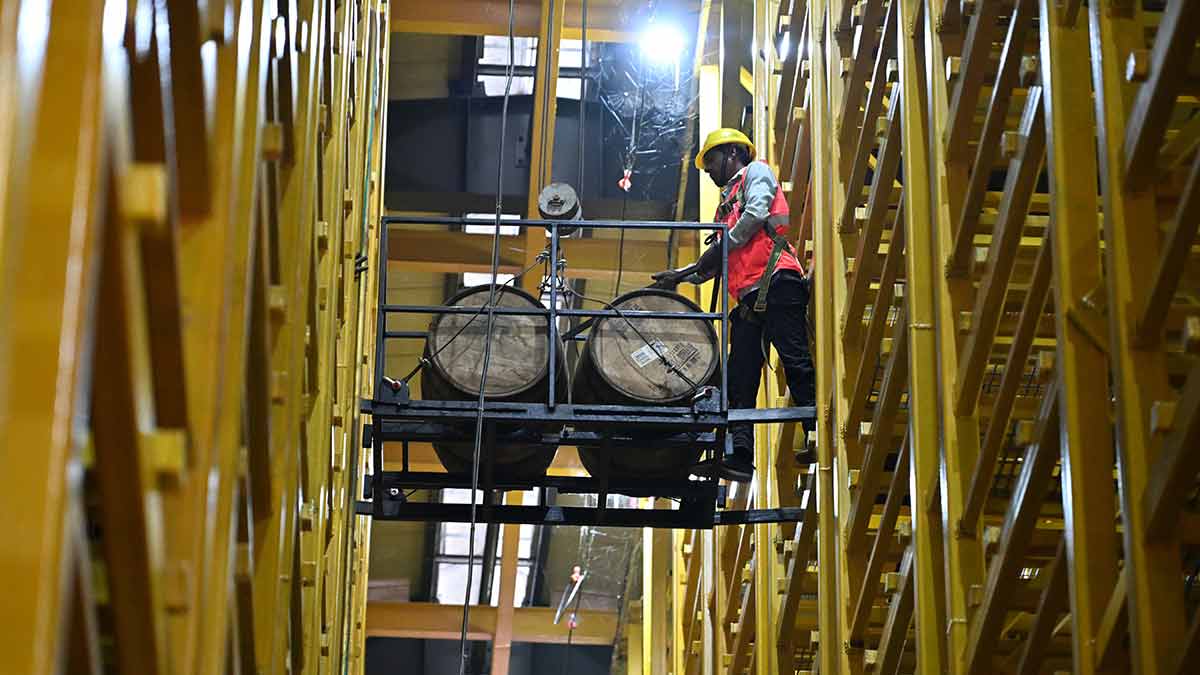
They have been mass-producing and overcharging, but ours is all driven by human intervention—determining the right time to move to distillation, managing maturation, and selecting the casks. We inspect every cask we buy. We left no stone unturned to ensure we met the highest standards in making single malts.
And it’s not just us. You have Taiwan, Australia, and New Zealand. Of course, Japan joined the movement many years ago. There are so many countries today producing excellent quality single malts.
I would say the weather in India is a big advantage; I can produce excellent quality whisky in six years, whereas it would take 20 years in Scotland. Of course, we lose 10 per cent to evaporation every year, compared to Scotland’s 2 per cent.
Q/ What was the response in India compared to foreign markets?
Initially, when I went on marketing tours, everyone would ask, “Is it molasses-based?” or “Are you really making single malts?” But over time, people started tasting and appreciating the quality we produce. Most countries that drink single malts now know that India is producing excellent quality.
Having said that, India is still the biggest whisky market. We’ve just started penetrating the domestic market. People have the means and don’t mind spending on quality. Because we have won 300-odd international awards, people have started recognising that excellence. Once they taste it, they identify the difference between Scotch and our whisky. We’ve arrived, and it’s just a matter of time before we take the world by storm.
Q/ Capturing the international market will still be a challenge.
It’s not easy to penetrate international markets, especially the big ones like the US and France. But Indian single malts have created a niche and a name for themselves; it’s just a matter of time. My challenge is simply getting people to taste the liquid. We need to show people that it’s a completely different world.
Q/ What is the next step in this journey?
The founders of Indian single malt whiskies have come together to form an association. We are working to ensure that no one dilutes the recognition Indian single malts have earned. We do not want rogue elements to spoil the reputation we have built.
The FSSAI has introduced regulatory controls regarding what can be labeled a “single malt.” We are now operating on similar lines to the Scotch Whisky Association. There is a regulatory authority with the power to take action against rogue elements in the industry. Beyond that, if the government could bring alcohol under the GST regime, there would be nothing like it.
