


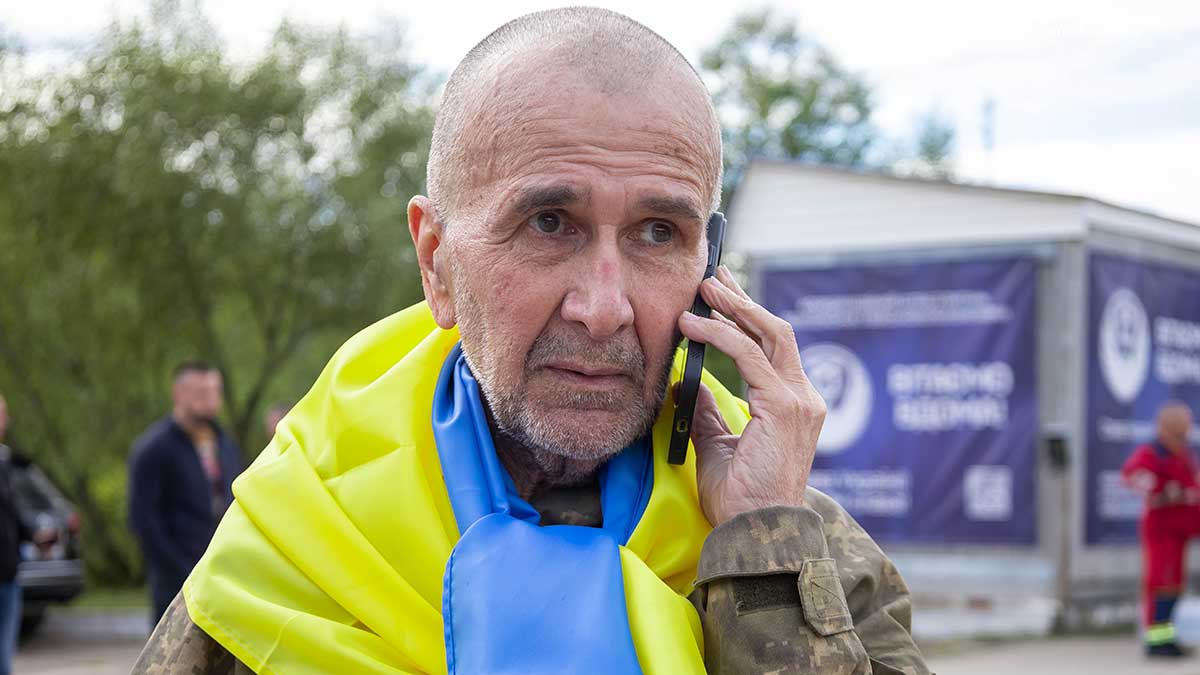
Volodymyr Mykolayenko, mayor of the city of Kherson in south Ukraine from February 2014 till December 2020, was aware of the perils of Russian attacks, because he witnessed the occupation of Crimea in 2014. But he never believed that Russians would attack the south of Ukraine and that too his city, Kherson. Here are excerpts from what he told Mridula Ghosh after he was freed from Russian captivity.
When the war began in 2022, I thought it would mainly affect Donbas. I was 62 and was just a pensioner. Yet I knew I had to fight for my country and my family. As soon as the full-scale invasion started that February, I registered with the territorial defence unit. We had only guns, but we were proud to play even a small role. When Kherson was occupied in those early days, we went underground and began planning guerrilla warfare. Our non-cooperation movement was born that way.
On April 18, 2022, an old acquaintance called me, asking to meet about something urgent. I agreed, but it was a trap. Russian FSB agents arrived, handcuffed me, and took me to the oblast police department. I was held for 16 days in the basement.

The torture and humiliation were constant. They wanted to break us and make us believe the Russians were “God’s gift” to Ukraine. The first “gift” from them was my three broken ribs. Their goal was to intimidate and silence us, to force us to tell our people that Russia was here forever.
After my detention in Kherson, I was taken to Sevastopol on May 2 for two days. Those two days felt almost “normal.” They recorded videos to show that prisoners were treated “humanely.” We were given food and books. But that illusion ended quickly. On May 4, I was flown deep into Russia, to the Voronezh district. In the city of Borisoglebsk, I was held in a pre-trial detention cell for five months. Everyone was beaten mercilessly with rubber truncheons, regardless of age or condition.
After those five months, I was transferred to a prison in Pakino, in Vladimir oblast, where I remained for almost three years. The torture continued. They wanted us to admit we had gone the wrong way. They never realised that they were the ones who attacked us. I often felt as if we were in a concentration camp. They beat us simply because we were Ukrainians.
At one point, I lost patience and went on a hunger strike. I complained to the warden about the beatings. After several days, the regional penitentiary chief came, and I told him plainly that if they beat us for no reason, they would be held responsible. For a while, the beatings stopped.
Food was another torment. I lost 25kg. Others lost even more. In the beginning, we were given no bread, only a watery liquid and boiled potato peels. Later, they began giving us bread, which helped us survive. When they saw how thin we had become, they started weighing us, but realised it was meaningless unless they fed us properly. Only around June 2024 did the food improve slightly. There was no real health care. My blood pressure rose from stress and beatings; I begged for tablets, and they gave, fearing consequences.
Our days were monotonous. We were allowed ten minutes in the prison yard, then locked up again. There was constant radio propaganda. We were forced to sing the Russian anthem and propaganda songs. I often thought I was old and had lived my life, but the younger men were tortured so brutally that it broke my heart. Some died from starvation, some committed suicide.
I never cried there. I am not a sentimental person. But after my release, I cried a lot. I was freed on August 24, 2025, Ukraine’s Independence Day, during a prisoner exchange. Crossing the Belarus-Ukraine border and seeing our blue and yellow flags waving, the people cheering, felt like the pure taste of freedom. Deep inside, I always believed we would win, because truth was on our side.
Now, I am undergoing medical rehabilitation, but I know our roadmap clearly. We must fight and win, regain our lands, and bring back our people still held in captivity. Our best people are there, and they must be free. I have returned to Kherson, but the “Russian drone safari” on civilians is unbearable. I moved away to another place but continue to serve my city in many ways.
