Research methodology
PERCEPTUAL OPINION COLLECTION
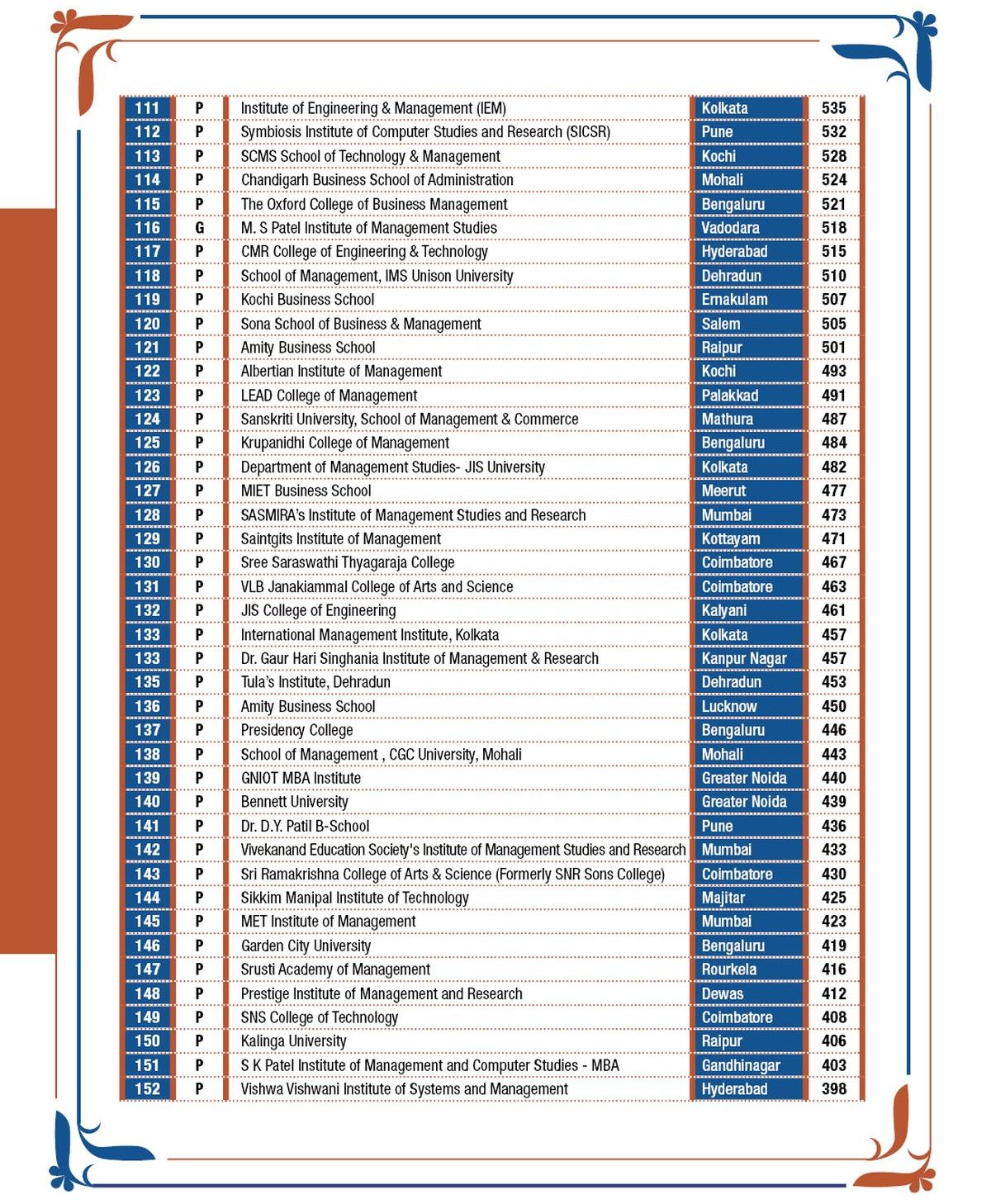
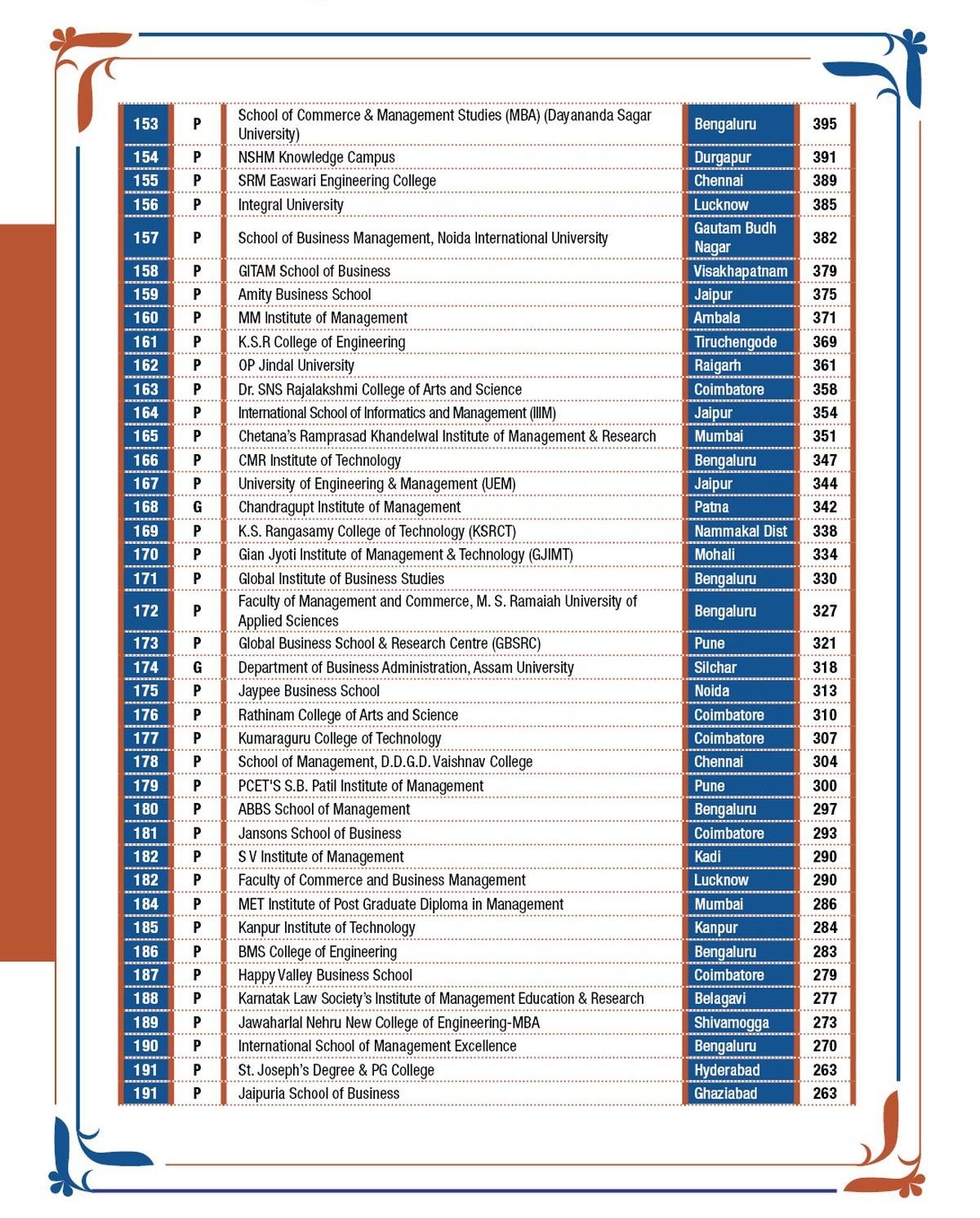
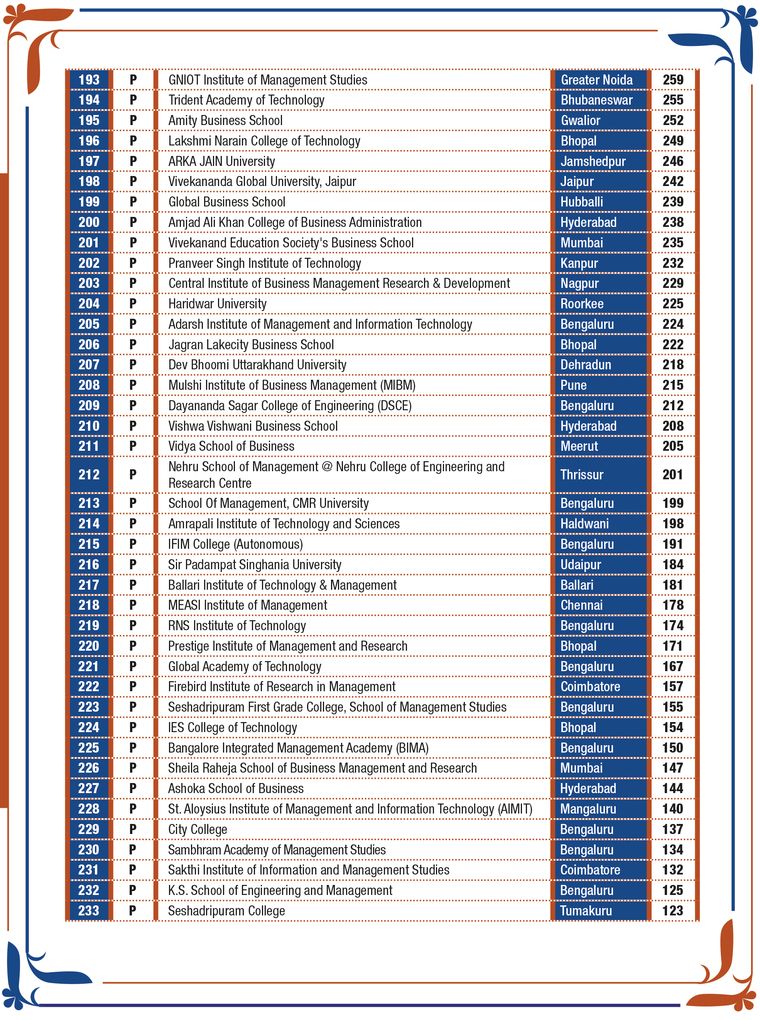
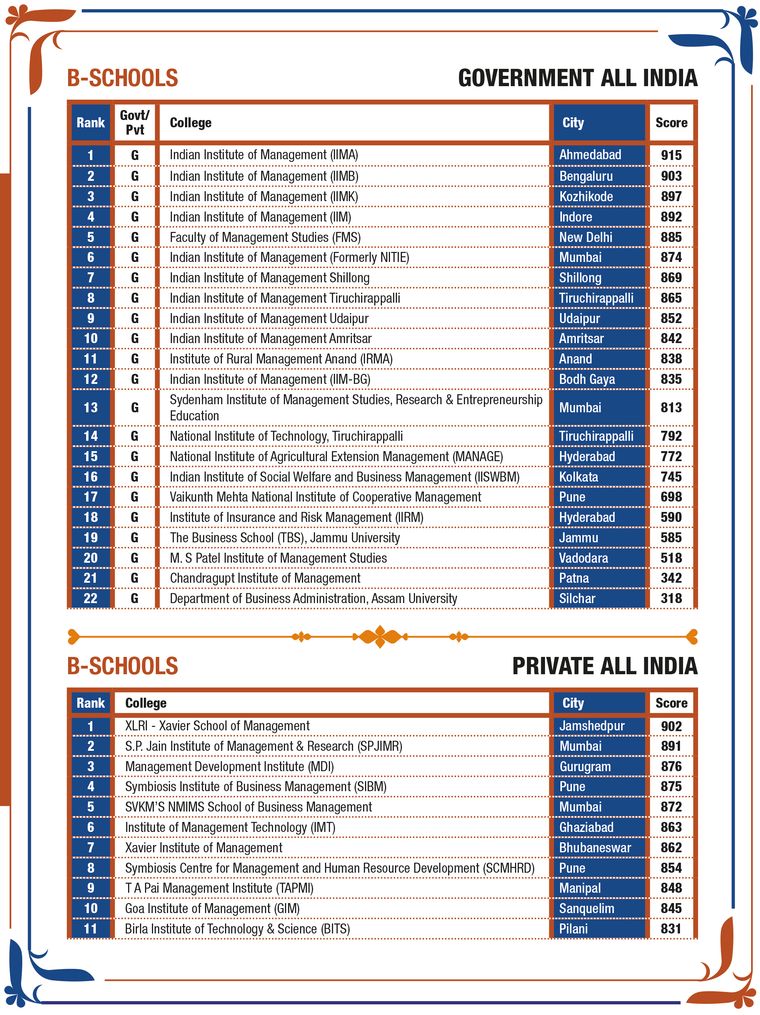
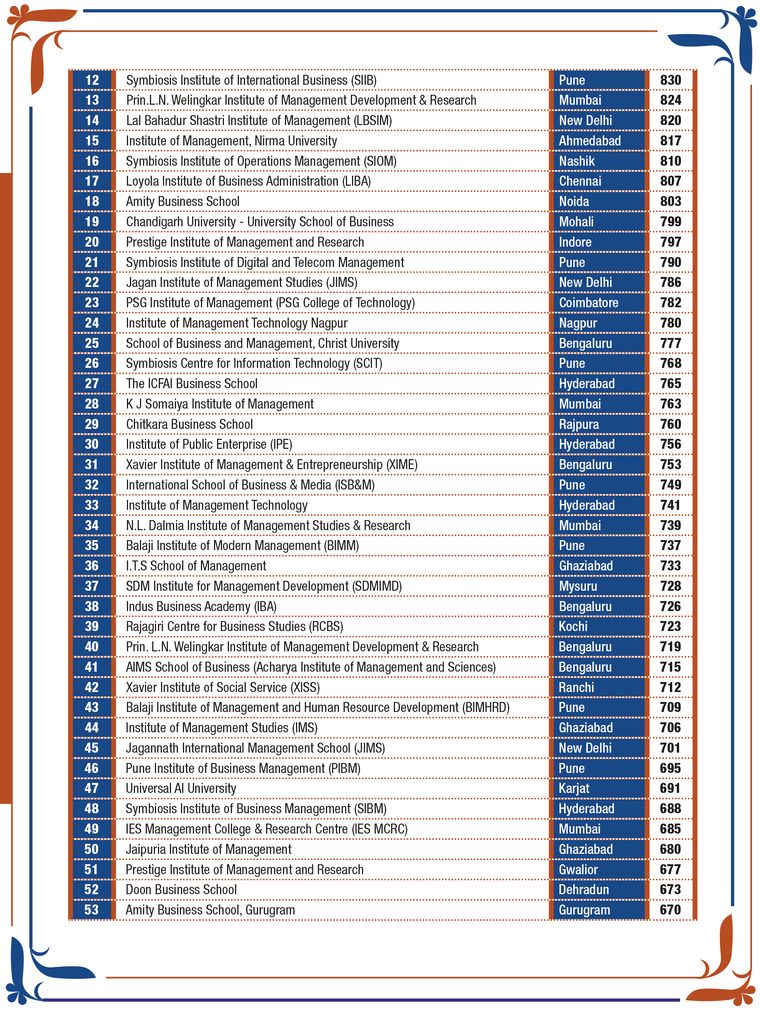
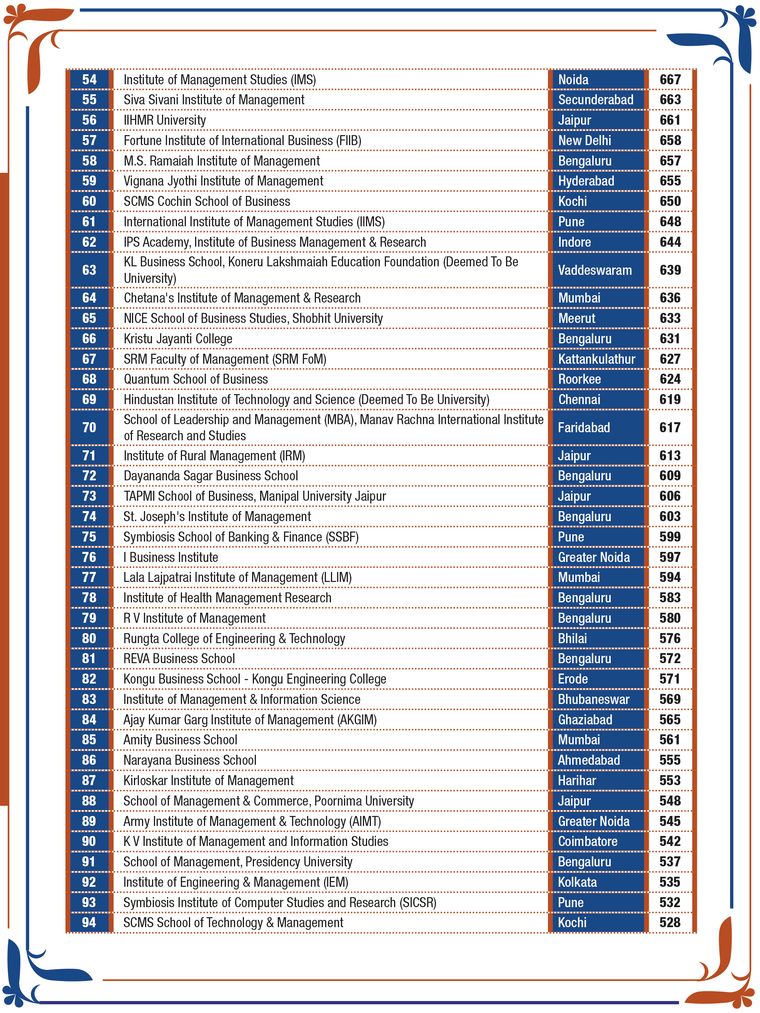
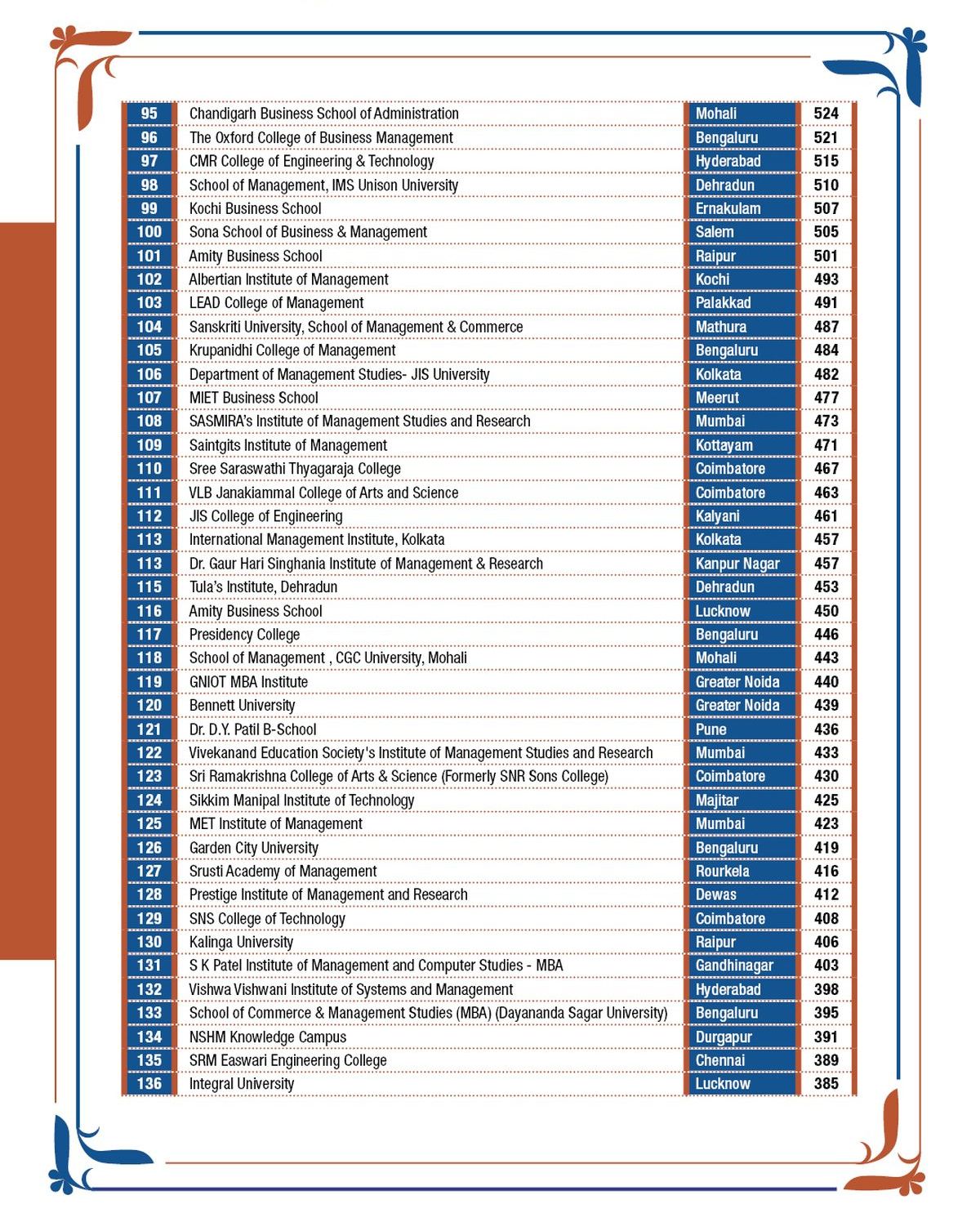
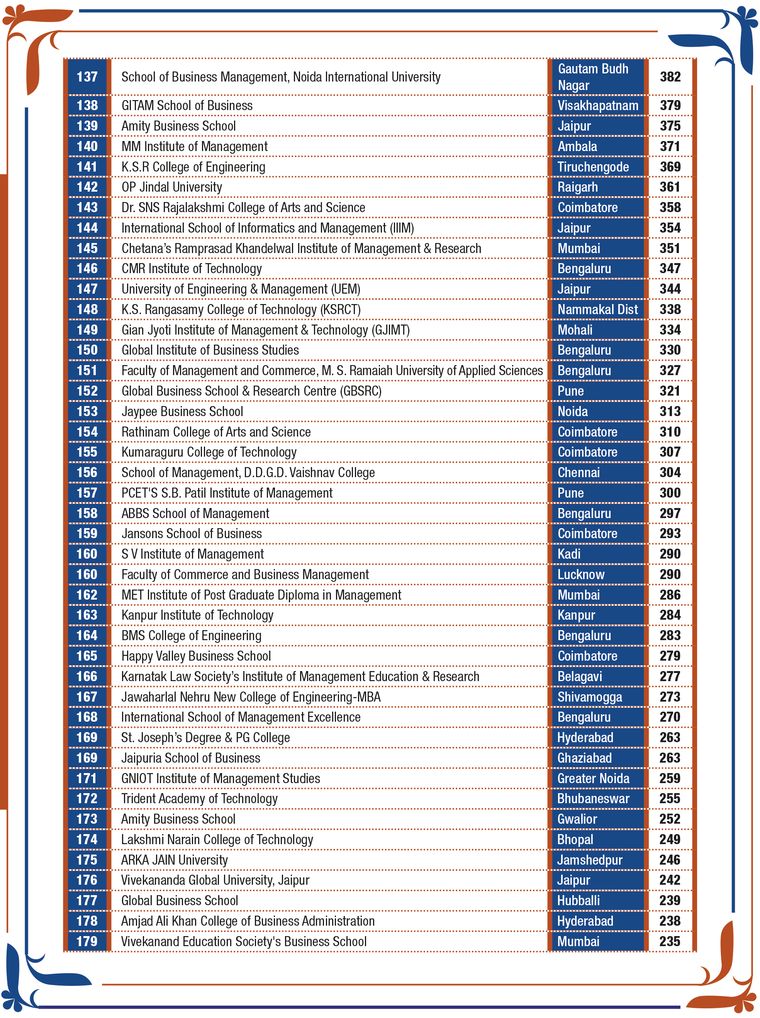
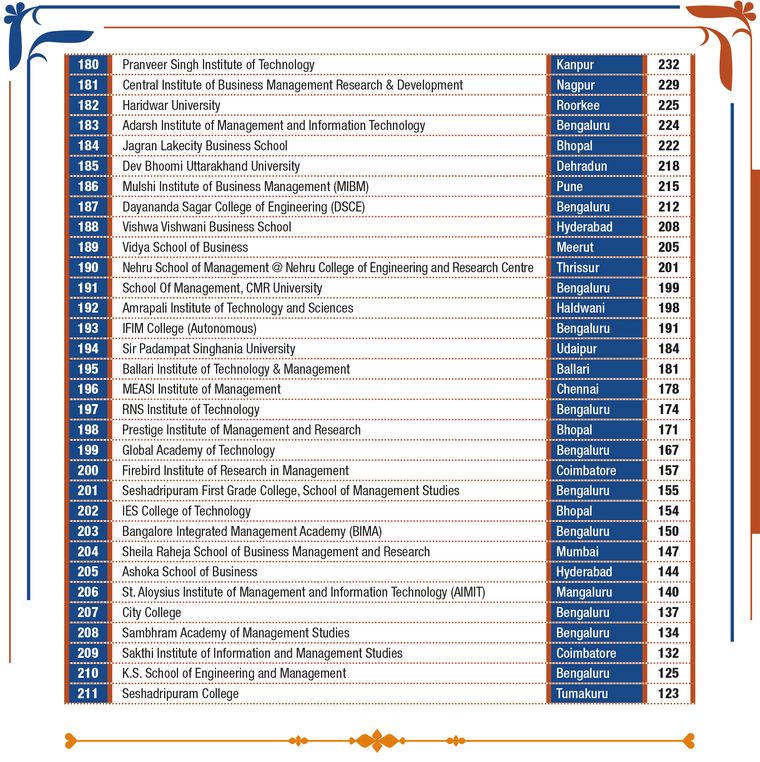
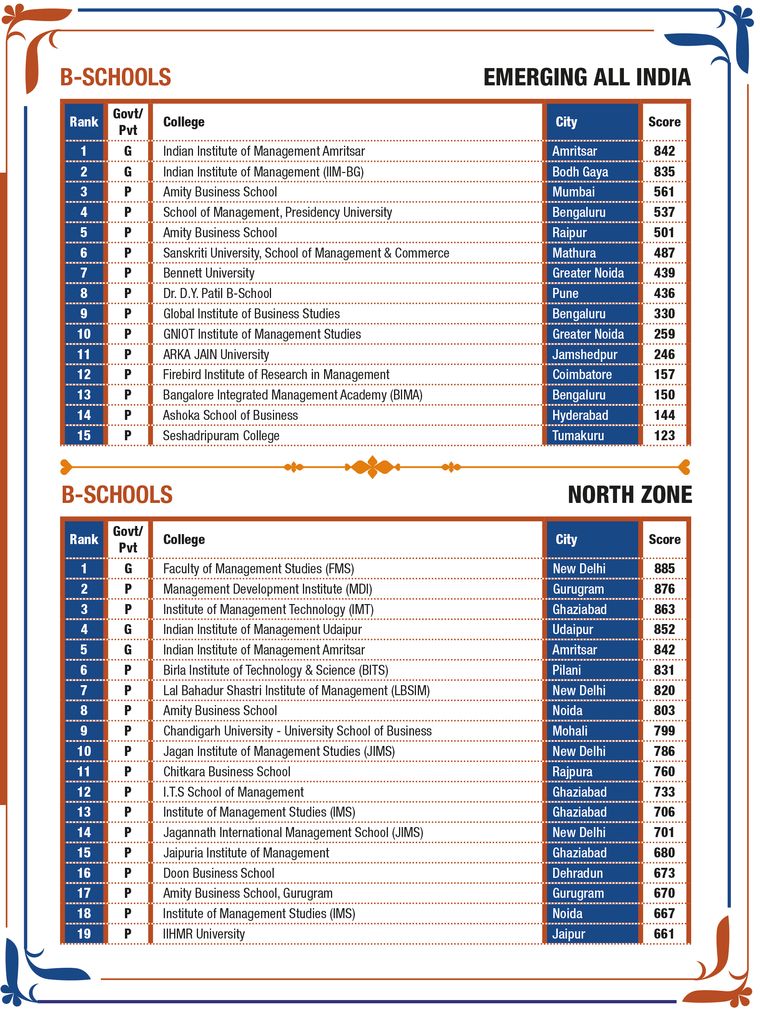
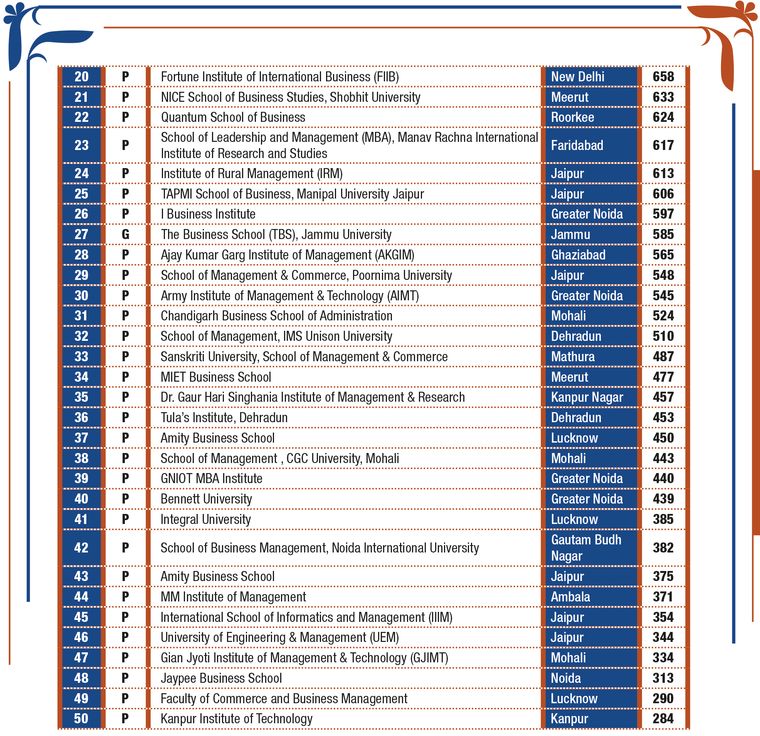
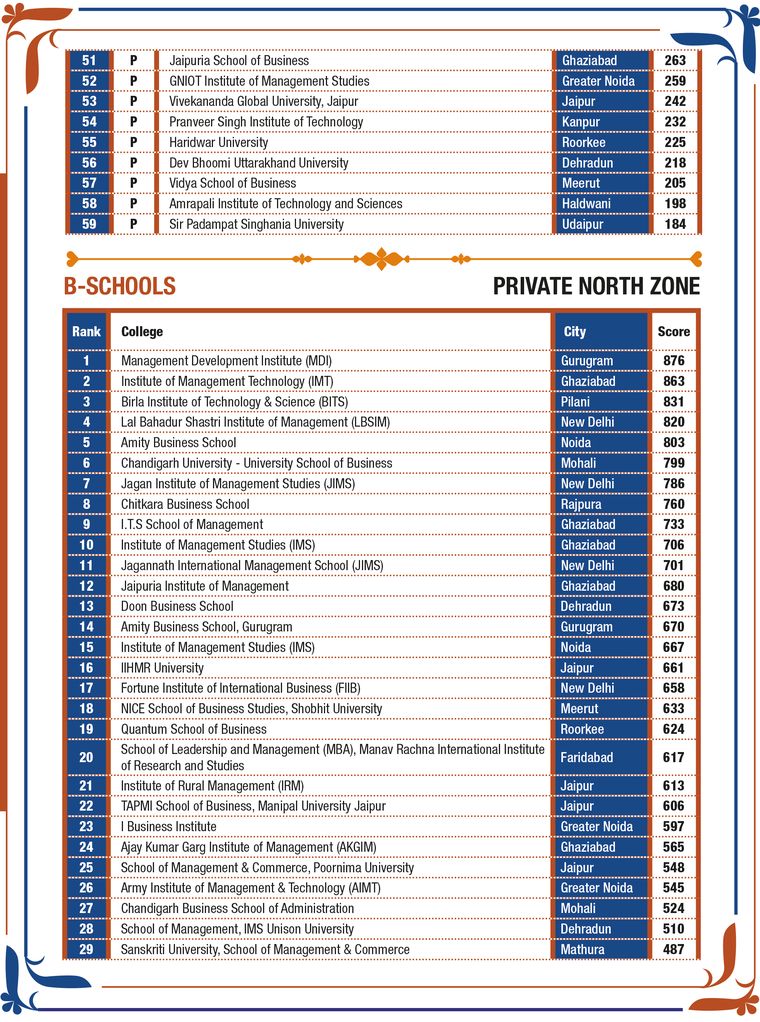
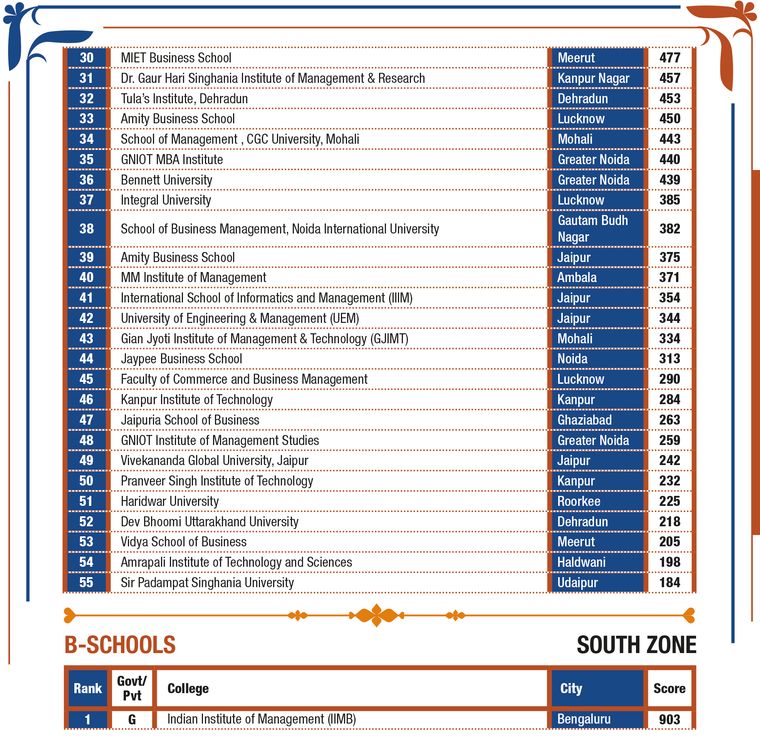
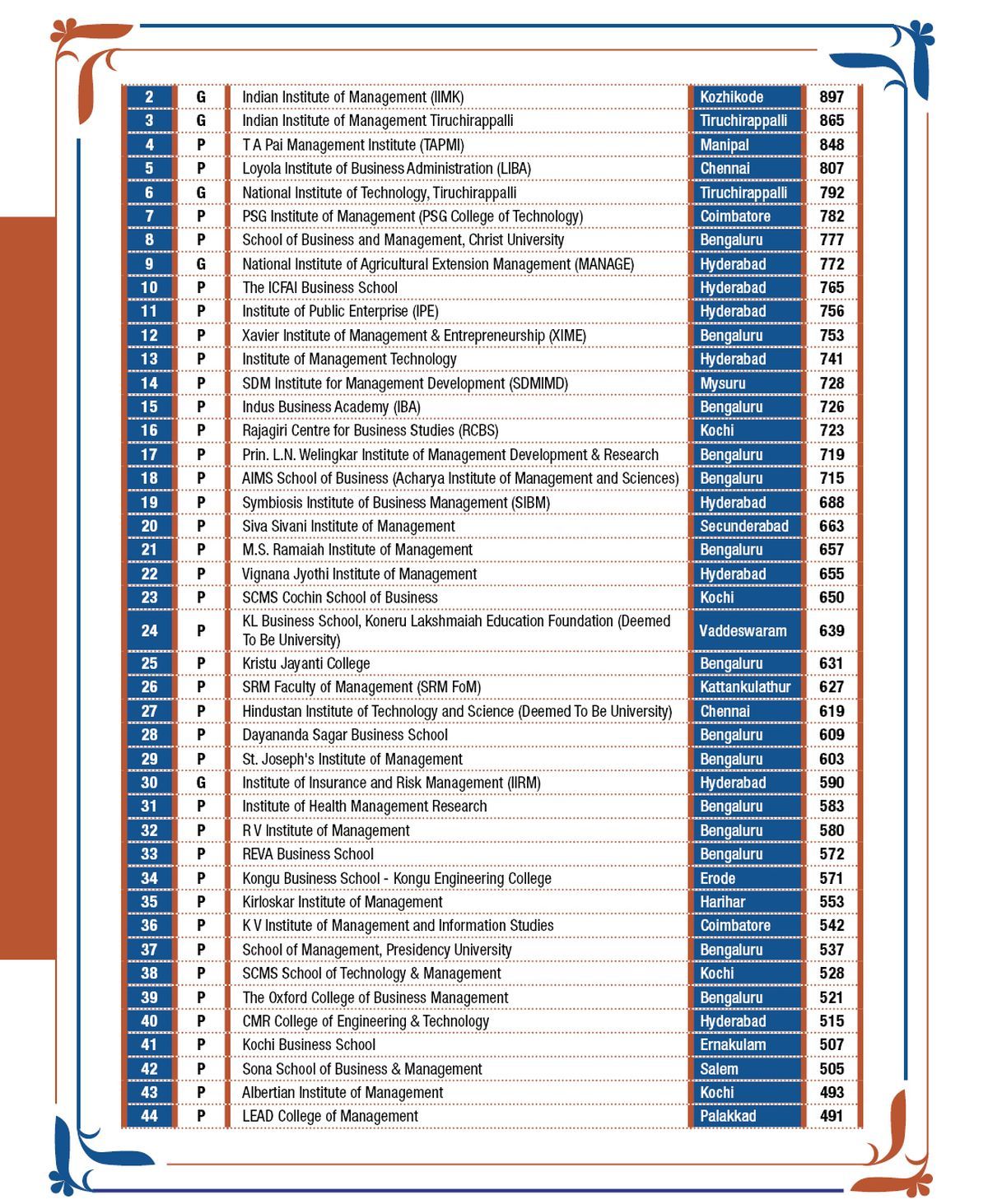
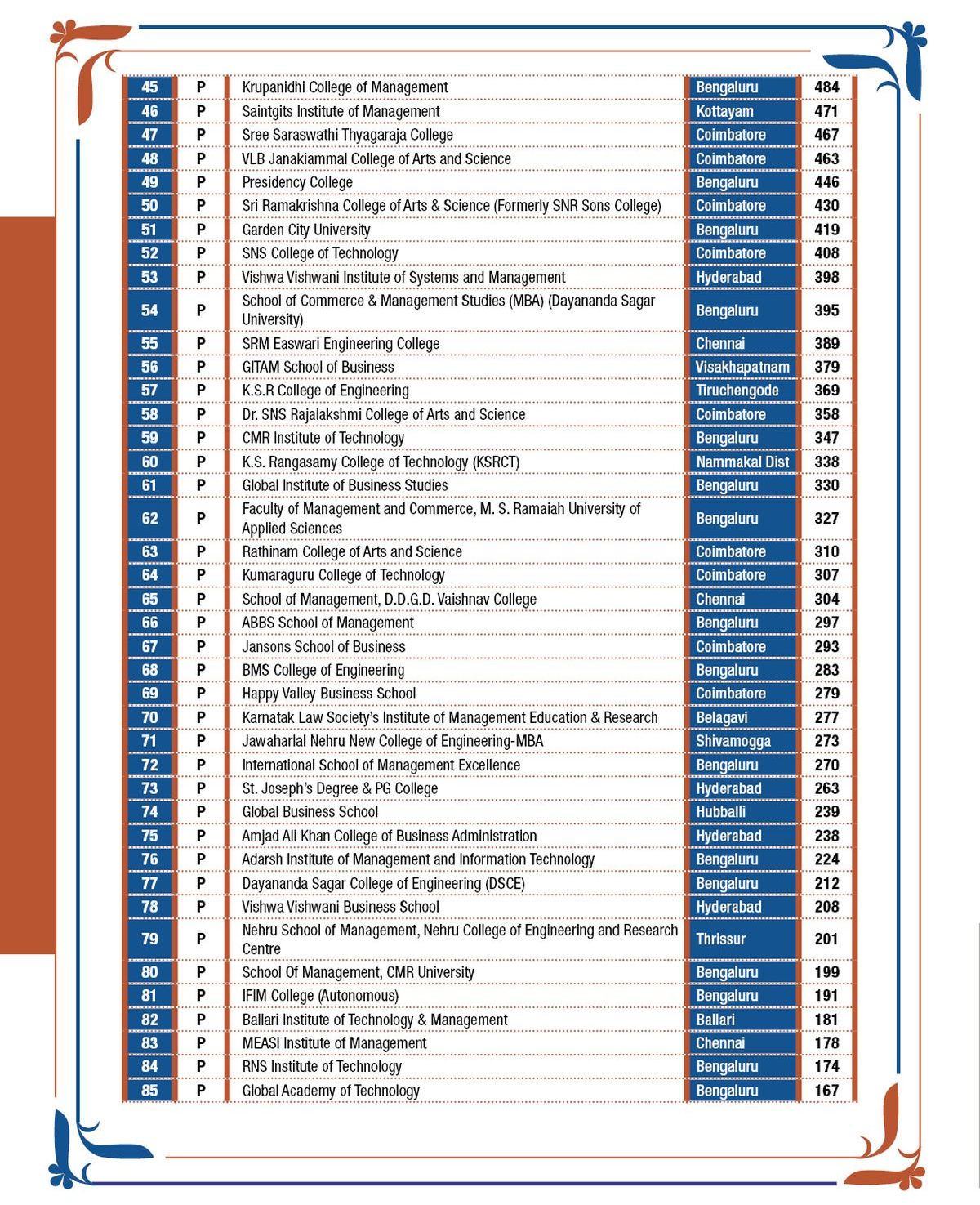
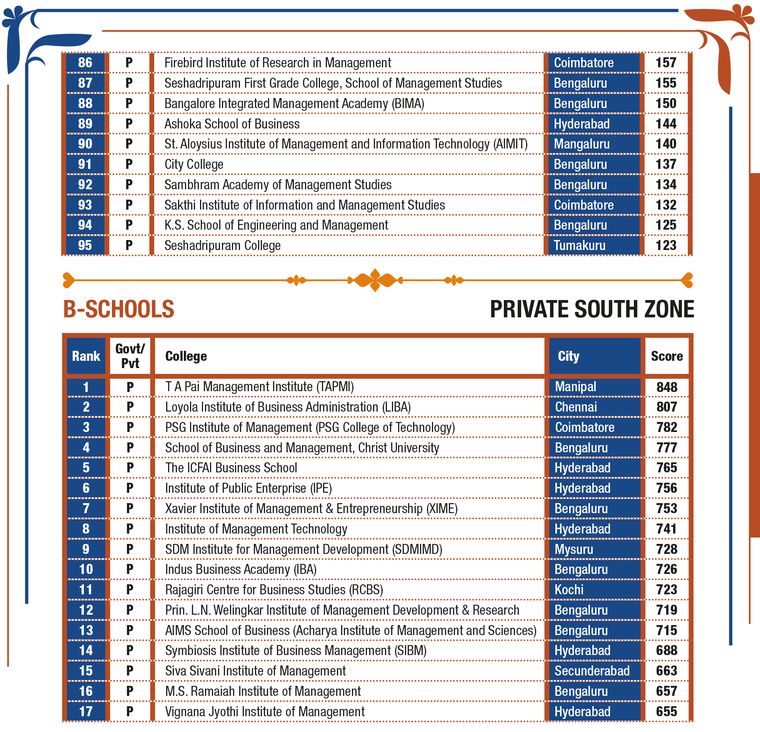
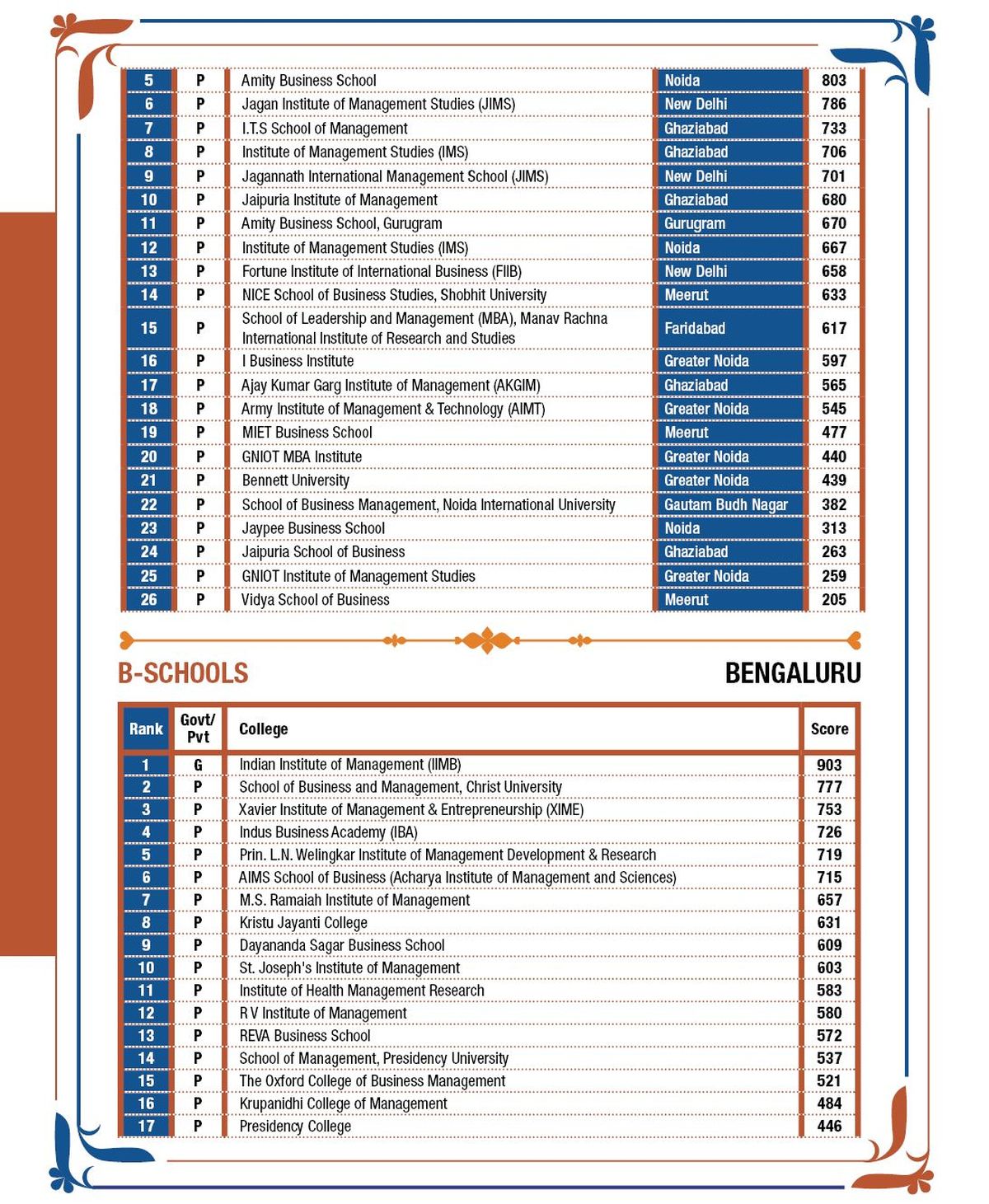
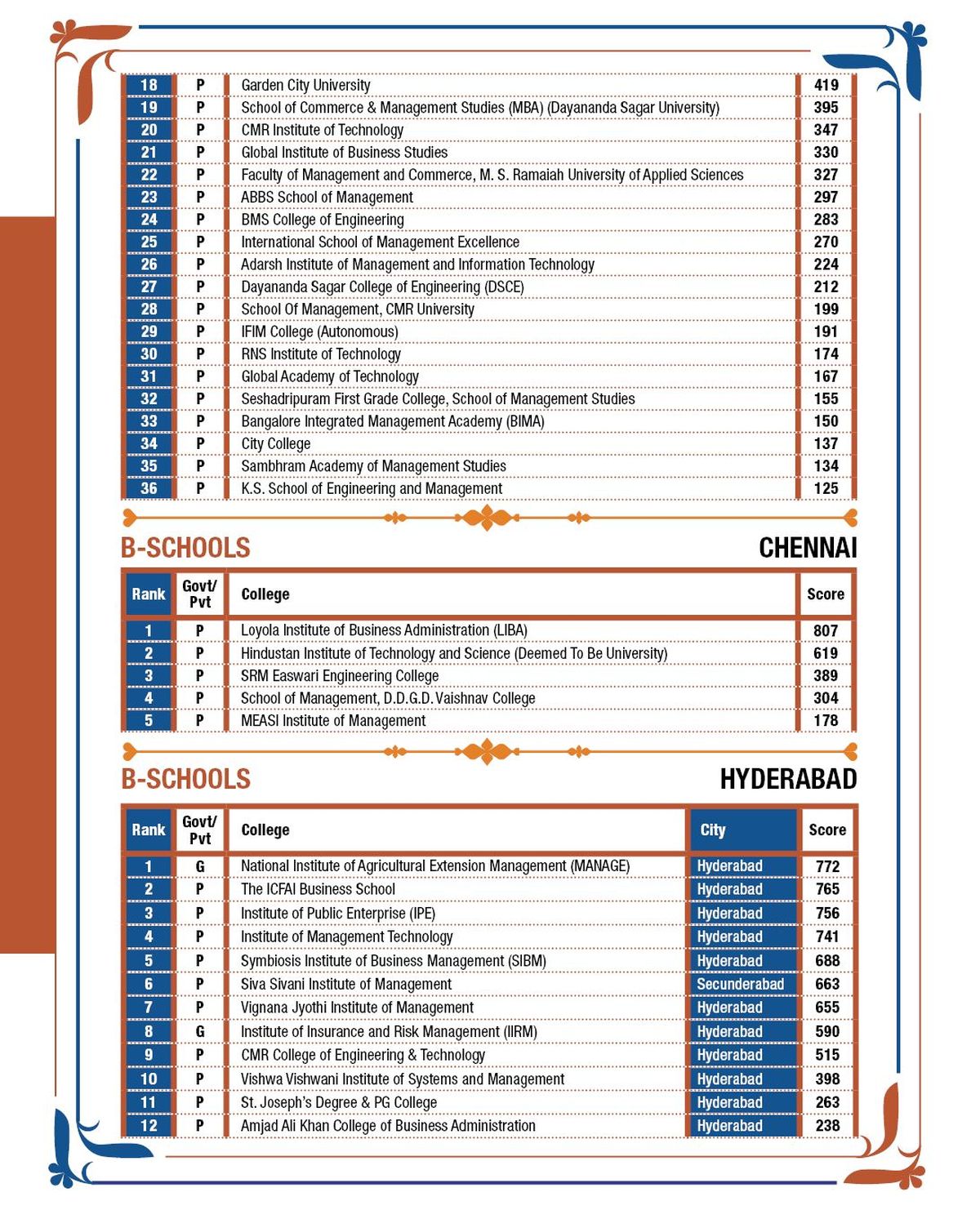
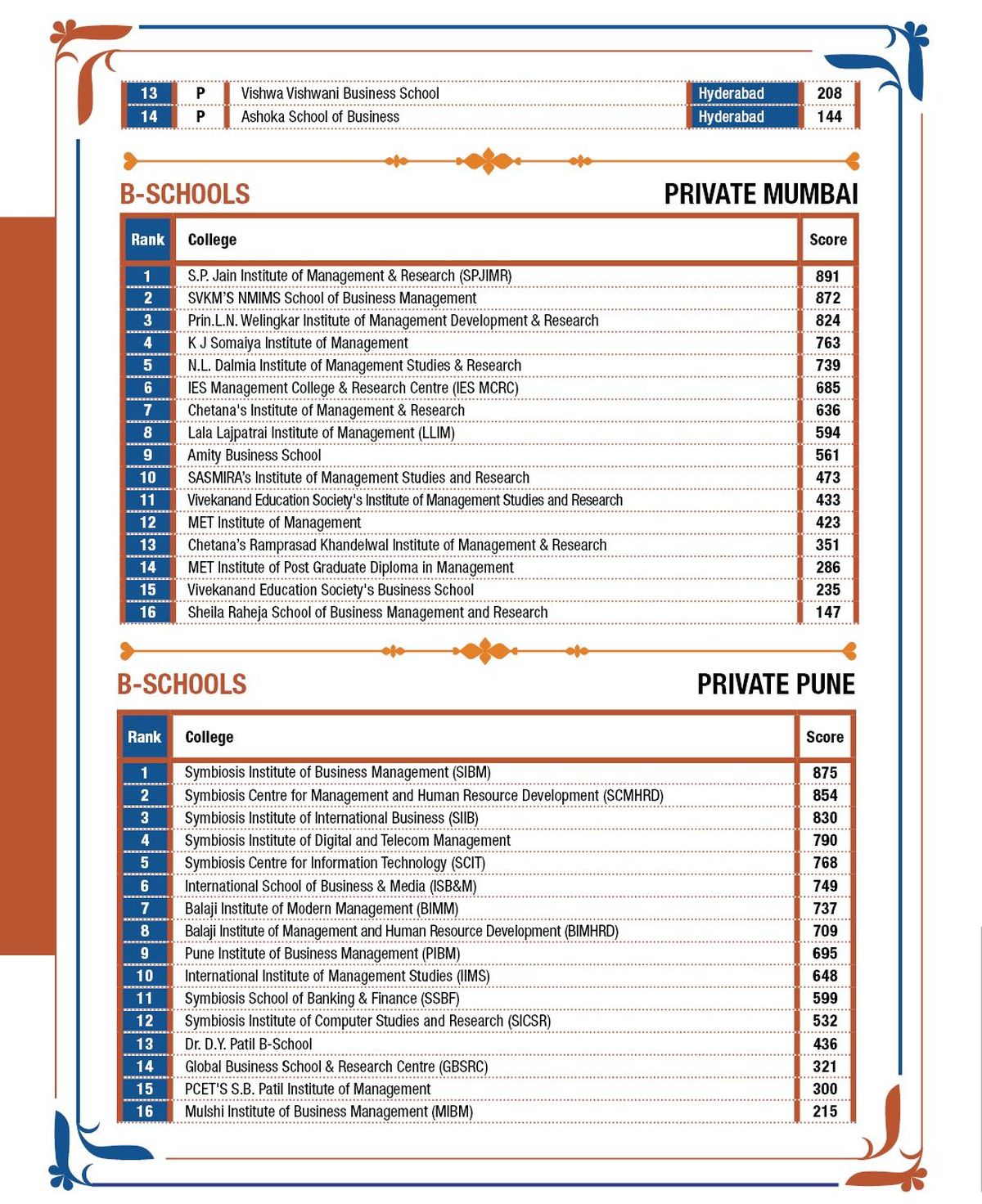
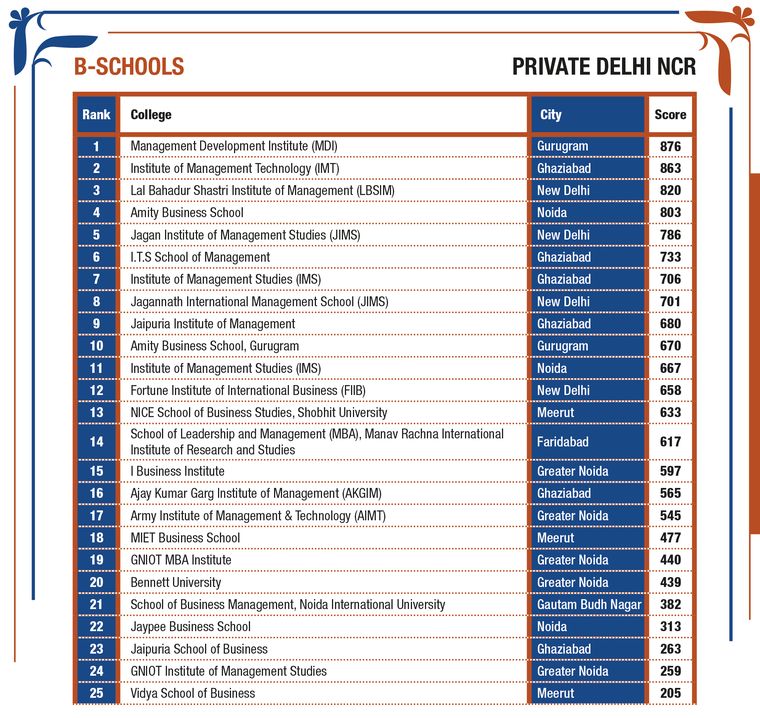
A primary survey was conducted in August-September 2024, where 187 academic experts, 618 students and 37 recruiters from 17 education hubs nominated the best b-schools in the country.
A closed-ended questionnaire was given to stakeholders, asking them to nominate and rank the top 25 b-schools in India and the top b-schools in their zones.
Perceptual score: Calculated based on the number of nominations received and the actual ranks given to the b-school in the All India category and in its zone.
FACTUAL INFORMATION COLLECTION
August-October. The participation link was sent to more than 1,400 b-schools, of which 186 responded on time. For 47 b-schools, 2024/2023 data was used.
Factual score: Overall infrastructure (20%), faculty (12.5%), teaching-learning and extracurricular (30%), and placements (37.5%)
RANKING METHODOLOGY
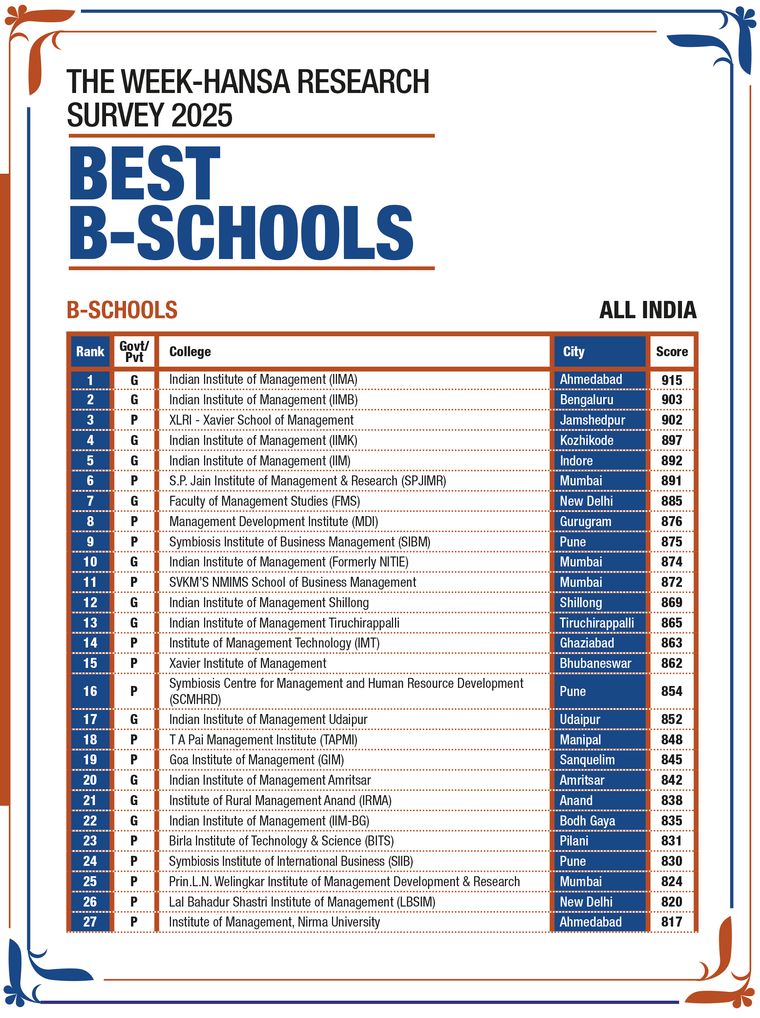
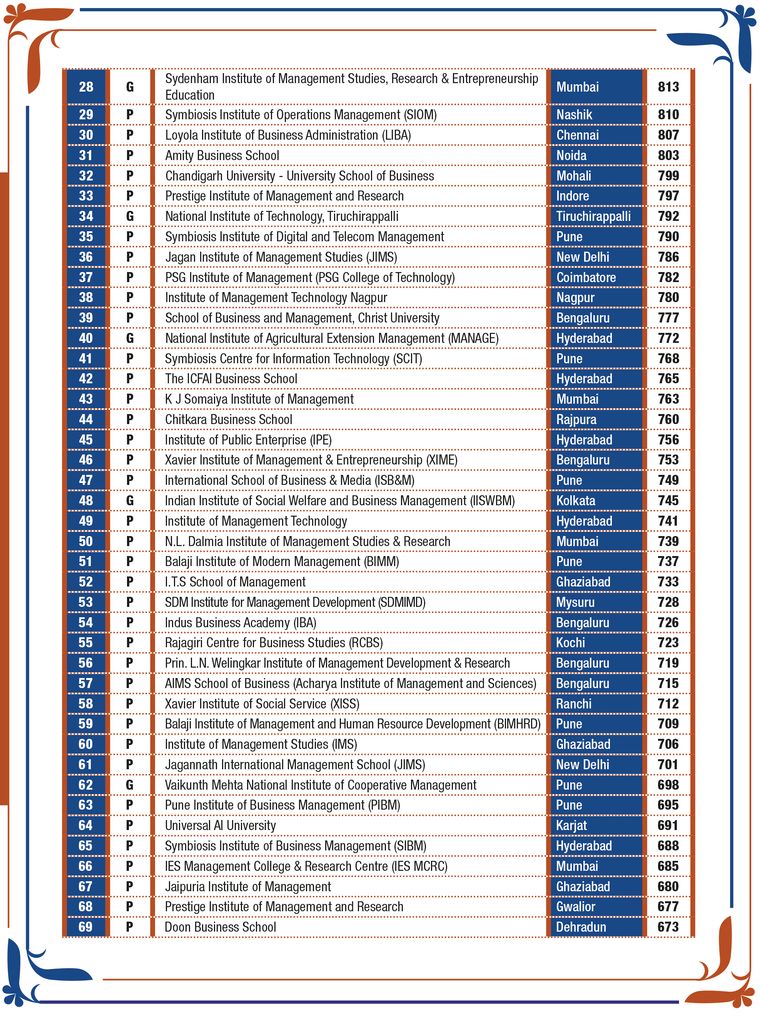
Ranking is based on a composite score, derived by combining the perceptual score and the factual score. For b-schools that could not respond within the deadline, the composite score was derived by combining perceptual score with an interpolated appropriate factual score.
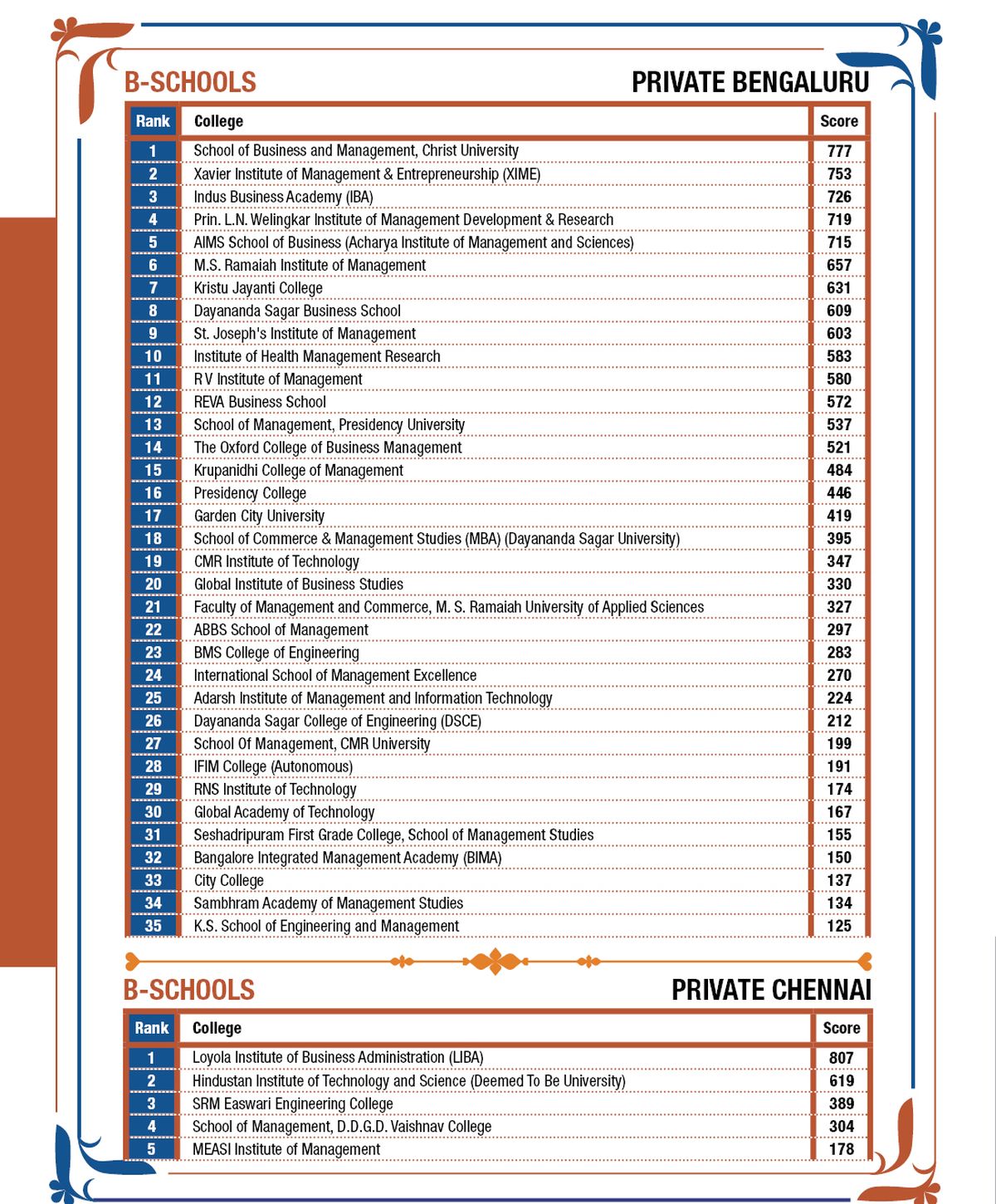
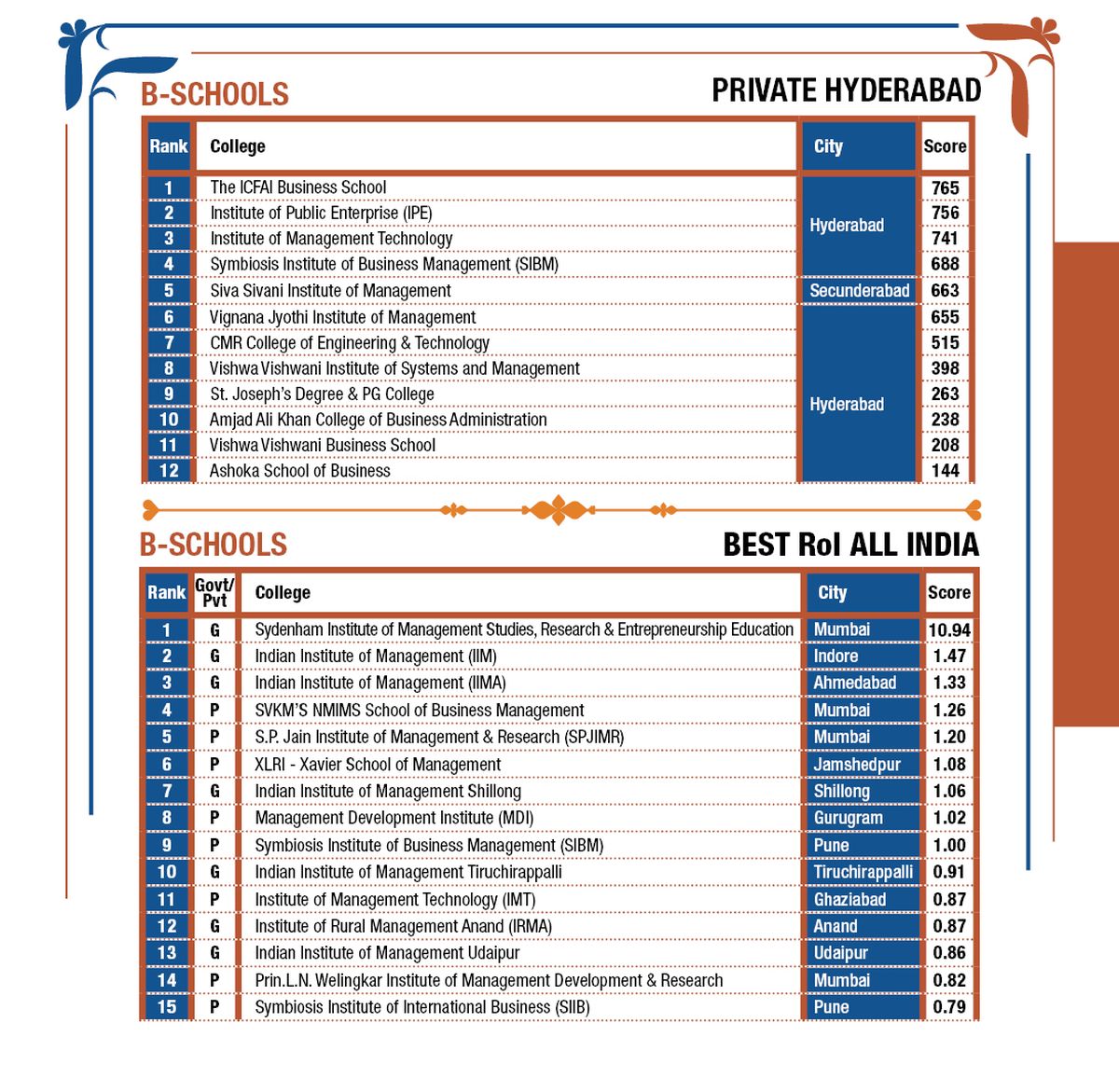
For RoI ranking, only the top 30 were considered. Within that group, only the b-schools which shared factual information in 2025 were ranked. RoI was calculated as average domestic salary package divided by total programme fee.
“LOOKING AHEAD
Five years from now, management education will operate on an entirely new plane. MBA will be re-programmed as ‘Master of Business Ambiguity’. AI will personalise learning journeys, global classrooms will become borderless, and interdisciplinary thinking will be the new core competence. —Debashis Chatterjee, Director, IIM Kozhikode
Education will shift from conventional degrees to competency-based learning, design thinking, micro-skills and problem-solving. Institutions that nurture innovative, conscious, research-oriented and emotionally intelligent leaders will lead the way. —Ritesh Goyal, Founder, chairman and managing director, GIBS Business School, Bengaluru
It is likely that in the near future we will be part of a world that is significantly automated not just in manufacturing but in the services as well. Such businesses would free up time to develop better human relationships. —Rev Roshan David Pereira, SJ, Director, St Joseph’s Institute of Management (SJIM), Bengaluru
AI-driven learning, simulations, global collaborations and real-time projects will dominate. Focus will shift from degrees to skills, innovation, entrepreneurship and leadership agility. Institutes will increasingly partner with industry. —M.R.S. Surya Narayana Reddy, Director (admissions), Vishwa Vishwani Institutions, Hyderabad
The dominant theme will be integration: integration of technology with pedagogy, of lifelong skills with credentials, and of industry with academia. —Sardar Taranjit Singh, Managing director, JIS Group Educational Initiatives and chancellor, JIS Group
True management education is a balance of competence, character and compassion. Over the coming years, management education in India will be defined by technology, experiential learning, and values-based leadership. —N.R.K.S. Chakravarthy, Director in-charge, Siva Sivani Institute of Management, Medchal-Malkajgiri, Telangana
We will witness a stronger fusion of technology with human-centric leadership. Programmes will increasingly adopt blended global models, micro-specialisations and cross-border academic pathways. —Rev Sebastian George, SJ, Director, XLRI Jamshedpur
The rise of micro-credentials, stackable specialisations and interdisciplinary learning will redefine how students build careers. We will see lifelong management education—smaller, sharper and delivered across multiple stages of one’s professional journey. —Swati Lodha, Director, MET Institute of Management, Mumbai
AI-driven MBA will become the norm. There will be a complete shift towards skills, not degrees. Experiential, industry-oriented programmes will dominate. Every b- school will become an innovation hub and soft skills will make a comeback.—Sathya Vittal Donepudi, Sr faculty, administrator, trainer, counsellor, mentor and senior admissions specialist, Institute of Insurance and Risk Management, Hyderabad
Management education conventionally focused on knowledge, skills and attitude. Going forward, AI will steer democratisation of knowledge. This will require b-schools to impart skills of reflection, thinking and judgment.—Atish Chattopadhyay, Director, IMT Ghaziabad
The future of MBA will be learn-do-reflect with much emphasis on quality rather than quantity. The competition from global private universities would be huge, with the government encouraging them to open their institutions in India.—Diptiman Dasgupta, Group chief operating officer, IEM UEM Group & IEM Research Foundation
As technology reshapes industries at lightning speed, b-schools will need to adopt future-ready, adaptive models of learning. Artificial intelligence, data science, blockchain and digital leadership will become integral components of the curriculum.—Neha Pandey, Professor and director, Faculty of Management Studies-Institute of Rural Management
“Learn while you work” will shape management education, making it more practical, applied and job-relevant.—Pradip Agarwal, Chief executive officer Heritage Group of Institutions