


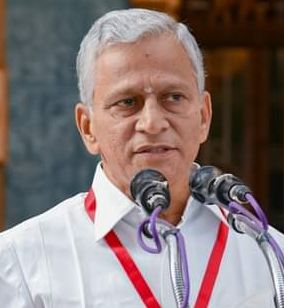
 Siripurapu Koteswara Rao
Mighty oaks from little acorns grow. What began humbly in a remote hamlet, Puttaparthi, has today blossomed into a global spiritual and service movement. The Sri Sathya Sai Seva Organisation now has a presence in more than 125 countries across all continents.
Rooted in Bhagawan’s divinity and his profound, universal message of “Love all, serve all” and “Help ever, hurt never”, the organisation has magnetically drawn people from all religions, nationalities, castes and creeds. His message of love and service led to the founding of the organisation in a modest way—with the formation of a Bhajana Mandali at Prasanthi Nilayam on March 18, 1963, followed by the registration of the Sri Sathya Sai Seva Samithi in Mumbai in August 1965.
On January 14, 1981, Bhagawan blessed the organisation with the divine charter, a milestone that marked the beginning of its expansion beyond all boundaries. He often reminded devotees: “Spirituality has no meaning to a person suffering from hunger. To the hunger-stricken, bring God in the form of food; to the distressed and distracted, in the form of peace; to the sick, as medicine; and to the afflicted, as a remedy. Only thus can spirituality enter one’s heart. Anything done otherwise produces agnostics and atheists instead of believers.”
Today, the Seva Organisation serves in 28 states and 8 Union Territories, across 464 districts, through 3,073 Seva Samithis and 4,224 Bhajana Mandalis. Over 1,10,000 men and 1,10,000 women render service as Sevadals, supported by more than six lakh active workers engaged in spiritual, educational and service activities.
The organisation has adopted 3,327 villages across India under the Grama Seva initiative, working to transform them into model villages.
Through 190 Sri Sathya Sai Skill Development Centres, more than 45,000 young men and women have been trained in employability and entrepreneurial skills.
Also read
- The spirit of Puttaparthi: How Sathya Sai Baba’s teachings shaped a town and touched millions
- ‘Just hearing his name uplifts you’: Dana Gillespie on Sathya Sai Baba
- Philip M. Prasad: Once a feared Naxalite, now a Sathya Sai Baba devotee
- ‘He walked the talk’: R.J. Rathnakar, managing trustee, Sri Sathya Sai Central Trust
- From Viswanathan Anand to VVS Laxman to Vivek Oberoi... : What famous devotees told THE WEEK about Sathya Sai Baba
- ‘I still wear Baba’s green stone set in gold’: Ted Henry
More than two lakh youth have received disaster management training, making the organisation one of the first responders in times of calamity. Over 710 drinking water plants have been installed in water-scarce regions, with drinking water projects implemented in 69 districts and 500 gravity-based systems providing sustainable access to clean water.
The spiritual wing conducts bhajans, Veda classes, satsangs and study circles, fostering inner growth and devotion among members and communities.
The education wing has over 18,000 Bala Vikas gurus. They impart value-based education through more than 20,000 Bala Vikas Centres, benefiting four lakh students.
The organisation runs 100 Sri Sathya Sai Schools, and has adopted 700 schools under its Vidya Jyothi programme.
It also trains Bala Vikas gurus, conducts parenting workshops, youth leadership training, and teachers’ development programmes, ensuring the integration of human values in education.
The service wing undertakes socially relevant, sustainable initiatives such as Narayana Seva and community kitchens for hunger alleviation, medical camps, permanent clinics, and nearly 100 mobile hospitals; telemedicine services in three locations, reaching remote areas; pregnancy and malnutrition care with Sai Protein supplements; Grama Seva in 6,000 villages, including 300 tribal villages; technology mission initiatives for low-cost, village-friendly solutions.
Besides, it undertakes relief work during natural disasters, including housing, clothing and vessel distribution; Sri Sathya Sai Prema Tharu, a large-scale tree plantation drive; Swachhata se Divyata, a community cleanliness campaign; and Liquid Love, the blood donation movement, with over five lakh registered donors across India.
On a modest estimate, volunteerism within the Seva Organisation amounts to 20 crore work-hours of seva annually in India alone.
This vast effort is sustained by the spiritual foundation laid by Baba—emphasising self-transformation through selflessness, sacrifice and service. Every act of service is rendered without cost to the beneficiary, transcending barriers of caste, creed, colour, religion and nationality.
This is indeed a journey from I to We to He.
Rao is national seva coordinator, Sri Sathya Sai Seva Organisations, India.