


The road to ruin is paved with good intentions. This could accurately describe the fact-finding report on Bangladesh by the Office of the UN High Commissioner for Human Rights, upon which Sheikh Hasina is now on trial. A deeply flawed report, this has set a political narrative that has enabled Bangladesh’s illegitimate interim government to run roughshod over Bangladesh and its institutions.
According to Article 10 of the Universal Declaration of Human Rights, “everyone is entitled to a fair and public hearing by an independent and impartial tribunal”. Yet, in Bangladesh, today, the reality could not be further from this. The trial of Sheikh Hasina at Bangladesh’s domestic International Crimes Tribunal (ICT) is no ordinary one, and few would claim she has been entitled to a fair and public hearing.
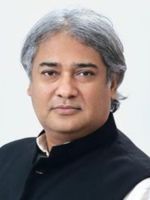 Mohammad Ali Arafat
Just last month, the UN Human Rights chief Volker Türk went so far as to urge “full respect for the most scrupulous standards of due process and fair trial, as guaranteed in international law”. What we are witnessing in Bangladesh is the rise of sham legal proceedings administered by kangaroo courts for political reasons.
The ICT Bangladesh is not the “independent and impartial tribunal” that the UN has enshrined in international law and is a betrayal of Article 10. This is a compromised tribunal, staffed by a woefully inexperienced and partial judiciary. It has been established at the behest of an unelected regime that holds neither the legal nor the moral authority to prosecute a democratically elected government. At the most basic level, fundamental principles of due process and fairness have been ignored. From the start of proceedings, it has been clear that this trial against Sheikh Hasina was never about justice.
This is a tribunal replete with conflicts of interest. Its chief prosecutor, Mohammad Tajul Islam, known for his defence of Jamaat-e-Islami leaders responsible for acts of genocide and crimes against humanity, made it clear that this trial was a mere formality and its outcome predetermined. None of the three judges appointed to the ICT has any experience of dealing with international criminal law matters. One of these three, Shafiul Alam Mahmud, has no experience at all of even being a judge. This would be like the Democratic Party putting President Trump on trial, ignoring the supreme court, and instead installing a rookie. It is a farce.
The ICT is almost certainly facing political intimidation from the Yunus regime. We have seen other examples where members of the judiciary to have been influenced by his administration’s unconstitutional force. Yunus-backed mobs have previously forced some of the most senior figures of the judiciary, including the chief justice himself, senior judges of the appellate division and 12 high court judges, to resign from judicial duties on the threat of physical violence.
Sheikh Hasina is facing charges for crimes that simply did not exist at the time of her leadership. They are the result of the interim government’s warped amendment of the Anti-Terrorism Act, which has legalised the prosecution of entire political parties.
The Yunus-backed National Citizens’ Party has made clear that convictions must be guaranteed, even calling for members of the former government to be “hanged” before elections can take place. There can be no doubt that this is not the climate of a free or fair trial.
Instead of referring proceedings to the International Criminal Court in the Hague, the only truly international tribunal capable of delivering impartial justice on charges of this nature, the interim government has sought to keep control firmly within its clutches. The irony of a government administering the death penalty in a trial about human rights abuses must not be lost on the international community. Indeed, numerous human rights groups and the UN itself have urged the Yunus administration not to pursue the death penalty, a caution that has fallen on deaf ears.
Also read
- Will chorus for Hasina's return grow, further straining New Delhi-Dhaka ties?
- 'They'll probably sentence her to death,' says Sheikh Hasina's son as Bangladesh braces for ICT verdict
- Dhaka on edge: Police ordered to shoot protesters ahead of Sheikh Hasina verdict
- Clinton family, US aid agency behind Sheikh Hasina’s downfall, says former Bangladesh minister
- India's tightrope walk: Navigating the post-Sheikh Hasina era in Bangladesh
In its current form and under the present circumstances, it is simply not possible for the ICT to deliver any justice process compatible with the international standards of fairness espoused by the UN human rights commissioner.
The UN must nevertheless recognise the role it has played in laying the foundations for this trial. In February, the report published by the Office of the High Commissioner of Human Rights ultimately emboldened the unelected Yunus regime to run riot across Bangladesh’s institutions. It is a report that has served as an unimpeachable source for many international media outlets, but which is fundamentally based on uncorroborated and unreliable testimony from unnamed security officials and partial evidence supplied by the interim government.
The report itself admits that it cannot supply the levels of proof that would satisfy a criminal court, and yet its findings have been reproduced as gospel. In the current climate of fear, it is unsurprising that witnesses would point the finger at whichever group the current government wants to implicate. In one of its last acts, the Hasina government launched an official inquiry into the events of the summer of 2024. It would have fairly, and impartially, established the facts of those terrible events. It is telling that one of Yunus’ first moves was to cancel that inquiry and instead rely upon the UN’s deeply flawed report.

A core failing of the UN’s report is its observational bias and its willingness to gloss over the waves of retaliatory violence and undocumented lynchings, hangings and revenge killings that targeted police officers, religious minorities and Awami League supporters. This violence was insufficiently investigated and the resultant death count woefully underestimated. The UN references a mere 44 revenge killings but suppressed documentary evidence detailing names, dates and causes of death that was provided to the high commissioner’s office by the Awami League, which places this figure as high as 144.
While the UN admits that this report is flawed in its methodology and time-frame, it has left a damaging one-sided narrative go unchallenged. But it has still never explained why it did not accept the Awami League government’s invitation to observe the violence on the ground, after the government established an inquiry commission that the Yunus regime later dissolved. Nor has it sought to investigate the politically and religiously motivated violence that has devastated the nation since last August and the ongoing threats to democracy. The report does a cruel disservice to ordinary Bangladeshis whose lives have been blighted by daily looting, muggings, robberies, acts of arson, rape and even murder. This report has served only to endorse an entirely undemocratic regime and legitimise its actions in the name of “reconciliation”.
One of the report’s most egregious errors is its incomplete, vague and even contradictory calculation of the total death toll. In its preliminary report, the UN reported an estimated 650 deaths, a figure that rose inexplicably in the final report to 1,400 deaths. This figure, it reveals, is based solely on “discussions with government officials and injured persons” and therefore cannot claim to embody the empirical rigour required of a “fact-finding” mission. What’s more, this figure is significantly higher than the Ministry of Health’s calculation of 843 deaths up until August 5. Are we to deduce, therefore, that the additional 500 deaths recorded by the UN in its report, which ostensibly runs to August 15, are in fact casualties of the Yunus regime, many of whom are likely to Awami League supporters or members of the law enforcement? If this is the case, then the Office of the UN High Commissioner for Human Rights is effectively trying to prosecute the Awami League for the murder of its own people. If it is not the case, why did the UN not analyse the deaths that occurred in the weeks after August 5?
The UN’s report raises significant questions about the control the Yunus regime exercises over supposedly non-partisan international bodies. There is no doubt that the UN has a vital role to play in advocating for the human rights of all individuals across the world. These rights are fundamental and enshrined in international law, and the UN is right to draw attention to where these have not been respected. But if the Yunus regime is to take the UN’s report as sacrosanct when it suits its own agenda, it must also heed Volker Türk’s warnings and take accountability for its blatant manipulation of justice and its draconian use of capital punishment. It cannot disregard the inconvenient truth of its own human rights abuses.
The author is former information minister and central leader of the Bangladesh Awami League.