



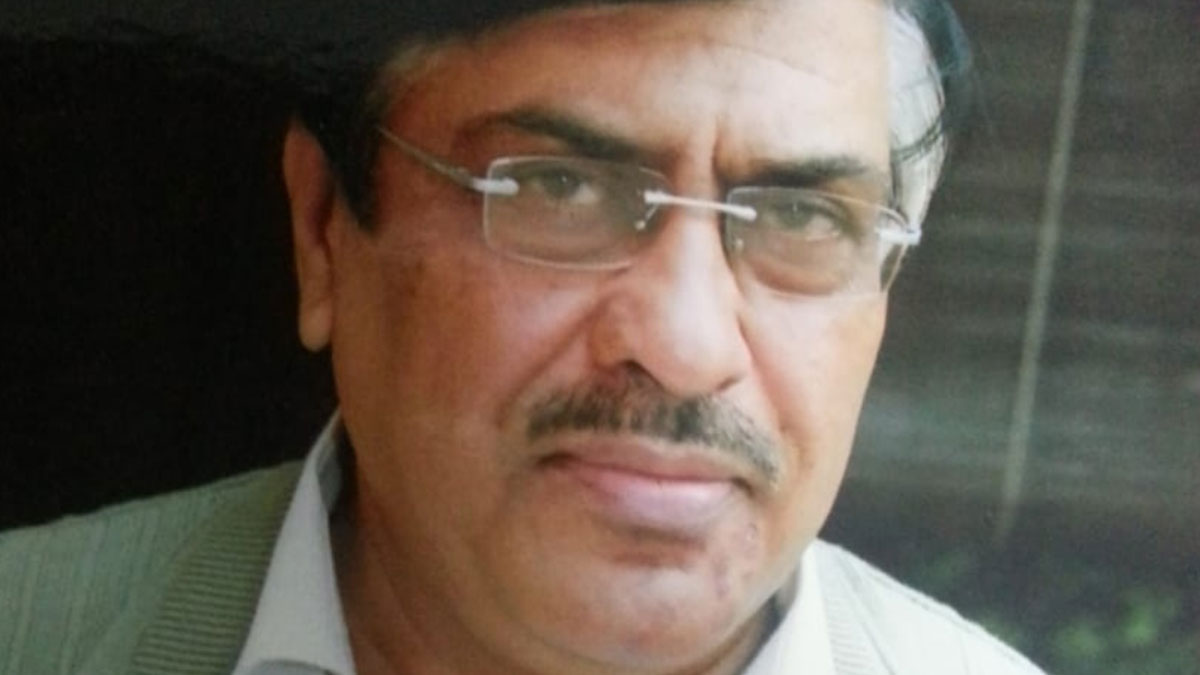
Interview/ Dr Imtiaz Ahmed, historian and former director, Khuda Bakhsh Oriental Library, Patna
Q/ Icons like Ashoka and Shivaji are being reinterpreted as caste representatives. But in many cases, like Ashoka’s, their actual caste is unknown. So, as a historian, do you think caste is a reference point in such cases?
Normally, no—it’s definitely a later construct. The political angle is central, because politics here revolves around caste. But another factor is competition—each caste now seeks its own icon. Some big names, some small, but it’s about asserting not just caste identity, but also a broader social identity. So this phenomenon must be seen in that context, too.
Q/ Do you think this trend is new, or was it always there?
It has intensified in recent years. If you look at where it emerged, it goes back to around 1938, when the so-called backward castes in Bihar—particularly Kurmis and Koeris—formed the Triveni Sangh. That was a turning point. Backward caste politics began to gain real significance then. Earlier, their representation was almost nonexistent. Things changed later—by the 1970s, when Karpoori Thakur became chief minister, the pattern was set. From then on, the post of state chief minister generally remained in hands of backward castes; as an exception we do have dalits and upper castes persons as well.
Since then, political power in Bihar has remained primarily in the hands of backward communities. Once that happened, competition emerged even among these groups. People began asking: why only Yadavs, why not others? That’s also a way of asserting identity—through political awareness and mobilisation.
Q/ What about Shivaji, who does not belong to Bihar?
In his own time, he wasn’t regarded as a Kshatriya. It was only when a scholar from Banaras performed a ceremony declaring him a Kshatriya that he gained that status. For centuries, he was accepted as such. But now, he is being claimed as a Kurmi or Kushwaha icon. Kshatriyas don’t really need to claim him anymore, they have plenty of icons. A similar story exists for Ashoka and the Mauryas. Initially, some believed they came from lower strata, but later they were reclassified as Kshatriyas. So, these reinterpretations keep happening in history. They shift with time, reflecting the social and political requirements of each era.
Q/ Is it only limited to castes in Bihar?
From the 1970s and especially the 1980s onward, backward castes consolidated political power. During Lalu Prasad’s rule, politics became heavily “Yadavised” through the MY (Muslim-Yadav) formula. That, I think, was the turning point.
A vice-chancellor in one of our universities belonged to a backward Muslim group, the Ansaris. He never used “Ansari” with his name. But his son later began using it. That shows how times changed—what once lacked prestige now became a mark of both social and political identity.
Many people in Bihar who were called “Malik” earlier identified themselves as “Syed”, claiming descent from noble Arab lineages. But scholars like the eminent mediaevalist Syed Hasan Askari always contested that claim, saying “Malik” was originally a military commander title, not Syed. Over time, “Malik” came to be recognised as a backward caste in Bihar. So caste dynamics have been very significant here, shaping both political power and social identity.
Q/ So what is happening now?
What we see now is a pattern: assertion of identity, mobilisation through perceived rights, and consolidation of social identity. These factors drive the process. This identity assertion hasn’t yet fully entered academia; it hasn’t permeated historical or educational texts yet. It’s still largely limited to political and social spaces.
Q/ So it hasn’t made its way into books or textbooks yet?
No, not really. It exists in the public domain, but I am not sure how far it has entered academic texts. That is more a sociologist’s question than a historian’s.
