



ON AUGUST 22, former Sri Lankan president Ranil Wickremesinghe was handcuffed, taken to court, remanded and sent to the Welikada prison in Colombo. It was a historic moment—no former president had ever been arrested on criminal charges.
The case relates to his two-day stopover, on September 22 and 23, 2023, in the UK with his wife, Maithree. After addressing the UN General Assembly in New York, the couple went to London; Maithree was to receive an honorary professorship at the University of Wolverhampton for her extensive research on gender equality.
The stopover cost 16.6 million Sri Lankan rupees (about Rs48 lakh), which allegedly came from state funds. The Anura Dissanayake government accused Wickremesinghe of misusing public money and slapped charges under sections 386 and 388 of the penal code and section 5(1) of the Public Properties Act.
With the arrest, the government signalled its resolve to clean up the administration regardless of high office. Denying accusations that the move was politically motivated, Dissanayake said it was an essential step to restore public trust. “Wealth, power or lineage should not matter—all are equal before the law,” he said at a public event in Colombo soon after the arrest. “No matter the criticism, we will not turn back. If my government and I fail to fulfil this duty, then no government will ever succeed.”
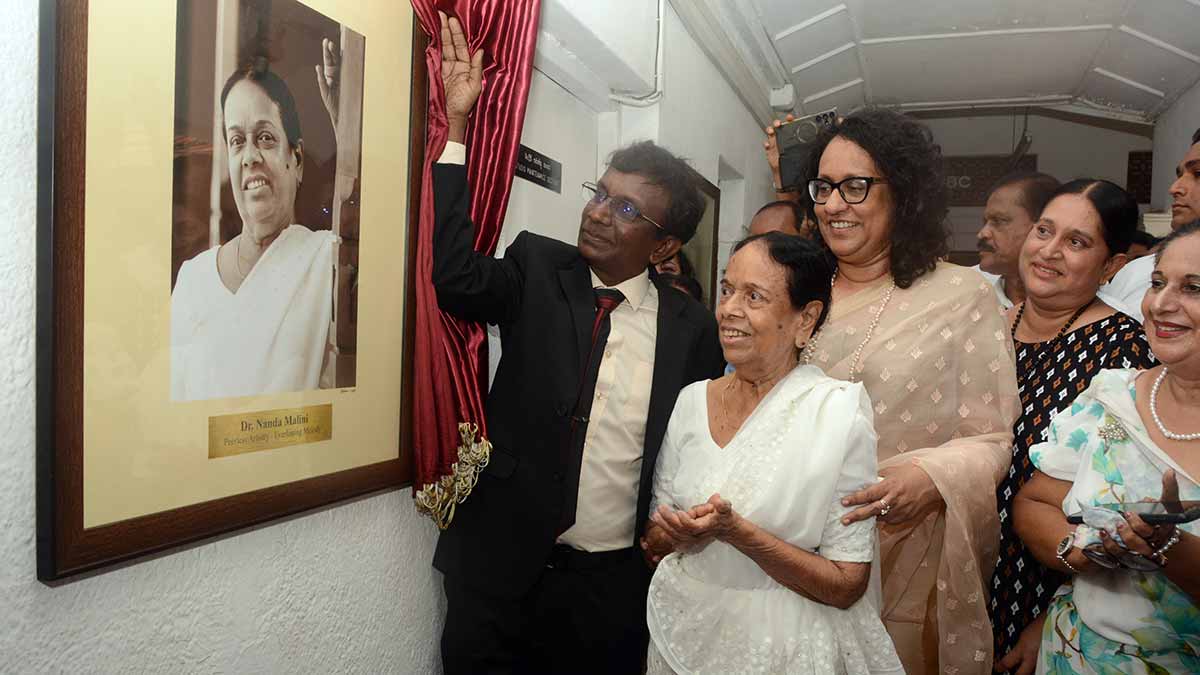
There is also symbolism behind the arrest. As Wickremesinghe was picked up from home, Prime Minister Harini Amarasuriya, along with Sri Lanka Broadcasting Corporation chairman Uditha Gayashan Gunasekara, honoured veteran singer Nanda Malini by officially naming studio 09 as the Dr Nanda Malini Studio. The frail, soft-spoken woman—always seen in a white sari—is known for her revolutionary songs and was once banned from all radio broadcasts in Sri Lanka.
She had sung what became the most powerful Sri Lankan protest song—‘Yadamin Banda Wilangula’ (handcuffed by iron)—in the 1980s during the Janatha Vimukthi Peramuna (JVP) insurgency. Notably, the JVP is now the main constituent of the ruling NPP (National People’s Power).
Describing a mother’s longing for her son who was jailed for his revolutionary ideals, the song’s powerful lyrics questioned the morality of a Sri Lankan system that punished protesters. “She is ubiquitous. Nanda’s voice is earthy, grounded and rousing,” said Sri Lankan independent researcher and columnist Uditha Devapriya. “It speaks in more than one sense to Sri Lankans.” This was seen even during the Aragalaya protests in 2022, when Nanda’s songs inspired the protesters and kept the momentum going.
Three years later, seeing Wickremesinghe in handcuffs would remind JVP members of her songs and the years gone by—the party has long linked him to the notorious detention centres established at the Batalanda housing complex near Colombo during the JVP’s second insurrection from 1987 to 1990.
The Chandrika Kumaratunga government had, in the late 1990s, constituted a commission to investigate allegations of torture at the housing complex. That commission’s report, which “indirectly linked” Wickremesinghe with unlawful places of detention and torture, was tabled in parliament this March.
After discussion and debate, NPP lawmakers said the government should investigate and bring those responsible to justice.
However, in a television interview after being released on bail, Wickremesinghe dismissed all charges in the report, saying there was no evidence. “And because he cannot be remanded and punished based on the commission’s report, the government chose to arrest him on charges that will not even stand in court,” said Akila Viraj Kariyawasam, former minister and assistant leader of Wickremesinghe’s United National Party.
As per Wickremesinghe’s lawyers, the stopover was sanctioned through proper diplomatic channels and Maithree had paid for herself. “The invitation came from the Sri Lankan High Commission in the UK. It was an official visit,” said senior defence counsel Anuja Premaratne.
NPP members disagree. “A government Wickremesinghe was part of killed 60,000 people between 1987 and 1990,” claimed Bimal Rathnayake, senior minister in Dissanayake’s cabinet. “Investigations into those allegations (Batalanda) are ongoing through the attorney general. A person who should have been brought to justice 40 years ago is being investigated by our government only because the investigators are allowed to act independently.”
Interestingly, there has been no sympathy for Wickremesinghe after the arrest. The people feel that no leader is above accountability, which signals that Sri Lanka wants to strengthen the rule of law and democratic checks.
To the outside world, this seems like a break from the long-standing culture of impunity among political elites. And while this could boost international credibility and reassure investors about reforms, it might also raise concerns about political stability during the reform process.
Senior leaders, including former president Maithiripala Sirisena, opposition leader Sajith Premadasa and Namal Rajapaksa, came out in support of Wickremesinghe. Former president Mahinda Rajapaksa visited him at the prison hospital. “The arrest is a serious threat to democracy,” said former president Kumaratunga.
The Dissanayake establishment has taken action against several opposition leaders and a few former bureaucrats. Wickremesinghe’s arrest, said Minister Anil Jayantha, has shaken the opposition camp; they are worried that the law could catch them next.
On August 29, for instance, former MP Nimal Lanza was arrested on charges of assault and trespassing during a protest in 2006. He had surrendered at the Kochchikade police station.
Soon after came the amendment to repeal the benefits enjoyed by former presidents or their widows. With a majority of 151 votes in parliament, the NPP repealed the Presidents’ Entitlements Act, which allowed for a residence or a monthly allowance, secretarial allowance, official transport and monthly pension. Though the move is in keeping with the NPP’s promise of removing corruption and cutting expenditure, it also raises questions about whether the government really wants to cleanse the system or just cut its opponents down to size.
Most Sri Lankans would be hoping it is the former.
