



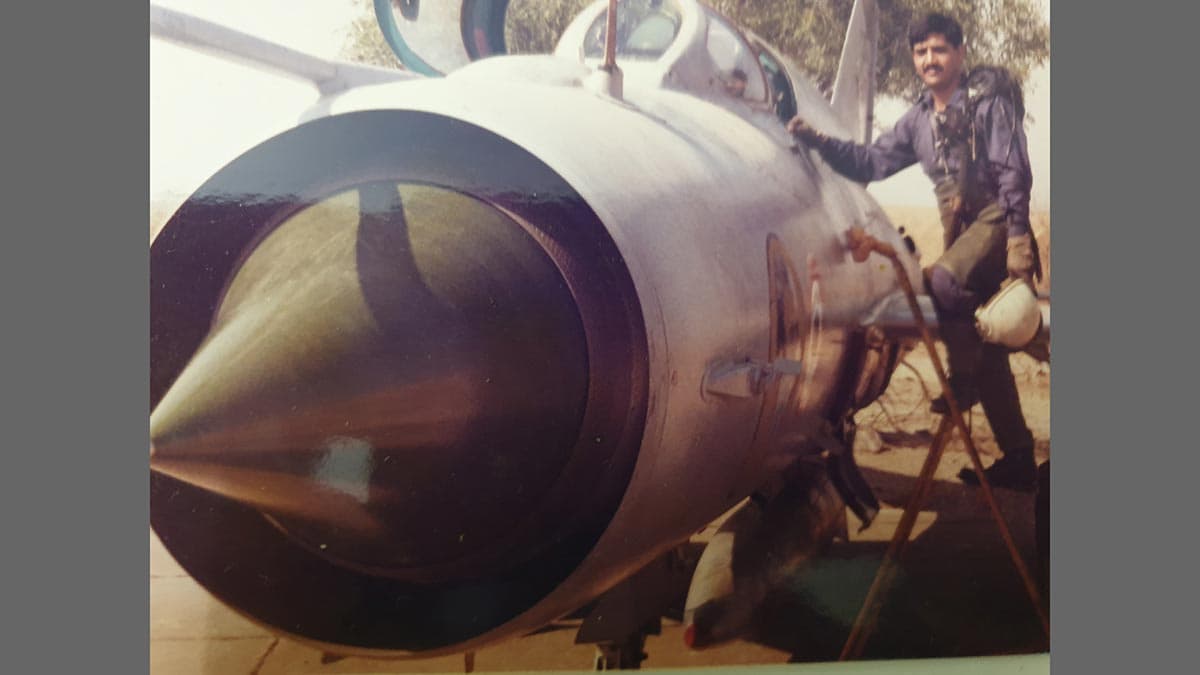
As the MiG-21 flies into the sunset, it is an emotional moment for all those who flew it and maintained it. Before anyone starts lamenting that the Air Force has been flying a 60-year-old aircraft, we need to get one thing right: the MiG-21s that flew in the 1960s and the 1970s are long gone. The last few flying today are less than 40 years old, and all of them have been regularly and meticulously overhauled, some as recently as five years ago.
Forty years is a long time, but it is not an unusual lifespan in aviation. What makes the MiG-21 remarkable is that it markedly exceeded the expectations of its makers and even its buyers. Worldwide, there is no other fighter aircraft of the 1950s design still in active service. And that was possible because the MiG-21 became more lethal and capable as it evolved from the original platform.
The first time I saw the MiG-21 was as a young schoolboy on a chilly morning in New Delhi. We had gone to see the Republic Day parade. An excited buzz went around the crowd as the parade ended, and everyone’s gaze shifted upwards, anticipating the most awaited moment—the flypast. In perfect sync with the commentary, the first aircraft roared past. It was a MiG-21, and it was painted a blazing red. The sight, the sound, the moment—it was exhilarating! If I had any doubts about what to do in life, they were settled right then, right there. I wanted to fly the MiG-21.
After graduating from the National Defence Academy, we were posted to Tezpur, a large airbase in Assam on the banks of the Brahmaputra. This is where all the lucky ones who had been slotted to fly MiG-21s started their journey. It was neither our cradle, nor our playpen, but definitely our first outing in the park. A step into the world that would be ours for decades—the world of fighter flying.
Before we started flying, we had to undergo an intense conversion course on the aircraft, where we were taught everything that a pilot needs to know. Take your car’s user manual, and multiply it about 10,000 times—that is the kind of information a fighter pilot needs to carry in his head.
In between classes, a colleague and I would sneak off to observe takeoffs from as close to the runway as we could. Just to hear the ‘Bang!’ of the afterburner and watch the aircraft accelerate, like Ravi Shastri’s famous ‘tracer bullet’, down the runway. And to watch it land as well, coming in like a dart, touching down, and then deploying its brake parachute, like an umbrella opening against strong wind. What a sight!
Flying it came next. The first thing that hit me was a recognition of what extreme velocity and thrust meant. Imagine being taken to the top of a steep slope, and being launched downhill—from a catapult! That is what the takeoff on a MiG-21 feels like. In the air, it was responsive and faithful, doing what you asked of it. However, you were never its master, always its partner. If you tried breaking the contract you signed every time you climbed into its cockpit, it rebelled, often with very little warning. And then, you had to be very smart to get out of trouble. You had to reestablish trust with your partner.
I flew the MiG-21 over jungles, mountains and valleys, and sea and deserts. The most challenging of these missions was flying in the valleys of the northeast, twisting and turning between mountain ranges at high speed. Imagine driving through a narrow street at 700kmph! An exhilarating experience.
Reliability was never a problem, at least in the time I flew it. In over six years of intensive flying, the MiG-21 never let me down. I wish I could embellish this story with exciting tales of near-misses and desperate situations. But there aren’t many, because I was fortunate enough to survive nearly 24 years of extensive flying without a scratch; neither on my body, nor on my aircraft. God was kind.
One episode, however, does stand out. It was a training combat mission in my younger days, while based in Pune. The weather was slightly cloudy, but good enough for the mission. During an intense high-G manoeuvre, I was straining to keep the other aircraft in visual contact. I pulled up into a cloud, and got disoriented, due to which the speed dropped. Since I had been looking out, I didn’t see this happen, and continued manoeuvring as if I was at high speed. My partner did not like that. Next thing I knew, I was in a completely unrecognisable flight condition. The aircraft was in a steep dive, and it had begun to lose height, while rotating at an alarming rate.
I emerged from the cloud, and saw a dam right below my nose.
I knew now where I was: just a little to the east of the National Defence Academy, where it had all begun—and where it might well end, because the dam was becoming larger as seconds passed!
My training kicked in. I did what the SOP recommended, and the partnership was reestablished. A close call; had the clouding extended to lower altitude, I might have realised my predicament too late. Disorientation and lack of visual references do that to you.
And that is about the worst situation I ever experienced on the MiG-21. So, with that little story, it is farewell to my partner of many years. You fulfilled your side of the contract admirably, and it was a great association while it lasted. Rest now, for you must be tired after this long journey.
