



The kinetic response to the Pahalgam massacre has evoked a sharp reaction from the Indian people and government. After two weeks of assessment and preparation, the Indian armed forces targeted key centres of three Pakistan-based terror groups: Lashkar-e-Taiba, Jaish-e-Mohammad and Hizbul Mujahideen. Indian missile strikes in the early hours of May 7 targeted nine sites in Pakistan-occupied Kashmir and Pakistan. In retaliation, Pakistan made attempts to target military facilities in northern and western India using drones and missiles, but all attempts were foiled. On May 8, the Indian forces successfully targeted air defence radars and other systems in Pakistan. The escalation is now clearly visible.
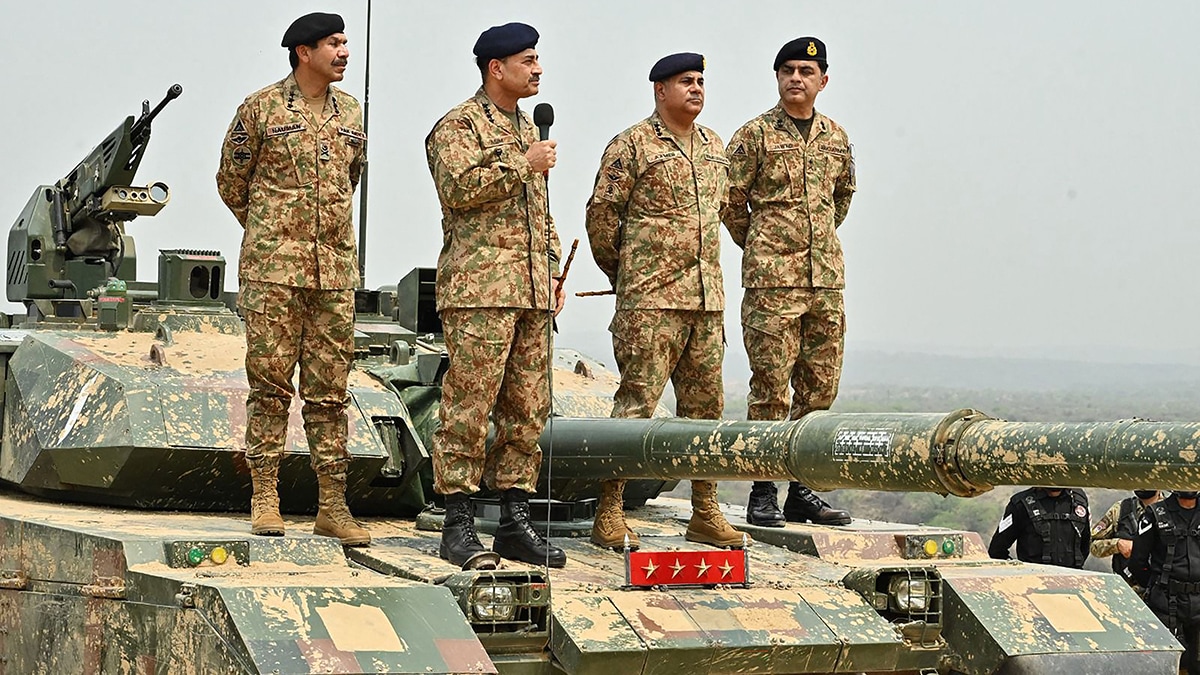
Pakistan’s chief of army staff General Asim Munir―widely regarded as the informal custodian of the country’s security and foreign policies―has now been ‘given authority’ to respond to the Indian strikes by the very government he had ‘selected’ for Pakistan following the 2024 elections. To assess Munir’s next steps, it is important to examine the challenges and options before him.
Munir’s biggest challenge comes from the Pakistan Tehreek-e-Insaf (PTI) party, led by former prime minister Imran Khan. The PTI commands a substantial mass base and a significant number of lawmakers. Munir has gone to great lengths to keep Imran and other senior PTI leaders imprisoned for months, and to repress and demoralise party cadres. However, unlike previous civilian leaders such as Nawaz Sharif and the late Benazir Bhutto―who would strike a deal with the army and leave the country to avoid trouble―Imran has chosen to remain in prison.
Imran’s continued imprisonment has placed Munir and the army in a difficult position. His problems have intensified since March, when two US lawmakers introduced a bill―the Pakistan Democracy Act―seeking sanctions on Munir for engaging in the “wrongful prosecution and imprisonment” of political opponents, including Imran. In addition, a key Trump-aligned diplomat has repeatedly and publicly called on Munir to release Imran in the interest of restoring democracy in Pakistan. This international pressure could bring ‘unexpected’ difficulties for Munir and Pakistan as they seek financial support from the west.
Munir also played a central role in ‘shaping’ the current government, allegedly by manipulating the vote-counting process. As a result, both international observers and ordinary citizens consider the federal government illegitimate and exceedingly weak. Therefore, apart from providing Munir with a façade for propaganda and tough rhetoric, the Shehbaz Sharif government is unlikely to offer meaningful support, even in striking a compromise with India. A weak government at the helm and an embattled general could, however, act rashly without fully considering the consequences.
Pakistan’s western borders have remained deeply unstable since the withdrawal of US troops from Afghanistan in August 2021. Home-grown militants continue to launch bold attacks almost daily in the border provinces of Balochistan and Khyber Pakhtunkhwa, targeting soldiers, bases, patrols, headquarters and cantonments, killing hundreds of security personnel. The Baloch insurgency, in particular, has grown increasingly dangerous, and despite the army’s high-handed tactics, it is seen as failing to ensure public safety.
Pakistan’s relationship with the Taliban interim government in Afghanistan remains tense. The two sides frequently engage in border skirmishes, shut border crossings and accuse each other of waging ‘proxy wars’, keeping the western border perpetually unstable.
Moreover, despite Munir publicly assuming personal responsibility for fixing Pakistan’s precarious economy, the plight of ordinary citizens remains unchanged. Should the global community push Pakistan back onto the Financial Action Task Force’s ‘grey list’, it would create insurmountable hurdles for accessing funds from western institutions. Given his total control over politics, security and the economy, Munir would struggle to maintain his image among the people of Pakistan.
The situation is evolving rapidly, and it is difficult to predict what might happen next. However, in theory, Munir has three broad options. The first is to go to war with India―a move that would devastate Pakistan’s economy, hinder growth and stretch its armed forces beyond capacity. The second option is to de-escalate through a form of ‘political melodrama’, while continuing the proxy war against India. The third is to make peace with Imran and unite the polity to present a strategic front against India and work towards resolving bilateral issues. The final option could pave the way for lasting peace between India and Pakistan, though at present, it appears the least likely.
Gupta is a strategic affairs expert and former director general of police.
