



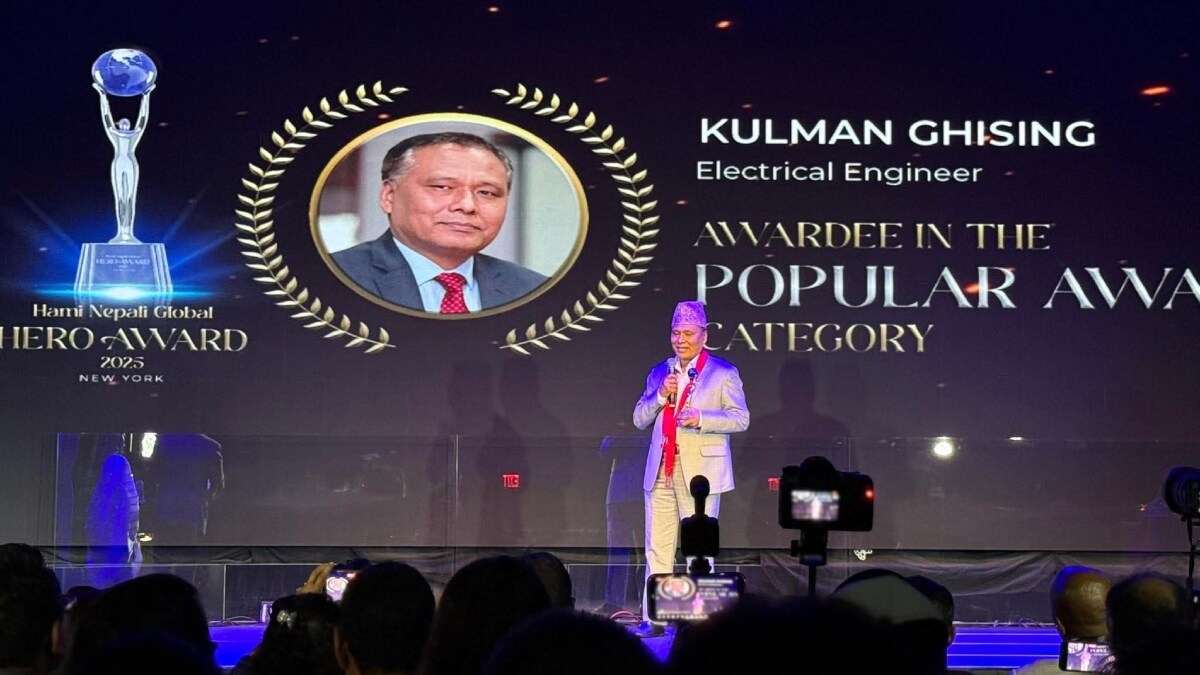
Former head of the electricity board, Kulman Ghising, is the frontrunner to lead an interim government in Nepal after protests by Gen Z groups toppled the incumbent administration. Ghising, the engineer credited for solving Nepal's power crisis, is said to be a clear favourite ahead of former Chief Justice Sushila Karki and Kathmandu Mayor Balendra Shah.
According to reports, prohibitory orders will stay in Kathmandu and surrounding areas for most of the day, the army said in a statement, while an airport spokesman said international flights were operating. The death toll from the protests had risen to 30 by Thursday, Nepal's health ministry said, with 1,033 injured. The demonstrations are popularly referred to as the "Gen Z" protests since most participants were young people voicing frustration at the government's perceived failure to fight corruption and boost economic opportunities. Government buildings, from the Supreme Court to ministers' homes, including Oli's private residence, were also set ablaze in the protests, which only subsided after the Prime Minister resigned.
Meanwhile, here are a few facts about Kulman Ghising, who is expected to lead Nepal to a new era:
1. Kulman Ghising was born in 1970 in Bethan village of eastern Nepal's Ramechhap district. This humble upbringing in rural Nepal is said to have given him firsthand experience with the difficulties of living with an unreliable electricity supply. As per data available on Wikipedia, he did his intermediate degree from Amrit Science College and then got a scholarship to study electrical engineering at the Regional Institute of Technology (RIT) in Jamshedpur. He later completed postgraduate studies from Pulchowk Engineering College, Nepal. Ghising worked for the Nepal Electricity Authority (NEA) for over two decades before becoming Managing Director. He also worked as Project Chief of the Rahughat Hydroelectric Project and had led the Chilime Hydropower Company.
2. Kulman Ghising rose to popularity after he was able to eliminate load shedding in major cities of Nepal. Interestingly, the revolution happened within two months of his appointment, a feat that had been considered impossible for years in a country that had power outages of up to 18 hours each day
3. Reallocating electricity to high-demand areas during peak hours and overhauling inoperative power plants were among the steps he adopted to resolve the Himalayan nation's power supply issues, reports said. He was hailed as an anti-corruption crusader when he took a tough stance against large industrial consumers who had been illegally consuming electricity, a report said. He identified leakage points, improved Nepal's electricity trade with India, allowing Nepal to import power during shortages and export surplus energy, and ensured better water flow management in hydropower plants.
4. After a successful first term from 2016-2020, he was re-appointed in August 2021 but was removed from his position in March 2025, months before his term was officially set to end.
5. Under his leadership, the NEA transitioned from being a loss-making entity to a profitable board, which helped to stabilize the sector financially for the first time in over two decades, MyRepublica said in a report. In July 2025, he received the 'Global Hero Award' in New York, a recognition for his contributions to ending Nepal's energy crisis.
