



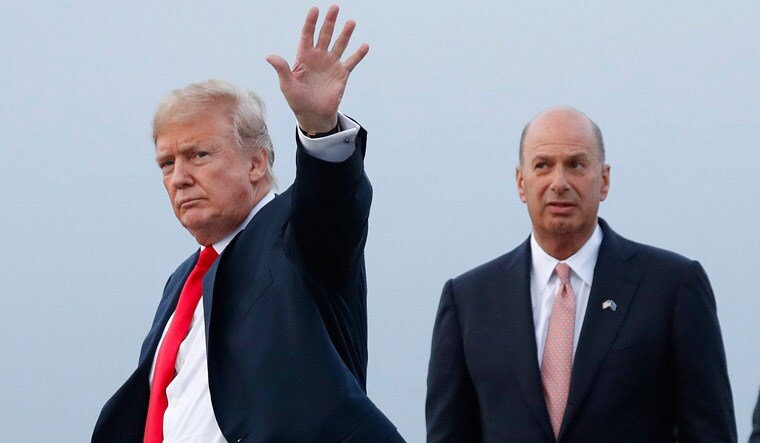
The Trump administration on Tuesday ordered its Ambassador to the European Union, Gordon Sondland, not to take part in a House Democratic inquiry into the president’s controversial dealings with Ukraine.
Hours before Sondland was scheduled to sit before a deposition in Washington, the ambassador was told not to appear. In the morning, US President Donald Trump tweeted his ire at the impeachment inquiry, which he termed illegitimate:
“I would love to send Ambassador Sondland, a really good man and great American, to testify, but unfortunately he would be testifying before a totally compromised kangaroo court, where Republican’s rights have been taken away, and true facts are not allowed out for the public to see.”
Sondland was to testify on the communications between Trump and Ukrainian president Vlodimir Zelinsky, which allegedly involved a quid pro quo exchange, where Ukraine would investigate corruption allegations against Joe Biden’s son, Hunter, in exchange for US security aid.
In the first whistleblower’s complaint, Ambassador Sondland and US Special Representative for Ukraine Negotiations Kurt Volker were both described has having reportedly “provided advice to the Ukrainian leadership about how to ‘navigate’ the demands that the President had made of Mr. Zelensky.”
The move to block Sondland’s deposition could trigger Democrats to file the additional charge of obstruction of justice as part of their impeachment proceedings. The Democratic senator from California, Kamala Harris, tweeted, “Someone should tell Donald Trump that you can definitely be impeached for obstruction of justice.”
House Intelligence chairman Representative Adam Schiff said that the ambassador had “text messages or emails” that were also being withheld by the state department. He told CNN that the move was “strong evidence of obstruction”.
