



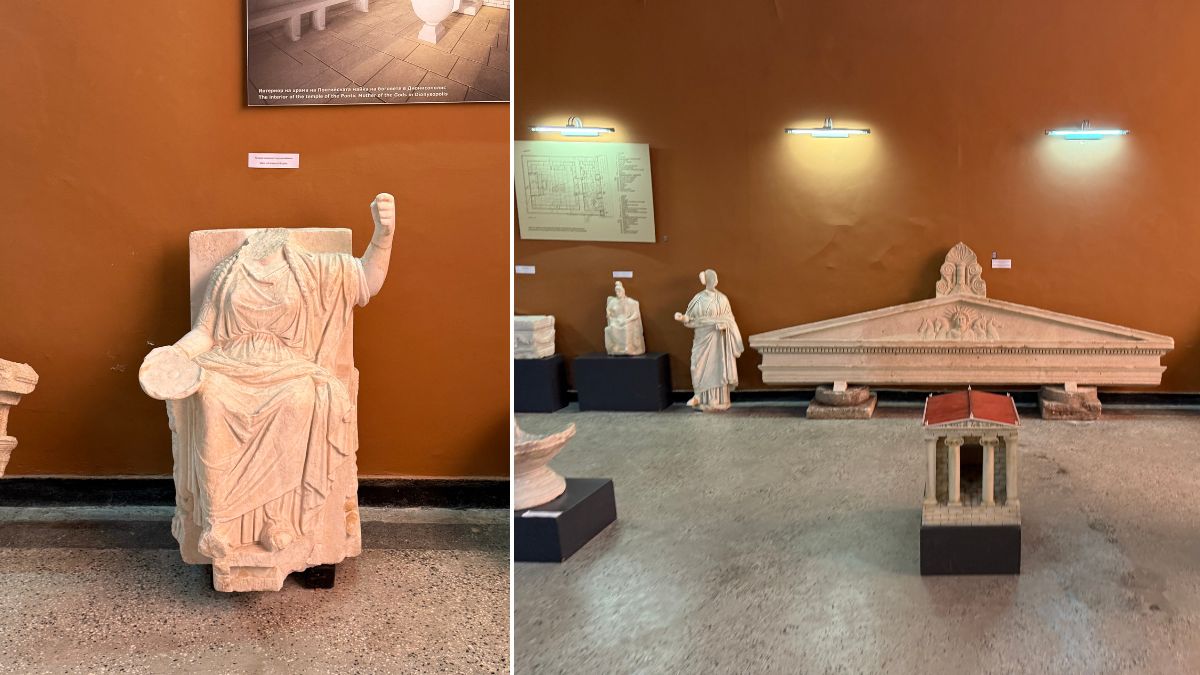
As I stepped into the Balchik Historical Museum in Bulgaria’s northeast on a chilly December morning, I could feel the warmth of the space and its exhibits. The museum chaperon added historical and cultural depth to my initial impression.
Balchik is a small coastal town on the western shore of the Black Sea, with around 20,000 residents. The population rises to 50,000 during the summer tourist season. It is called “The White City” because of its white limestone cliffs and buildings. In the sixth century BC, Greek settlers renamed the city Dionysopolis, and under Roman rule, it thrived as a centre of agriculture, trade, and a port. Later, it was influenced by the Byzantine, Bulgarian, and Ottoman empires. After Bulgaria’s liberation in 1878, it became part of the modern Bulgarian state. However, between 1913 and 1940, the town was part of Romania.
The museum displays the remains of seven civilisations - the New Stone Age, Thracian, Greek, Roman, Byzantine, Bulgarian, Ottoman, and Romanian. They include pottery, amphorae, coins, glass, ceramics, and artefacts from the temple of Cybele. The Temple of Cybele, uncovered in 2007, dates to approximately 280–260 BCE and was in use until around the 4th century CE. The temple is believed to be the most remarkable testimony of the cult of the great mother-goddess in continental Europe. It was buried as a large part of the city was destroyed during a possible tsunami in the 6th century.
Apart from the museum, Balchik also features the modest yet elegant palace of Romanian Queen Marie. Built in the 1920s, the palace complex combines Mediterranean, Oriental, and Balkan architecture. It served as the queen's summer retreat, where she enjoyed peaceful moments away from royal grandeur, read, admired the ocean’s vastness and the fleeting nature of human life, and painted. One of her paintings is displayed inside the palace. The Queen spent her later years there, and it was her wish to have her heart buried in the palace's chapel after her death. Currently, within the palace grounds is a botanical garden, developed in 1955 by Sofia University, which boasts one of the largest outdoor collections of cacti and succulents in Europe.
As I departed, I carried with me a scrapbook of unforgettable memories of the Black Sea and its 2,500-year-old cultural history.
The author is Ambassador of India to Bulgaria & North Macedonia
