



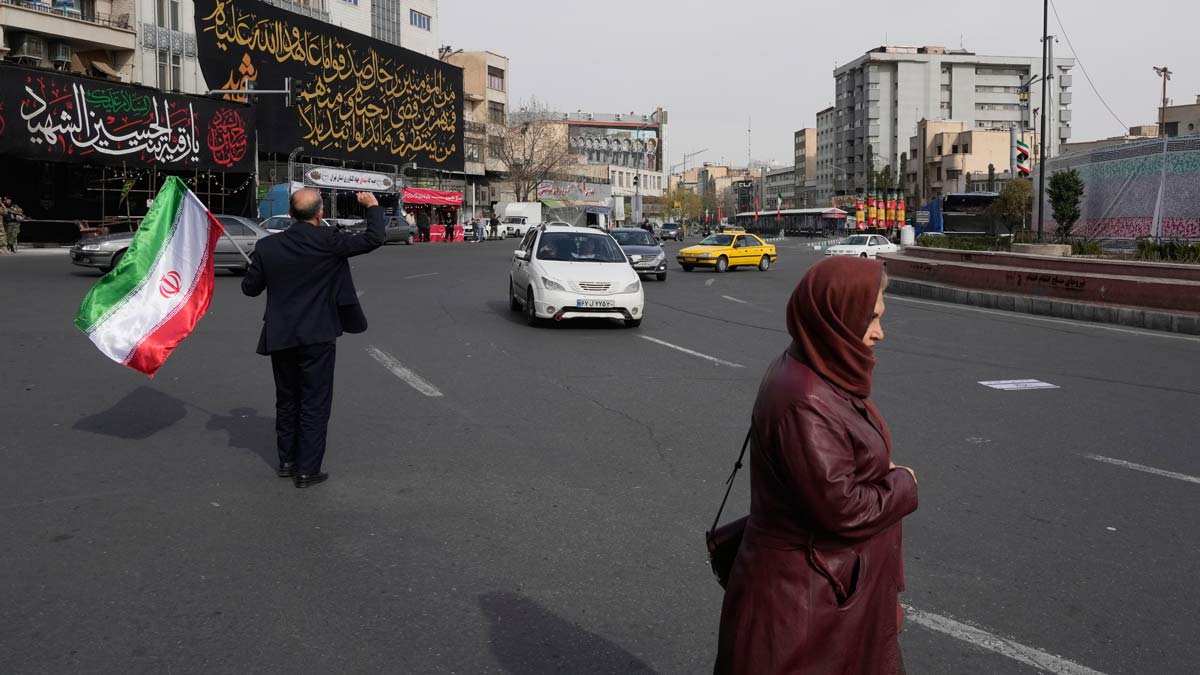
An Iranian media outlet with close ties to the elite Revolutionary Guard claimed on Tuesday that two energy sites were struck by airstrikes hours after US President Donald Trump announced a five-day pause in military operations.
Fars News Agency, a semi-official outlet, reported that one strike targeted natural gas infrastructure in Isfahan, while another hit a gas pipeline connected to the Khorramshahr power plant. Neither Israel nor the US has officially claimed responsibility for the strikes, though both countries often refrain from acknowledging such operations.
It remains unclear whether these sites were specifically targeted or damaged as part of broader strikes in the region.
On Monday, Trump stated that he had ordered a five-day delay on attacks against Iranian power plants and revealed that the US was in talks with Tehran to bring an end to the conflict.
However, Iran has rejected Trump's claims of negotiations, asserting that it would retaliate by targeting the water infrastructure of Gulf countries if the US strikes its electricity grid. This threat has caused significant concern among Gulf nations, as desalination plants—critical for their survival—are among the region's most sensitive civilian infrastructure.
In response to the US-Israeli strikes, Iran has already launched missile and drone attacks on neighboring countries hosting US military bases. Also, Tehran has effectively closed the Strait of Hormuz, a major global oil chokepoint, sending shockwaves through world markets and causing oil prices to surge.
