



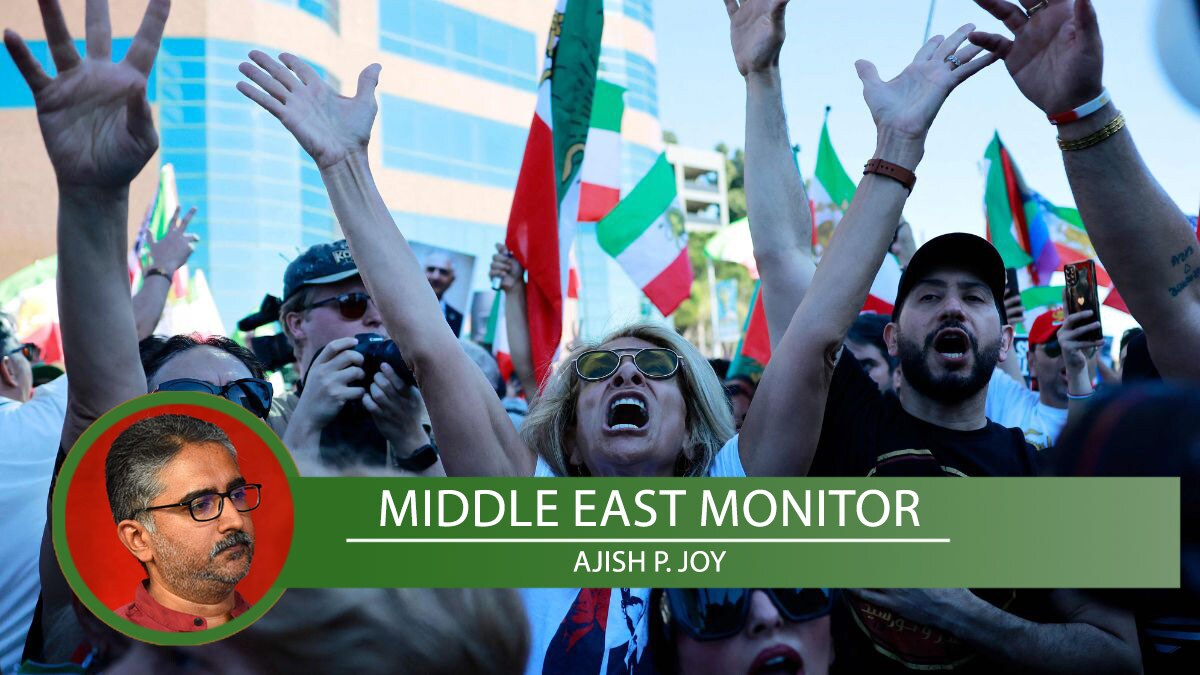
Reports of the assassination of Iran’s Supreme Leader Ayatollah Ali Khamenei have triggered scenes of celebration across parts of Iran and within sections of the Iranian diaspora across the world.
The killing followed joint military operations identified as 'Operation Roaring Lion' and 'Operation Epic Fury', which targeted senior Iranian leaders and strategic military facilities. US President Donald Trump announced Khamenei’s death on social media, calling him “one of history’s most evil figures” and framing the strike as justice for victims of the Islamic Republic. Iran later confirmed that Khamenei’s body had been recovered from the rubble of his compound in Tehran.
Khamenei’s death represents a profound political shift in Iran. Despite communication networks being disrupted, there were major celebrations in Iran. In Tehran, residents cheered from balconies and windows, setting off fireworks, playing music and chanting “freedom, freedom”. Witnesses described spontaneous applause echoing through neighbourhoods even as aircraft and missiles crossed the night sky.
Similar scenes were reported in cities and towns across the country. In Karaj and Besat Town, crowds honked car horns and gathered in the streets. In Fuladshahr, Borazjan and Mamasani, residents waved flags, whistled and danced. In the southern city of Gal-e-Dar, demonstrators reportedly toppled a statue of Ruhollah Khomeini, the founder of the Islamic Republic. In Shiraz and Isfahan, hundreds gathered for impromptu street parties, some waving white cloths as a symbol of peace. In Abdanan, a Kurdish city that has faced repeated crackdowns, young men and women drove through the streets flashing victory signs.
For many Iranians, the emotional intensity of the moment reflected years of repression. Human rights organisations have long accused the state of using lethal force against protesters and imprisoning dissidents. Families of those jailed or killed under Khamenei’s rule described the news as cathartic. One resident was quoted as saying: “This war is not our war. It’s Trump’s war with the hateful Islamic regime,” expressing hope that the regime’s collapse might open the path to political freedom.
Supporters of the Islamic Republic were largely absent from public spaces during the initial celebrations, though reports suggested that paramilitary units were mobilised in some areas to contain gatherings. The scale and durability of public jubilation remained difficult to verify amid information blackouts and heightened security.
Beyond Iran’s borders, sections of the diaspora marked the moment with rallies and street gatherings. Celebrations were reported in Madrid, London, Berlin and parts of Armenia. In Los Angeles, home to one of the largest Iranian communities outside the country, hundreds gathered in neighbourhoods such as Westwood, waving Iranian and American flags. Some carried placards reading “Make Iran Great Again”, while activists publicly thanked Trump for ordering the strike.
Yet, Iran’s political future remains deeply uncertain. Trump urged Iranians, including defecting members of the Revolutionary Guard, to unite peacefully and reclaim their country, hinting that a post-Khamenei leadership path was already under discussion. Reza Pahlavi, the exiled son of Iran’s last shah, declared that the Islamic Republic had effectively ended and argued that any attempt by regime insiders to appoint a successor would lack legitimacy. Some demonstrators in Los Angeles called for Pahlavi to assume a leadership role.
Analysts caution that the removal of a long-entrenched authoritarian ruler does not automatically produce a democratic transition. Iran’s political system is underpinned by powerful institutions, including the Revolutionary Guard and religious foundations, with access to arms, resources and loyal constituencies. A sudden power vacuum could produce competing centres of authority, raising the risk of military rule, factional infighting or even civil conflict. For now, scenes of celebration coexist with profound uncertainty.
