



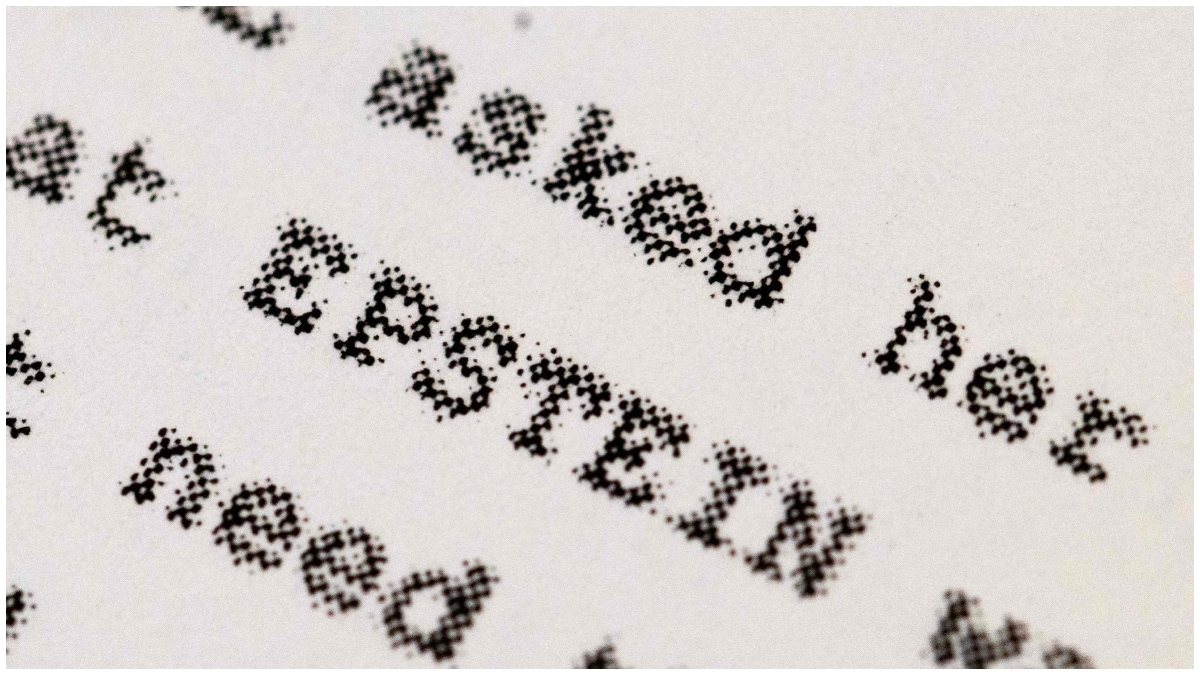
One of the recently released documents from the US Department of Justice, made public under the Epstein Files Transparency Act, revealed a shocking violation of religious sanctity: the illicit acquisition and private possession of the Kiswa—the sacred black-and-gold cloth of the Kaaba—by convicted sex offender and paedophile Jeffrey Epstein.
The Epstein incident related to the Kiswa is seen by many as a symbolic crisis centred on the breach of Hurma (sanctity). Additionally, this represents an ontological disturbance that calls into question the very essence of sacred material culture.
The sanctity of material objects in Islam mainly derives from their connection to divine worship, sacred history, or functional piety. An object itself has no inherent holiness. Key sacred objects include the Quran, mosques, and holy relics; these require proper handling with ritual purity and respect to prevent desecration. In this context, the Kiswa is one of the holiest objects in Islam. Its fragments are traditionally regarded as priceless relics, and these are usually gifted only by Saudi authorities to heads of state, high-ranking dignitaries, or major museums.
Understanding the history of this sacred cloth is essential, as it tells a story of craftsmanship and changing political guardianship, starting in the pre-Islamic era when the Kaaba was covered with various tribal textiles and animal skins. Some claim that, initially, it was the Himyarite King of Yemen, As'ad al-Kamil, who ordered the covering of the Kaaba with a cloth. Later, Prophet Muhammad adopted this practice after the conquest of Makkah in 630 AD, using a Yemeni cloth with red and white stripes. His first successors, also known as the Rightly Guided Caliphs, then covered it with a plain white cloth.
Over the centuries, the Kiswa became a powerful symbol of sovereignty, leading to a long period of Egyptian dominance from the Mamluk era onwards. The Dar al-Kiswa in Cairo, until the mid-20th century, was the main manufacturer. Egypt sent the sacred cloth to Makkah in the grand, ceremonial Mahmal caravan—a wooden palanquin carried by a decorated camel. In 1927, King Abdulaziz established a dedicated factory in Makkah, which eventually caused a permanent shift of production to Saudi Arabia.
Today, the Kiswa is a masterpiece of modern textile engineering combined with traditional hand embroidery. It is a 14-metre-high black garment that remains the most visible symbol of Islamic custodianship. The change in the Kiswa's colour over time is due to practical reasons, as colours other than black tend to look dirtier after long use. Previously, the Kiswa was replaced on the Kaaba every year on the ninth day of the Islamic month of Dhu al-Hijja, during the Hajj; in recent years, it has been replaced at the start of the Islamic New Year, or Muharram.
The Kiswa, which covers the sacred structure of the Kaaba, derives its sanctity from its close connection to the Haram—the inviolable sanctuary of Makkah. Therefore, the Kiswa functions within a layered spatial theology. Here, proximity to divine worship establishes gradations of sanctity: the mosque surrounding the Kaaba is sacred, as is the territory of the Haram; likewise, the Kiswa is sacred.
To understand the importance of the Kiswa’s displacement into a profane domestic space, like Epstein’s, it is crucial to comprehend how Islamic sacred geography functions. In Islam, holiness (hurma) is organised geographically and protected by law. In this context, the Haram (the sacred area around the Kaaba) is not just a symbol but a legal entity. Inside its boundaries, violence, hunting, and even certain natural acts are restricted. The Kiswa, as a material extension of the Kaaba, holds the same significance. It is treated with pure ritual care, and its yearly replacement is a carefully planned ceremony. Although Kiswa fragments are tightly regulated by custodial authorities, even when given as gifts, the process follows strict diplomatic protocols.
When a fragment is moved into a private domestic setting, especially in a context of moral criminality, it becomes more than just a scandal. To understand this, Mary Douglas’s framework in Purity and Danger is helpful. Douglas explains that impurity is not about hygiene but about “matter out of place.” The textile, once part of a tightly structured sacred space, becomes “matter out of place” when situated in a secular, domestic environment.
In Islamic law, this incident can be viewed through the categories of tahara (ritual purity) and najasa (impurity). While the Kiswa is not inherently sacred in an ontological sense—unlike the Quran, whose divine speech grants it special status—it gains secondary sanctity through its function and proximity. Moving it into a morally tainted space produces a symbolic inversion. Therefore, this incident should not be seen as just an individual sin. It involves an ontological crossing in which sacred heritage becomes a commodity and prestige replaces genuine piety. Furthermore, the Epstein-Kiswa episode reveals a harsh reality: wealth and connections now enable people to acquire “sacred” objects that were once under the exclusive guardianship of religious and political authorities.
