



Shared Threat Perceptions, Fractured Relations
For West Asia or the Middle East, depending on where you stand, it’s almost always a safe wager to predict war; more often than not, you won’t be far off. The region is defined less by natural alliance-building and more by a Hobbesian state of perpetual rivalry. The familiar saying, “The enemy of my enemy is my friend,” sounds comforting, but in practice it rarely holds true. At best, the enemy of my enemy is a temporary ally, one who will eventually become another adversary further down the list.
Iran is the common denominator of threat perception for several regional powers, yet these states distrust one another almost as much as they fear Tehran. Turkey under President Recep Tayyip Erdoğan competes fiercely with Saudi Arabia for influence in Syria, aggravates Egypt with ambitions of regional leadership, and maintains open hostility toward Israel. The Houthi conflict which pits Iran-aligned Ansar Allah against Yemen’s government backed by Saudi Arabia, with the UAE‑supported Southern Transitional Council has intensified lately. Egypt is consumed by challenges on nearly all its borders, from Libya to Ethiopia’s dam dispute, and from the Red Sea coast to the Houthis in Yemen. Israel has tense relations with Egypt, outright hostility with Turkey, and deep distrust of Saudi Arabia, with whom it has no formal ties. Its most direct conflict remains with Iran, where another round of warfare seems likely. None of these states are natural allies. Their rivalries run deep, even as they share a common adversary in Iran.
In this fractured state, the US acts as the binding force, less than perfect though it may be. Despite media portrayals, the Trump administration’s National Security Strategy was not radically different from its predecessors. Like Obama and others before him, Trump emphasised a pivot toward East Asia while recognising the need to sustain alliances in the Middle East.
Gaza, Hamas, and the Limits of Phase Two
Postwar Gaza may become the testing ground for this emerging alliance. Trump’s 20-point plan, unique in its inclusion of external actors like Turkey and Qatar, boxed Hamas into a corner by securing regional buy-in before negotiations. Though implementation remains uneven, the plan was adopted into a UN Security Council resolution, giving it international legitimacy.
Building on this, on January 14, American special envoy to the Middle East Steve Witkoff announced the start of phase two of Trump’s plan, with a technocratic Palestinian government established in Gaza. Under phase one, Hamas and Israel agreed to a ceasefire in October 2025, alongside a hostage-prisoner exchange, a partial Israeli withdrawal, and an aid surge. Phase two is designed to go further. It involves reconstruction and full demilitarisation of Gaza, including the disarmament of Hamas and other Palestinian groups. Witkoff warned that Hamas must comply fully, including returning the body of the last Israeli hostage, or face serious consequences.
Energy ties offer another dimension of regional cooperation. Egypt, with significant gas fields and LNG terminals, once exported natural gas to Israel. Today, the pipeline across Sinai has been reversed, allowing Israel to send gas to Egypt, with plans to expand exports to Europe via Egyptian LNG facilities. Protecting these pipelines will be essential, but the arrangement highlights how energy can complement military cooperation in building regional stability.
The question of US arms sales, particularly F‑35s to Qatar, Turkey, and Saudi Arabia raises concerns about Israel’s Qualitative Military Edge (QME), a principle enshrined in US law. Every proposed sale is evaluated against QME, with Israel’s perspective central to the process. The UAE’s experience illustrates the complexity. Despite joining the Abraham Accords and securing agreement for F‑35s, its reliance on Huawei-run networks raised fears of Chinese technology theft, stalling the deal. The same concerns about the presence of Chinese military equipment and personnel appear to be hampering the deal with KSA Turkey was expelled from the F‑35 program after acquiring Russia’s S‑400 system. So beyond QME, safeguarding US technology and managing geopolitical entanglements with China and Russia remain critical hurdles.
One of the most consequential moves of Trump’s first administration was bringing Israel under the US Central Command (CENTCOM). Traditionally excluded, Israel now participates in joint exercises with Saudi Arabia, Egypt, and other regional militaries' naval drills, air command coordination, and missile defence operations. These exercises have already functioned as a de facto military alliance. Turkey, though formally under European Command, is occasionally integrated into CENTCOM activities, particularly air operations, given its hosting of the US base at Incirlik. CENTCOM has even established a command-and-control centre near Gaza, underscoring its operational presence in the region.
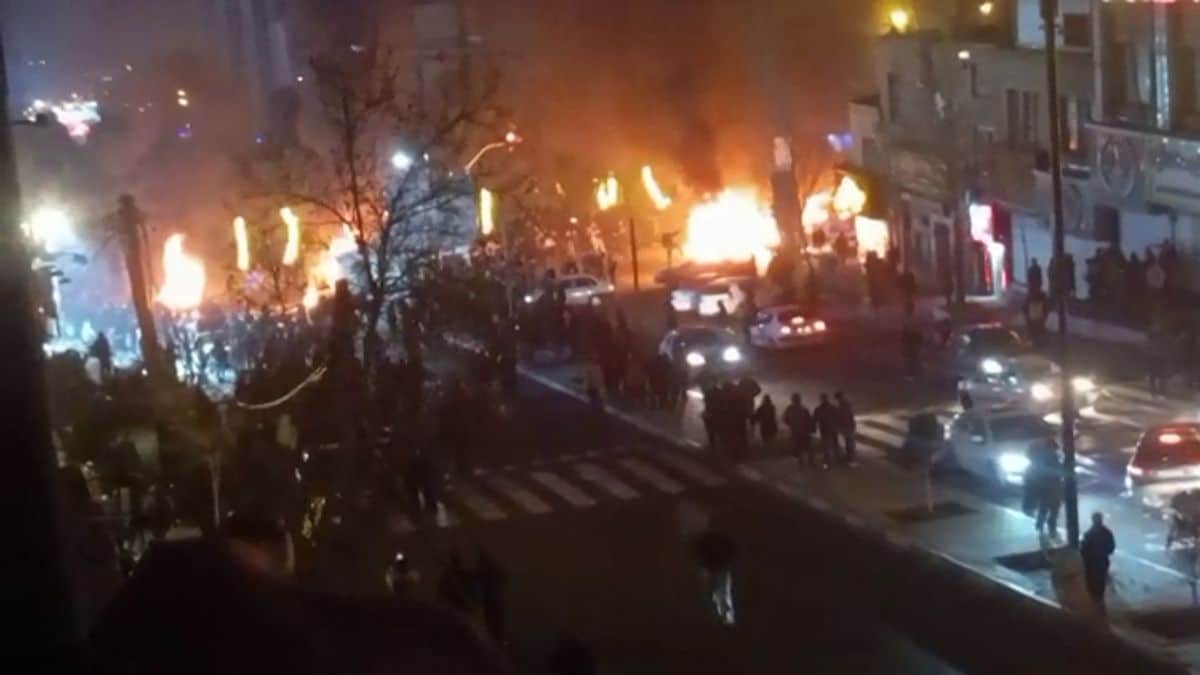
Recent violence in Iran which has allegedly left as many as 2,000 dead, has been portrayed by Tehran as the continuation of US-Israeli aggression. In June last year, Israel’s attacks killed several of Iran’s most experienced IRGC figures, including its chief Hossein Salami. Though the loss dented the IRGC’s prestige, the supreme leader swiftly appointed a new generation of commanders cut from the same ideological cloth. Speaker of parliament Mohammad Bagher Ghalibaf, himself a former IRGC commander, threatened to “set the region on fire,” warning that US bases in Qatar could be legitimate targets if Iran were attacked.
Meanwhile, Iran's Foreign Minister Abbas Araghchi has sought to strengthen ties with Doha, Cairo, and Riyadh, underscoring Iran’s dual track of confrontation and diplomacy. Analysts such as Mohammad Ali Shabani note that historically, Iranian protests have led to regime rebalancing in favour of repression.
Optimism over Gaza’s future is tempered by Hamas’s refusal to disarm, complicating the second phase of Trump’s plan. The agreement calls for demilitarisation, removing offensive weapons like rockets and RPGs rather than total disarmament. Hamas remains weakened, controlling half of Gaza but surrounded and constrained. Israel, meanwhile, has developed innovative tactics to neutralise tunnel networks and now controls all entry and exit points into Gaza.
While Hamas is unlikely to relinquish power voluntarily, Israel’s dominance ensures that phase two, whether through negotiation or force remains within reach. From Gaza’s uncertain future and the worldwide rise of antisemitism, the stakes are immense. Yet the more immediate disruptions lie with Hezbollah in Lebanon and Iran, both rearming and preparing for confrontation. As tensions mount, Israel’s leadership weighs the prospect of renewed military action, while regional instability keeps the world’s attention fixed on West Asia. Against this backdrop, two pivotal political contests, the US mid-term elections and Israel’s upcoming Knesset vote promise to reverberate far beyond their borders, shaping policy choices and global alignments. Unresolved conflicts and the persistence of radicalisation could define the course of 2026, following on the heels of an already turbulent 2025.
The author is a security and economic affairs analyst
