



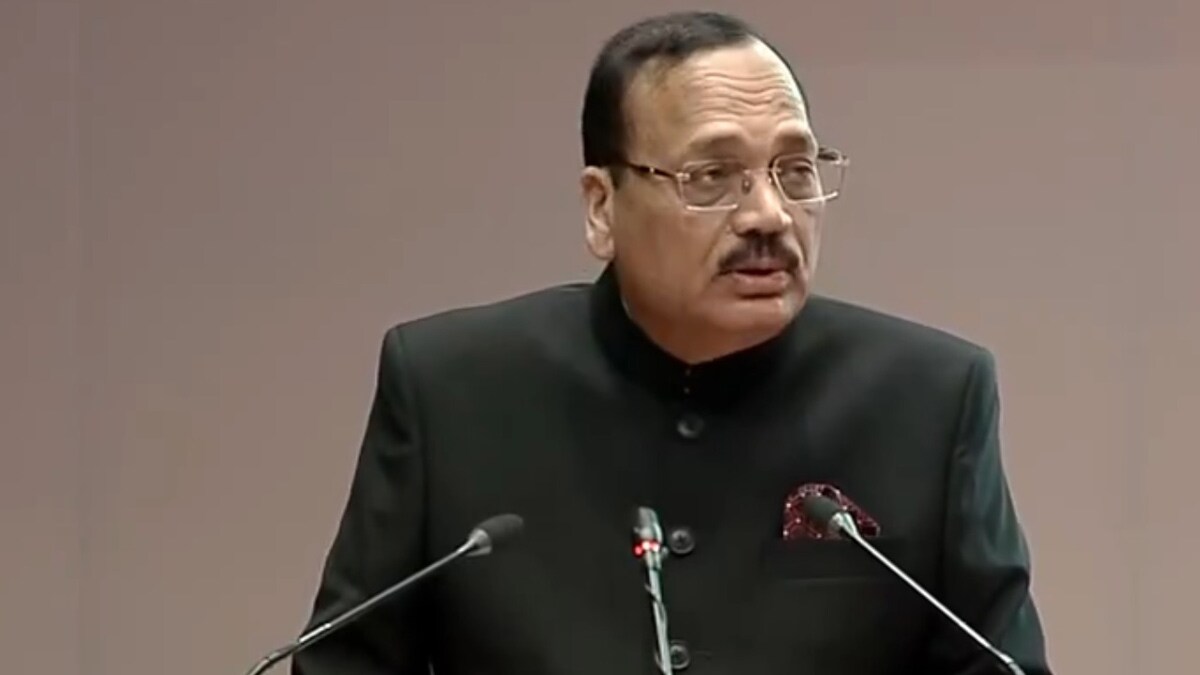
Calling delay and rising litigation costs the biggest obstacles to justice delivery in India, Chief Justice Surya Kant on Sunday said the true test of the judicial system lies not in legal theory but in the lived experience of ordinary citizens struggling to access courts.
Delivering the keynote address at a symposium organised by the Orissa High Court Bar Association on “Ensuring justice for the common man: Strategies for reducing litigation costs and delays,” the chief justice said justice becomes meaningful only when it is predictable, accessible and humane.
Referring to his early years as a practising lawyer, he recalled seeing an elderly farmer waiting outside a courtroom late into the afternoon with his case listed far down the board. “For him, delay was not a docket statistic. It was a quiet erosion of dignity,” the chief justice said, underscoring how prolonged litigation disproportionately harms the poor and vulnerable.
He said the constitutional promise of dignity under Article 21 is compromised when justice becomes slow or unaffordable. “The right to dignity is killed through a thousand cuts when the rule of law becomes tardy or expensive,” he observed, warning that procedural delays gradually undermine public faith in the justice system.
Addressing the issue of pendency, the chief justice said backlog must be viewed as a systemic problem affecting every level of the judiciary. When higher courts remain clogged with long-pending matters, he said, the pressure intensifies on trial courts below. He indicated that efforts are underway at the apex level to dispose of old cases involving settled or repetitive legal issues to remove uncertainty that stalls proceedings across the system.
“Finality at the top creates confidence across the judicial pyramid,” he said, describing the exercise as system stabilisation rather than routine docket management.
The chief justice strongly advocated greater use of Alternative Dispute Resolution (ADR), particularly mediation, calling it one of the most effective tools for reducing both costs and delays. Drawing from judicial experience, he said mediation has successfully resolved family disputes, commercial conflicts, trademark cases and even cross-border disputes when parties were willing to engage in meaningful dialogue.
However, he noted that ADR remains underutilised due to a lack of institutional and cultural commitment. Government departments, he said, often file appeals mechanically due to institutional anxiety rather than legal necessity. He emphasised the need for training and accountability frameworks to curb unnecessary litigation by the state.
The chief justice also cautioned lawyers against forum shopping, stating that approaching higher courts simply because one can afford to do so adds to delays. “The appropriate forum must be respected,” he said, adding that settlement should not be seen as a surrender, but as a strategic resolution of disputes.
On technology, the Chief Justice said digital tools introduced during the pandemic—such as virtual hearings, e-filing and online case tracking demonstrated their potential to reduce procedural delays and expand access to justice. Digital service of summons and electronic tracking of notices, he said, can eliminate months lost to avoidable adjournments.
At the same time, he warned against uncritical reliance on technology, particularly in an era of deepfakes and digital fraud. Reforms that exclude the poor, elderly or digitally unfamiliar, he said, risk deepening inequality rather than improving access.
Highlighting the importance of judicial infrastructure, the chief justice said inadequate courtrooms, staff and facilities continue to strain the system. Infrastructure, he stressed, should be viewed as an investment rather than expenditure. He called for specialised and exclusive courts for time-bound trials, especially in complex criminal cases with national and international ramifications.
Concluding his address, the chief justice likened the justice system to a chariot driven by four wheels—the bench, the bar, the administration and the citizen. “If even one refuses to move, the journey halts,” he said, calling for collective responsibility to ensure timely and affordable justice for all.
