



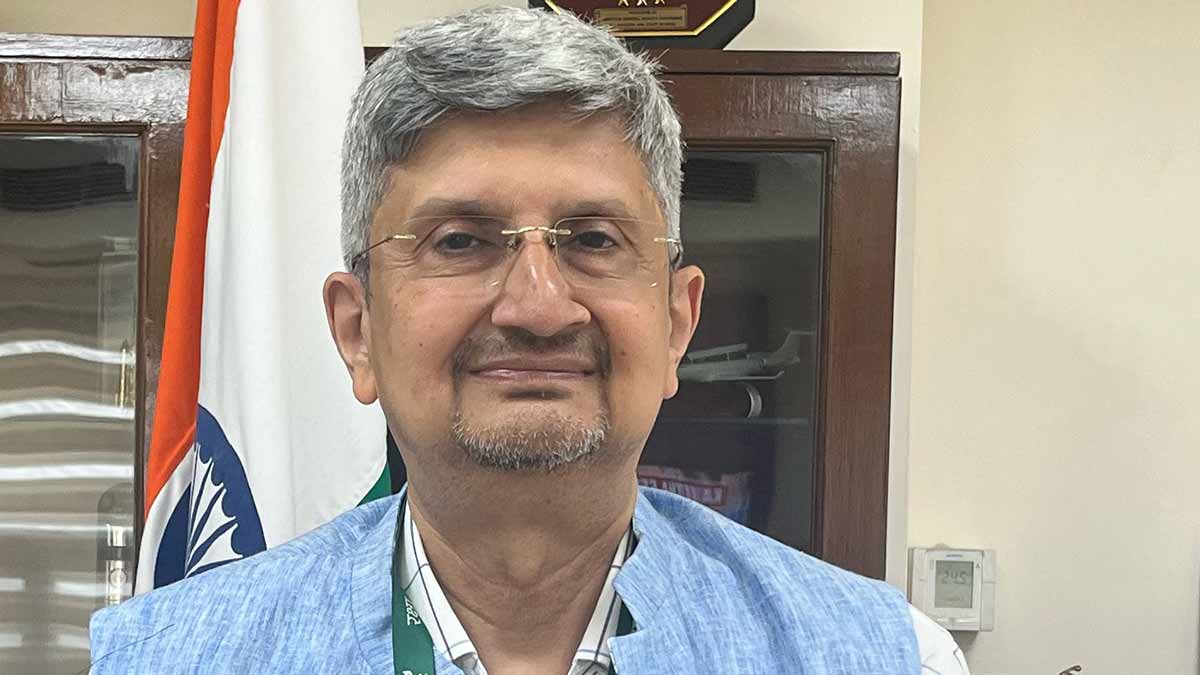
Secretary, Department of Defence R&D, and Chairman of Defence Research and Development Organisation (DRDO), Dr Samir V. Kamat, reiterated the importance of increasing the budgetary allocation for research and development as he pointed out that India allocates merely 0.65 per cent of the budget to R&D, while the country's competitors allocate more than two per cent.
Kamat, who was delivering the keynote address in the Air Chief Marshal (Retd) P.C. Lal Memorial Lecture, organised by the Air Force Association, listed the defence systems to be inducted in the near future.
For more defence news, views and updates, visit: Fortress India
According to news agency ANI, he spoke about how DRDO is focusing on next-generation capabilities, such as underwater domain awareness; intelligence, surveillance, and reconnaissance; space situational awareness, man-unmanned teaming; cyber defence; and ballistic and hypersonic missile defence.
"In the next one to three years, we are going to induct systems like 'Anant Shastra' surface-to-air missile, guided Pinaka, Advanced Light Weight Torpedo, Trawl Assembly, Infantry Floating Bridge, Extended Range Anti-Submarine Rocket, Very Short Range Air Defence System, Vertical Launch Short Range Surface-to-Air Missile, Dhruvastra Anti-Tank Missile, Naval Anti-Ship Missile-Short Range," he said.
ALSO READ: ‘America First 2.0’: What does the new US National Security Strategy mean for India
Kamat said the road ahead will be both exciting and challenging as India hopes to become self-reliant in defence by 2047. He said India needs to be totally self-reliant in missile systems, armoured vehicles, military bridging systems, artillery, guns and ammunition, light combat aircraft, ships and submarines, AEW&C, and EW Systems, among others.
More money for R&D
The DRDO chief highlighted how the nature of warfare—in land, air, sea, space, cyber and information—is constantly evolving and spoke about the importance of increasing R&D budget.
"In the area of defence, our R&D is only 5.75 per cent of the defence budget, but the US spends more than 10 per cent," news agency ANI quoted him as saying.
He said while India is on the way to being a leader in defence technology, there are many challenges ahead, including the lack of full control on the supply chain, and scarcity of talent in R&D.
"Academic involvement in basic and applied research on future technologies is essential," he said, adding that test facilities and infrastructure must also be established. "We have to do this; otherwise, we will remain where we are today. Capability building is also lacking. Civil-military fusion is the need of the hour," he said.
