



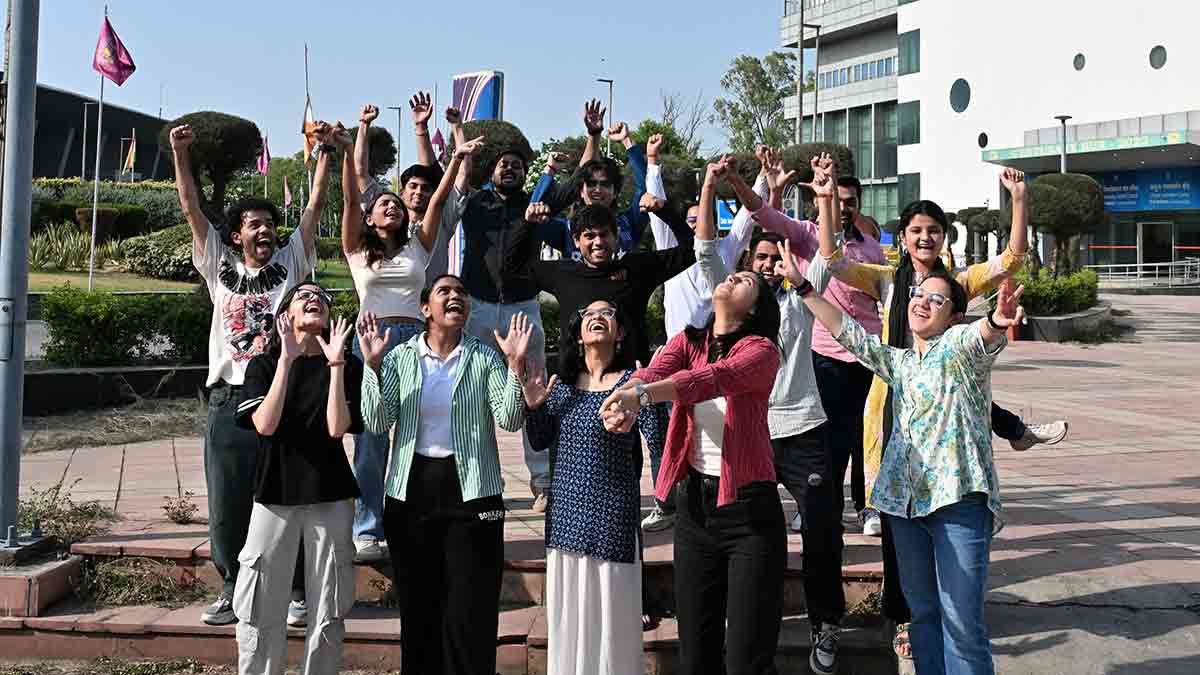
I WONDER WHAT would I have done if St Stephen’s College had a zero attendance policy. I surely would not have made a kamikaze drone, as Sourya Choudhury of BITS Pilani did.
The co-founder and chief technology officer of Apollyon Dynamics registered his independent project as academic work and Dean (Research) Sanket Goel approved funding at zero stage. So, the institute offered both academic and financial support. Later, BITS alumnus Vikas Katragadda stepped in as lead investor, completing the BITS network, writes Principal Correspondent Abhinav Singh in this week’s cover story on India’s best universities. As always, our annual issue on the topic is powered by THE WEEK-Hansa Research Best Universities Survey 2026.
Abhinav brings in diverse voices such as those of Vice Chancellors V. Ramgopal Rao of BITS Pilani, Yogesh Singh of Delhi University, Ajit Kumar Chaturvedi of Banaras Hindu University and Deependra Kumar Jha of Manav Rachna University. He also interviewed former UGC chairperson M. Jagadesh Kumar, BigBasket co-founder Hari Menon and Joint Commissioner Deepak Purohit IPS to bring you perspectives from higher education, entrepreneurship and public administration.
While reading the cover story, I realised the context in which Army chief General Upendra Dwivedi said the other day about Gen-Z being 10 times better than his generation. He listed five characteristics that stood them in good stead: adaptability, risk appetite, social awareness, global connectivity and digital fluency. The general’s observations and Abhinav’s cover story make me hopeful of tomorrow’s Indians.
If you are well past your university days, let me assure you that this issue covers more than education. Our political coverage continues, with Special Correspondent Prema Rajaram visiting the family borough of Contai and writing about the Adhikari clan right from patriarch Sisir to Chief Minister Suvendu, Lok Sabha member Soumendu and legislator Dibyendu.
Senior Special Correspondent K. Vijaya Bhaskara Reddy spoke to K. Kavitha—BRS founder K. Chandrashekar Rao’s daughter—who floated the Telangana Rakshana Sena. The BRS was formerly TRS, and the new TRS is poised to eat into the original’s vote bank. In Kerala, Principal Correspondent Nirmal Jovial is tracking the sparkling new V.D. Satheesan government and the hope it inspires, despite an empty treasury.
In closing, I cannot but draw parallels between two academic situations—the way in which universities are reinventing themselves, and the way in which we have let down our children through the NEET paper leak. The government should evolve a foolproof system, yes, but what about the dishonesty that runs deep in society? No legislation can correct that. Senior Special Corrspondent Kanu Sarda’s article on the leak is quite comprehensive.
For a country that prides itself on being religious, what do such incidents say about our spirituality? If my child does not have the academic rigour to become a doctor, what am I doing to him and society by paying Rs20 lakh for a leaked question paper? That child might become a doctor, but will he be a healer?
The emotional toll of such leaks has not been calculated, I must say. A senior editor on THE WEEK’s desk told me about a man who lost his mind when he lost a medical seat. This son of a headmaster and headmistress was a bright student and had set his heart on becoming a doctor. In those days, medical admissions were linked to pre-degree marks. He lost his seat by one mark.
He withdrew into a shell and never did anything else in life. He is in his 60s now, and both his parents are no more. Imagine those lost decades of self-doubt and meaningless pain. In his case, of course, the system or society were not at fault. But, what happens when we collectively let our children down?
